

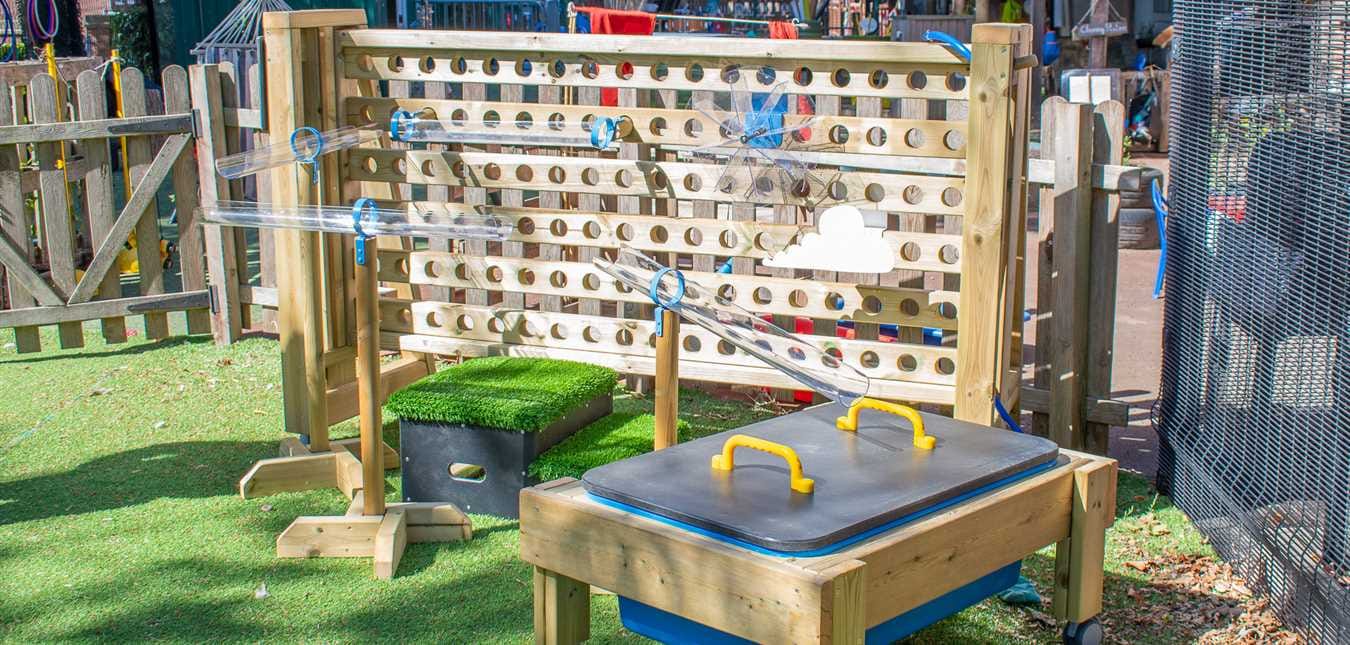
Traditional Playgrounds vs Play in a Day!

Every school wants an outdoor area that feels special. But when it comes to planning an EYFS outdoor space, it's worth asking a bigger question than "how will it look?" The real question is: what will children actually be able to do out there?
Whether you go down the traditional route of a fully bespoke playground project, or opt for a curated package like Pentagon Play's Play in a Day, the goal should be the same: creating an outdoor environment with genuine play value, one that supports learning and development in early years settings, not just one that photographs well.
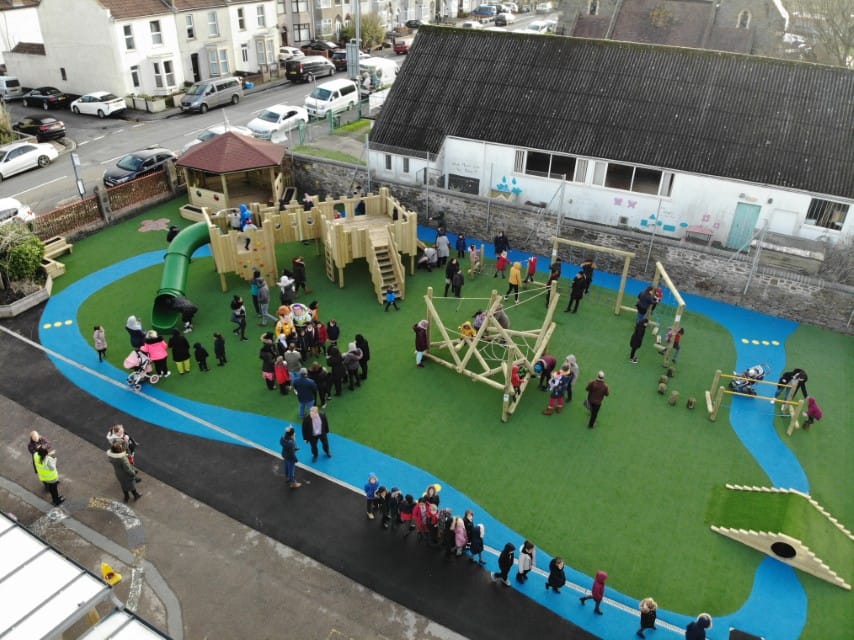
In this article, we'll compare the two approaches fairly, and show where Play in a Day can offer real advantages for schools and nurseries, particularly EYFS provisions.
Play Value Should Come Before Appearance
It's easy to get swept up in surfacing colours, themed panels and eye-catching designs when planning an outdoor learning environment. And there's nothing wrong with wanting your playground to look inviting, as appearance matters to children, staff, parents and visitors alike.
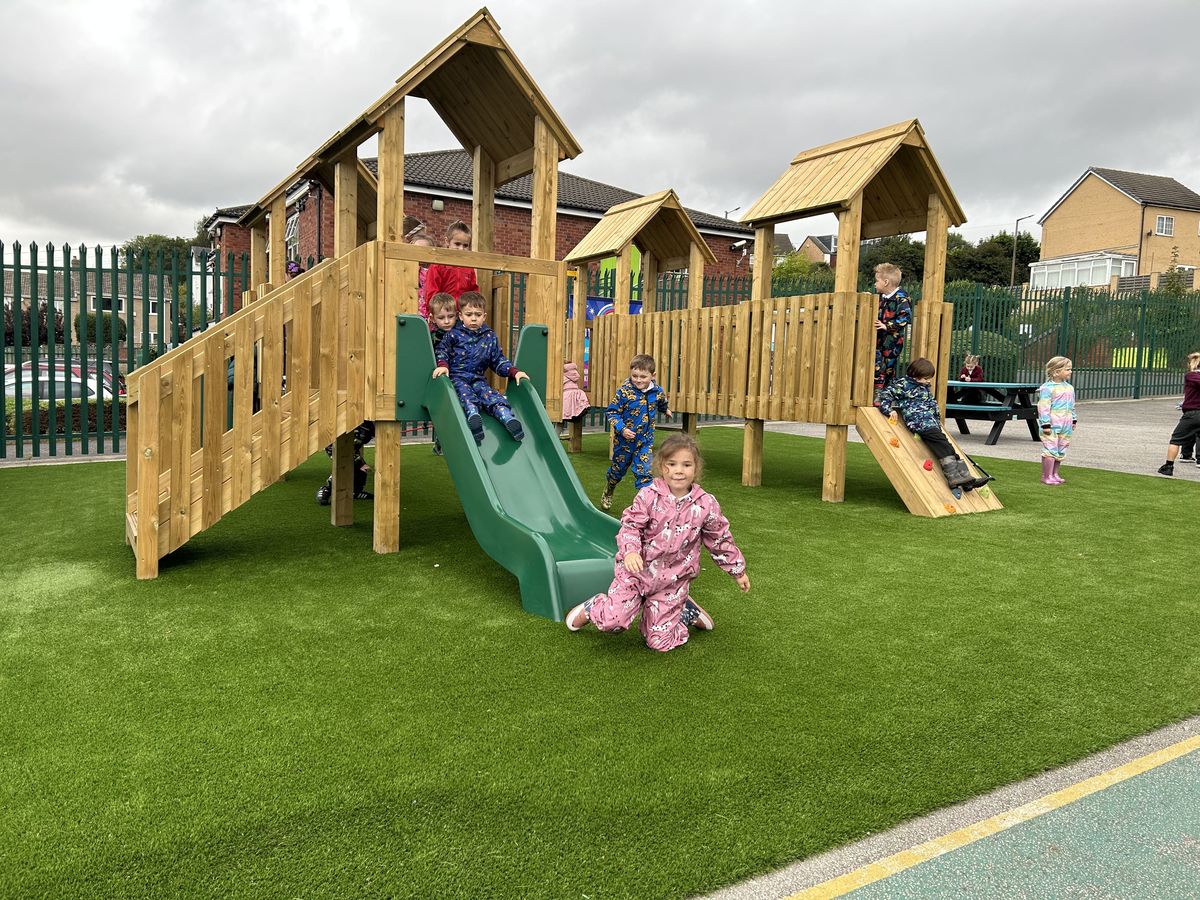
But a beautifully surfaced area with limited play opportunities gives children very little to actually do. The real measure of a good early years outdoor area is what it enables, not how it photographs.
A high-value outdoor space should give children genuine opportunities for:
- Playing and exploring
- Active learning
- Creating and thinking critically
- Imaginative play
- Physical development
- Communication and language
- Problem-solving
- Child-led activities
- Independence and social interaction
These map directly onto the three characteristics of effective learning that underpins the EYFS framework. When you're planning or upgrading an outdoor area, it's worth carrying out a simple audit: for every square metre, ask what learning or play opportunity it creates Surfacing, fencing and furniture all have their place, but they should support play value, not replace it.
Why EYFS Outdoor Areas Matter So Much
Outdoor learning isn't an add-on to early years provision, but it's one of the most powerful contexts for meeting the EYFS statutory framework.
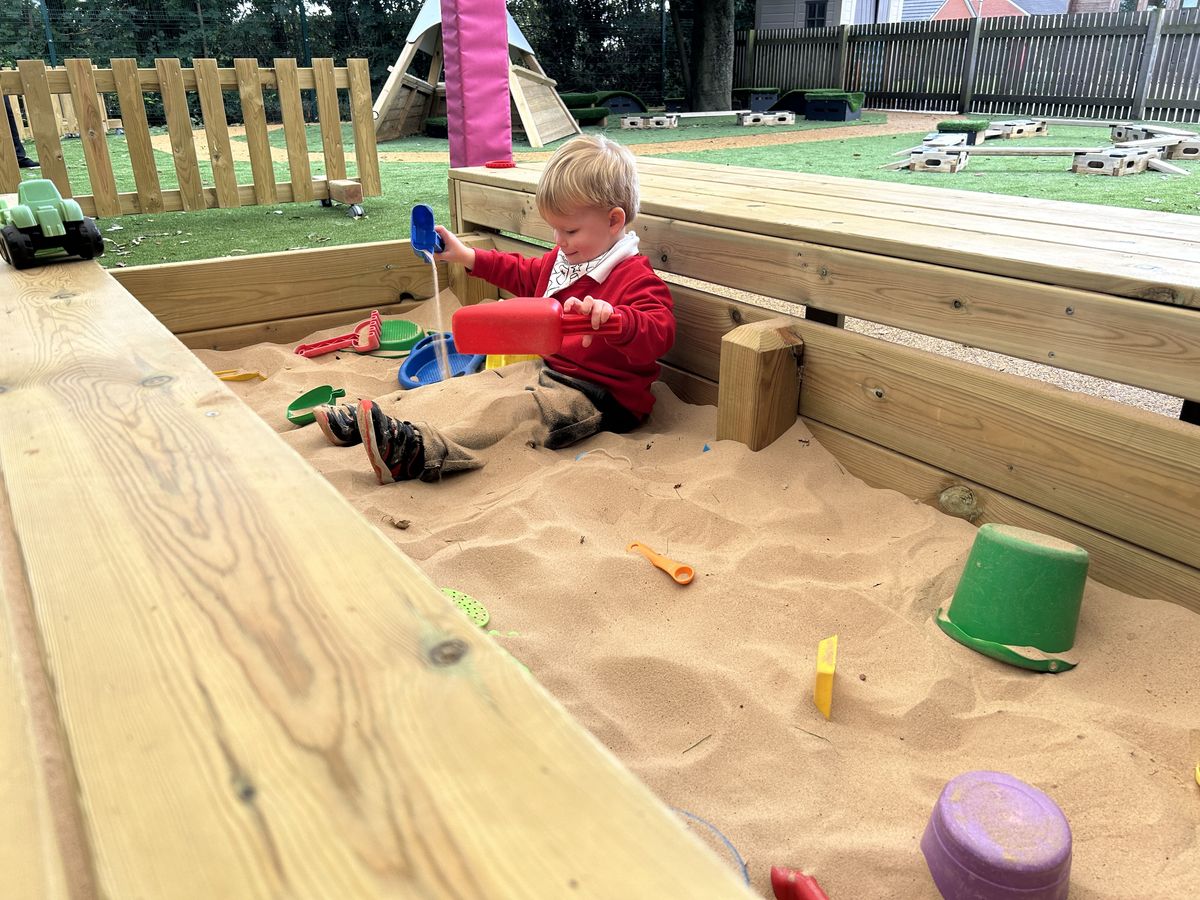
A well-designed outdoor environment can support al seven areas of learning, but its real strength lies in the prime areas:
- Communication and language - role play, storytelling and open-ended resources naturally encourage children to talk, listen and negotiate with their peers.
- Physical development - climbing, balancing, digging and carrying build gross motor skills, fine motor skills, core strength, spatial awareness and hand-eye coordination.
- Personal, social and emotional development - outdoor play supports self-regulation, confidence, wellbeing and social skills, especially when children have space to choose their own activities.
Beyond the prime areas, the right resources can bring literacy (mark making, phonics through outdoor games), mathematics (numbers 0-10 as a marking, comparing sizes, spatial reasoning), understanding the world (exploring the natural environment, forest school-style activities) and expressive arts and design (den-making, imaginative role play, music) to life outdoors too!
Just as importantly, a purposeful outdoor environment supports child-led play. When resources are open-ended and flexible, children direct their own learning rather than relying entirely on adult-led activities. This result is exactly the kind of engagement that produces the richest, most natural evidence for practitioners.
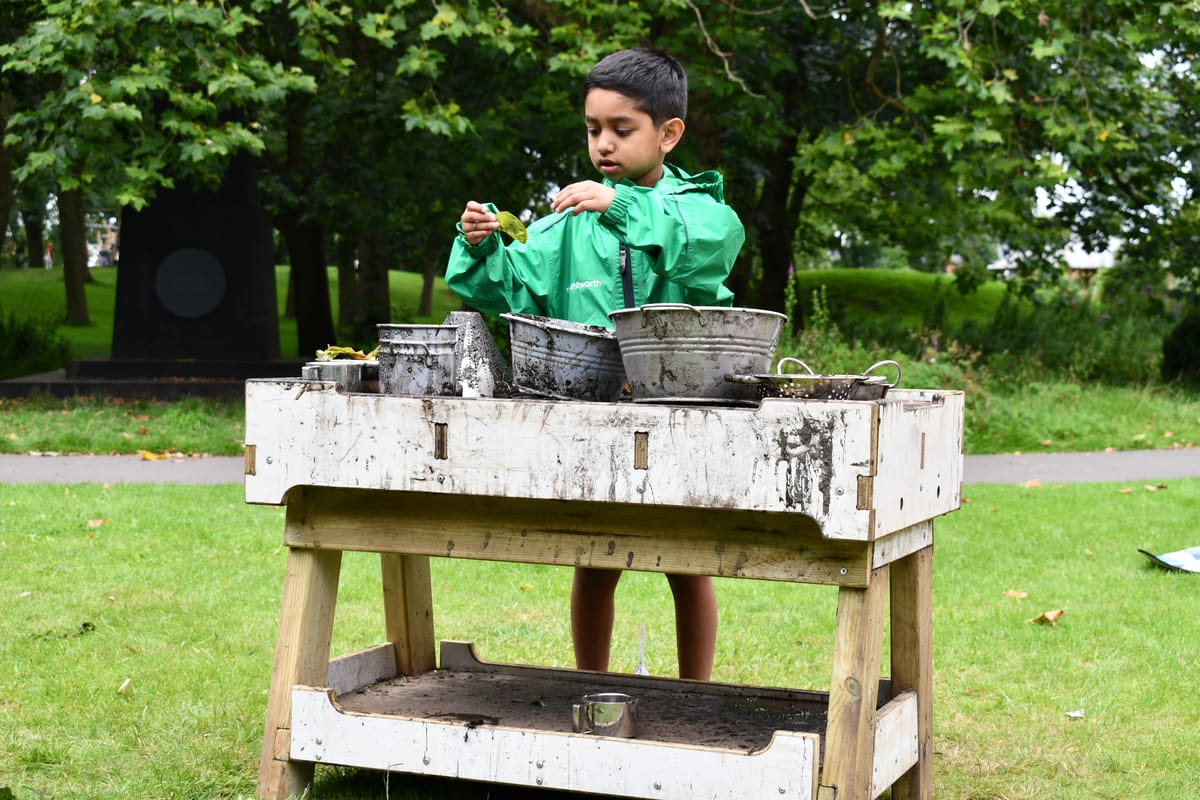
A child building a den, testing how water moves through a dam, or negotiating turns on a trim trail is generating exactly the kind of spontaneous, meaningful moment that's easy to observe, record and collate as evidence (whether that's for your own tracking or to support conversations with Ofsted.)
Traditional Playground Projects
Traditional playground design has a lot going for it! A fully bespoke project, developed with a consultant, allows a school to reflect its site, its ethos and the specific needs of its children in a completely tailored way. For larger transformations (such as new zoning across a whole site, bespoke builds, or integrating surfacing, landscaping and equipment together) this level of customisation is genuinely valuable, and it's the right choice for many schools.
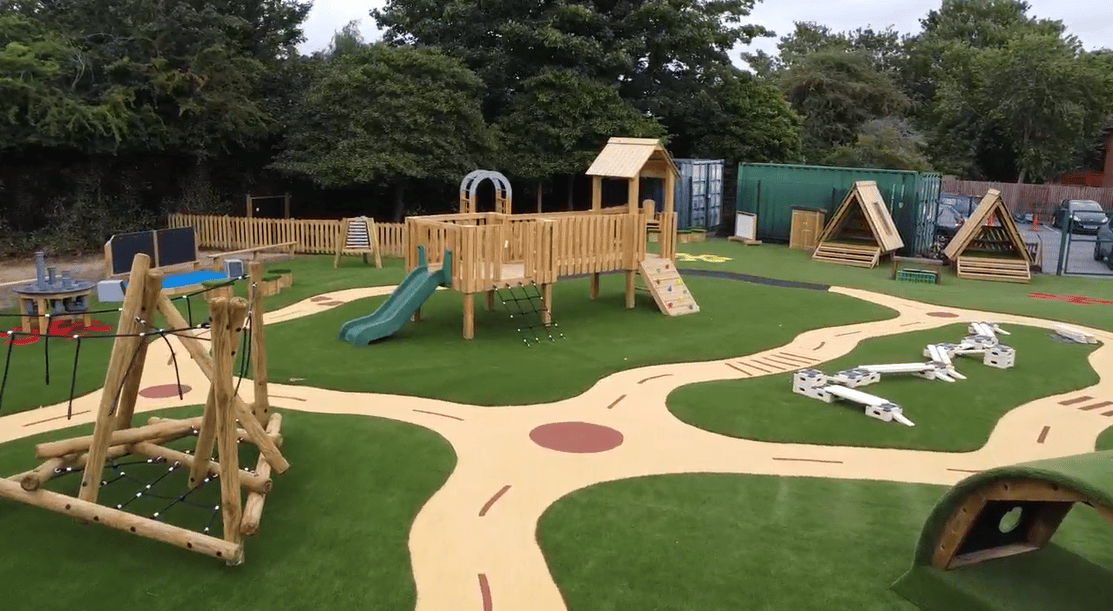
The trade-off is time. A typical traditional project usually involves several stages: an initial consultation and site visit, a design phase, revisions to get the layout right, ordering, manufacturing lead times, and finally installation. With Pentagon Play's own process as an example, a consultant visit can take around 1-2 weeks to arrange, followed by further 1-2 weeks for design work, before equipment is even ordered!
None of this is a criticism of the process, as a thorough design takes time, and that time is often well spent. But it does mean schools need to plan well ahead, and outdoor spaces can be out of action for a while during the build.
Where Play in a Day Offers a Different Path
Play in a Day was developed for schools and settings that want the play value of a considered EYFS outdoor area, without the extended design and installation timeline of a fully bespoke project.
Speed and Reduced Disruption
Rather than weeks of consultation, design revisions and lead times, Play in a Day packages are curated in advanced (with them already being designed to work together and support all seven areas of learning) so there's no design process to wait for.
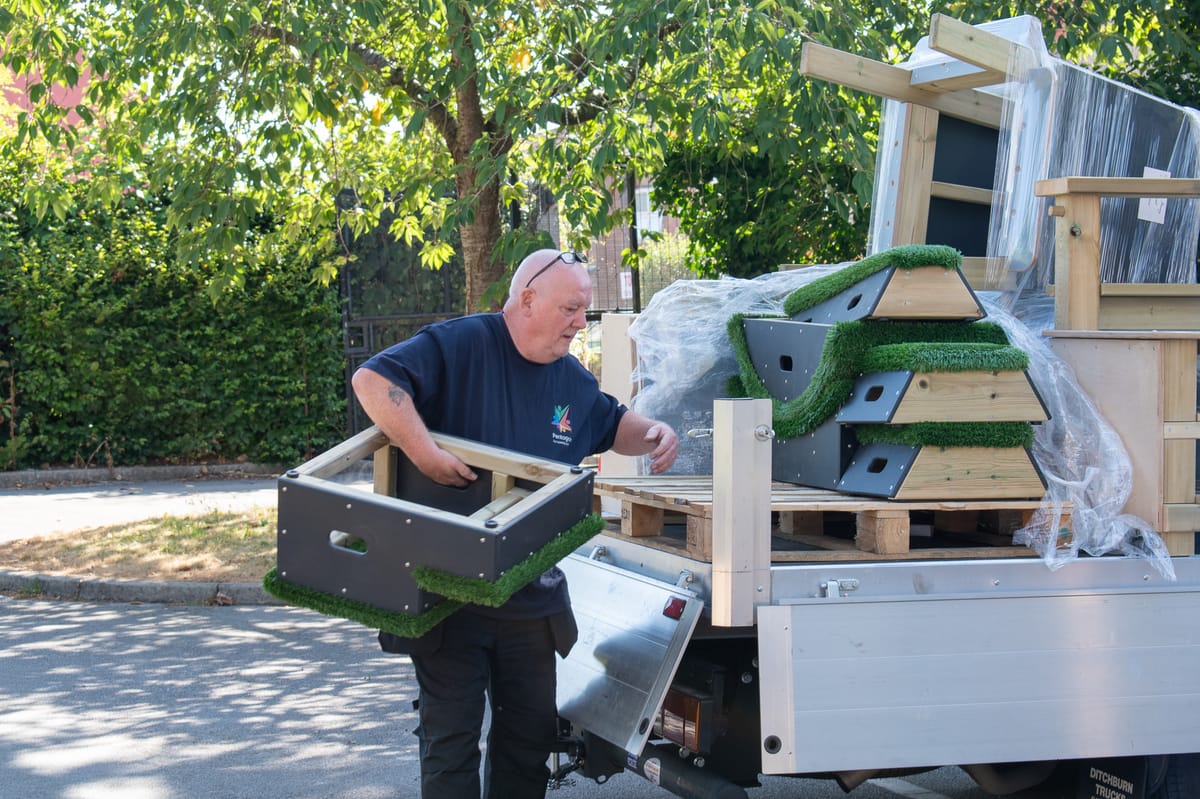
Pentagon Play's team can deliver and have the equipment ready in a single day, meaning children are back outside, playing and learning, far sooner than a traditional build would typically allow.
For an EYFS class or year group, this matters. Every day without an outdoor learning environment is a missed opportunity for the kind of active, physical, sensory play that indoor spaces simply can't replace.
Confidence Without the Guesswork
Because each package has already been though through by people who specialise in early years outdoor provision, schools don't need to become playground design experts overnight! Every item is chosen to work alongside the others, creating a cohesive space rather than a collection of unrelated equipment.
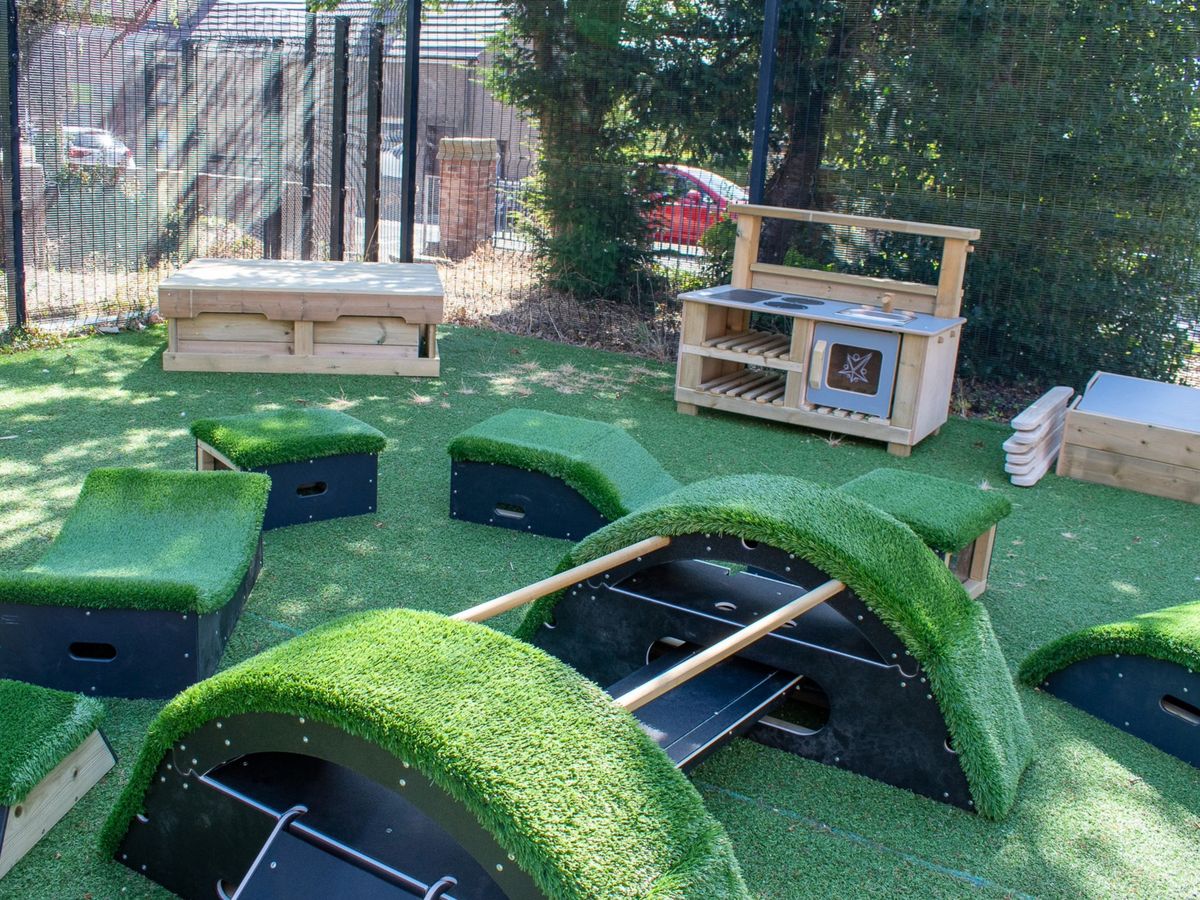
Pentagon Play offers three Play in a Day packages, each suited to a different priority:
- The EYFS Freestanding Package - flexible, movable resources including mud, sand and water play, construction and balance equipment, ideal for settings that want to keep rearranging their space through the year.
- The EYFS Complete Package - a larger, more comprehensive collection for bigger EYFS cohorts, combining physical, sensory, communication and imaginative resources in one outdoor learning environment.
- The Sensory Regulation Package - a smaller, dedicated space focused on self-regulation, calm and sensory exploration, useful alongside a main EYFS area or as part of inclusive, SEN-friendly provision.
Schools that have already invested in these kinds of packages found them a practical way to refresh their outdoor provision quickly! However, just like with any investment, it;s important that you check each package thoroughly first to make sure that the one you choose suits your school's priorities.
"But We Already Have a Sandpit" - Rethinking, Not Replacing
One of the most common hesitations schools raise is that they already own perfectly good equipment (such as a sandpit, a playhouse, a climbing frame etc.) and don't want to see it go to waste. That's a completely understandable concern, and the answer doesn't involve you throwing anything away!
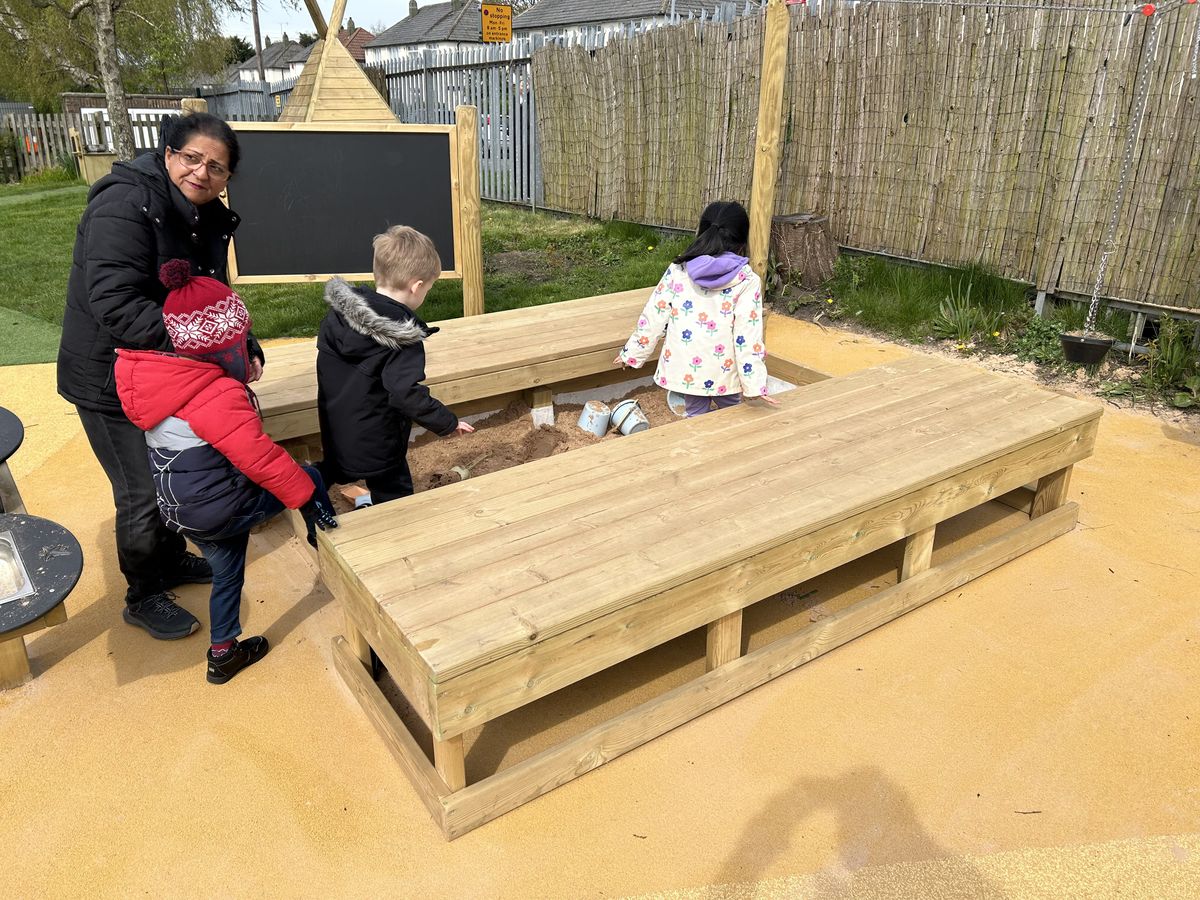
Instead, it's worth thinking about your whole outdoor space, not just the EYFS area in isolation. Existing equipment often still has plenty of life in it, but it just might not belong in the newly designed space anymore. A playhouse that's a little large for 4-year-olds could work brilliantly relocated to a KS1 area. A climbing frame that no longer fits the flow of your EYFS zone might be exactly what's needed for your KS2 playground.
This approach allows you to create a fresh, cohesive EYFS outdoor area with Play in a Day, while still getting full use out of resources you've already paid for (by just moving them to a setting where they'll have the most impact!)
Appearance Matters, But it Isn't Everything
It's important to note that none of this information so far doesn't mean appearance isn't important. A cohesive, purposeful-looking EYFS outdoor area helps children understand and navigate their environment, gives staff a space that's easy to supervise, and creates a strong first impression for parents and visitors!
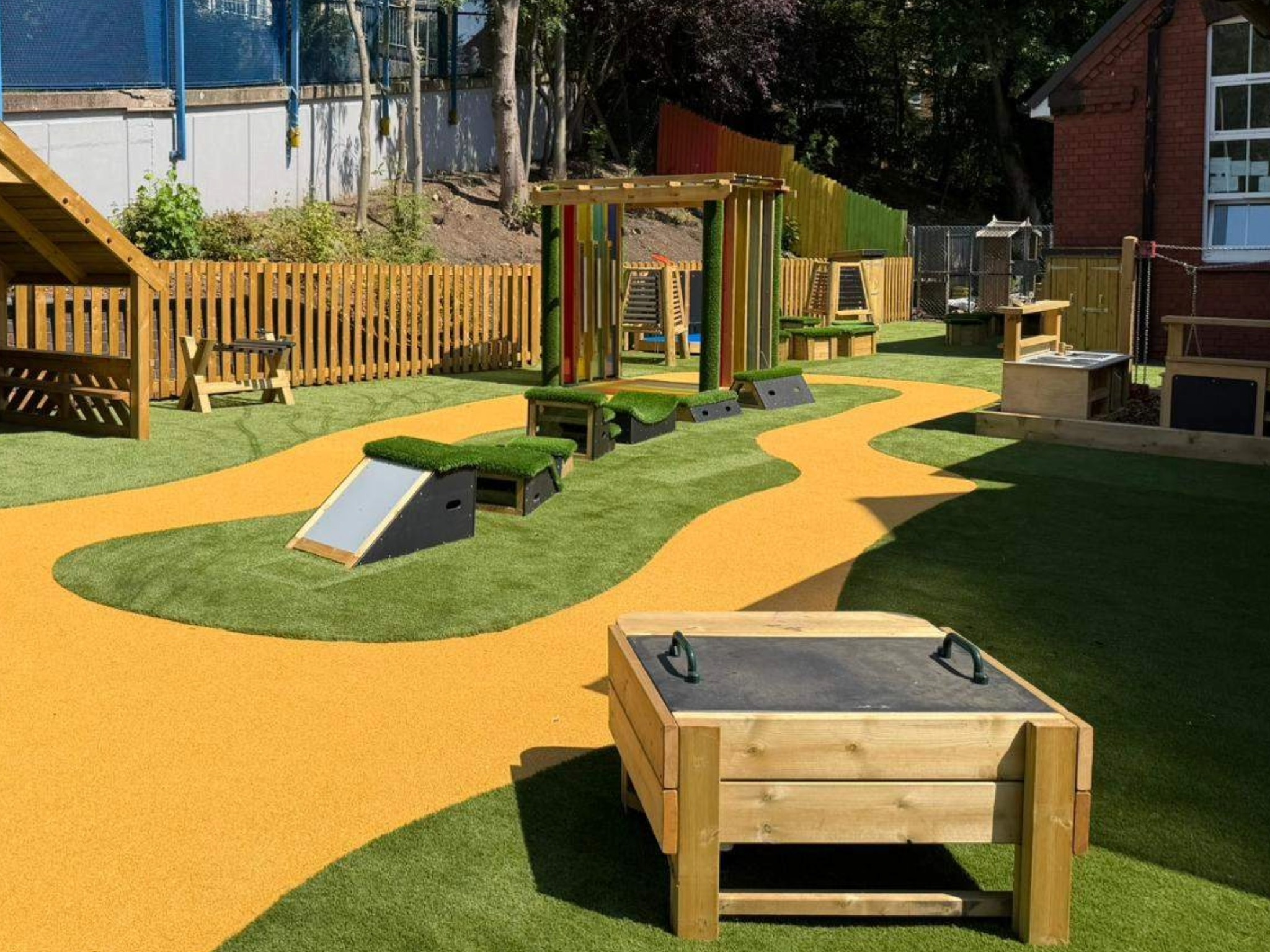
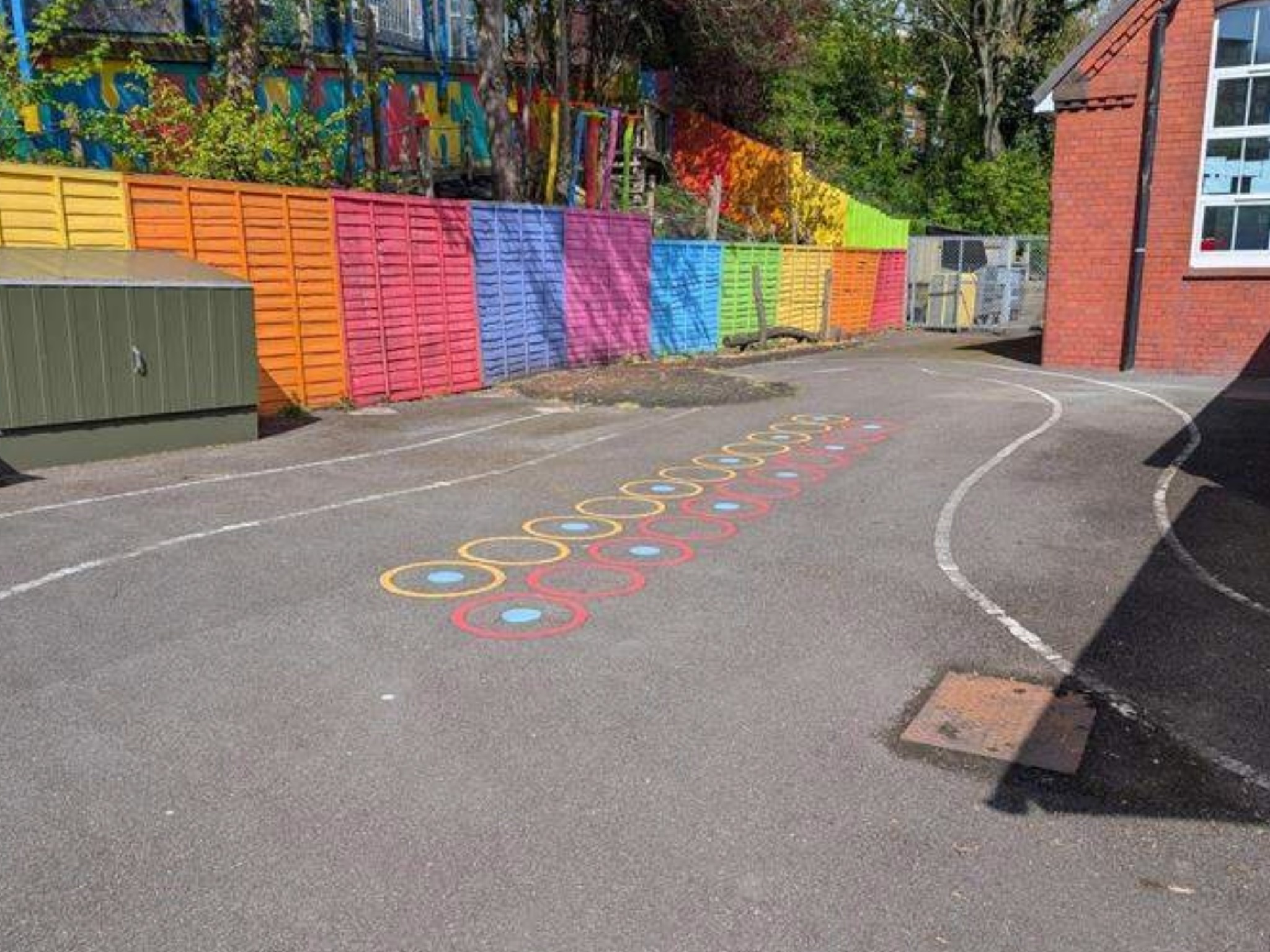
But it's worth being honest about how older equipment sits within a new design. A playground built up gradually over several years, with items added at different times, can end up looking mismatched (even if every individual piece is safe and usable.)
When planning a new EYFS environment, it's worth asking not just "is this equipment still safe and functional?" but "does it still fit this space, this age group, and these learning objectives?" Sometimes the answer is yes. Sometimes it's a sign the item would be more at home elsewhere on site.
Choosing What's Right for Your Setting
Traditional playground projects and Play in a Day packages aren't in competition, but they suit different situations. A full site-wide redevelopment, bespoke landscaping or a completely one-of-a-kind design will usually call for the traditional consultant and design process. A focused, high play-value EYFS outdoor area that needs to be up and running quickly is exactly where Play in a Day was designed to help.
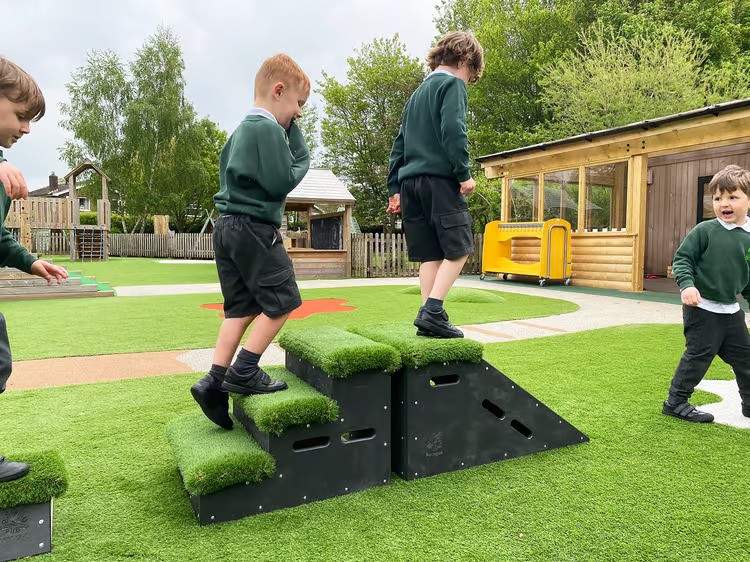
Whichever route your setting takes, the priority stays the same: an outdoor learning environment that gives children real opportunities to play, explore, communicate, problem-solve and grow, all of which are supported by practitioners who can observe that learning happening naturally.
Ready to see what a Play in a Day package could look like in your EYFS outdoor area? Get in touch with Pentagon Play to talk through your options, or browse the full range of Outdoor Learning Bundles to find the right fit for your setting!
FAQs
How long does a typical playground installation take?
It depends on the type of project. A traditional bespoke playground typically involves a consultation, a design phase and order lead times before installation begins. Pentagon Play's Play in a Day packages are pre-designed and can be delivered and installed in a single day, reducing disruption to the school day!
How do I design an EYFS outdoor area?
Start by thinking about play value rather than appearance, like what will children actually be able to do in the space? A good EYFS outdoor area should support all seven areas of learning, with particular attention to the prime areas, self-regulation and opportunities for child-led play.
What makes a good EYFS outdoor environment?
A good EYFS outdoor environment offers a genuine range of play and learning opportunities: physical challenge, sensory exploration, imaginative and role play, communication, and problem-solving, all set up to encourage independent, child-led activity rather than only adult-directed tasks.
Does outdoor play cover all seven areas of learning?
Yes, when the space and resources are thoughtfully chosen. Outdoor environments are particularly strong for supporting the prime areas (communication and language, physical development, and personal, social and emotional development) while also offering natural opportunities for literacy, mathematics, understanding the world and expressive arts and design.
What should we do with our existing playground equipment?
There's usually no need to remove usable equipment! Instead, consider your whole outdoor space across all year groups. Equipment that no longer fits your EYFS area's design or learning objectives can often be relocated to another part of the site, such as KS1 playground, so nothing goes to waste!
How much does EYFS playground equipment cost?
Costs vary depending on scale and specification. Pentagon Play's Play in a Day packages are priced as complete solution, with delivery and installation included, offering a clear cost comparison against sourcing and installing individual items separately.