

.jpg)
How to Create a Wheelchair-Friendly School Playground!

Delivering a wholly inclusive school playground is an essential part of providing a balanced and equitable education.
A school’s outdoor learning environment plays a vital role, for children of all ages and abilities, in supporting not only physical development and social interaction, but also independence, good health and wellbeing, and learning across the curriculum - IF it’s a good one!
School playgrounds MUST be wheelchair-friendly if they’re to ensure that every child, regardless of mobility, has the opportunity to play, learn and thrive alongside their peers.
But what does true accessibility look like in practice? And how can headteachers, teachers and SENDCos move beyond compliance to create spaces that are genuinely inclusive, engaging and fun?
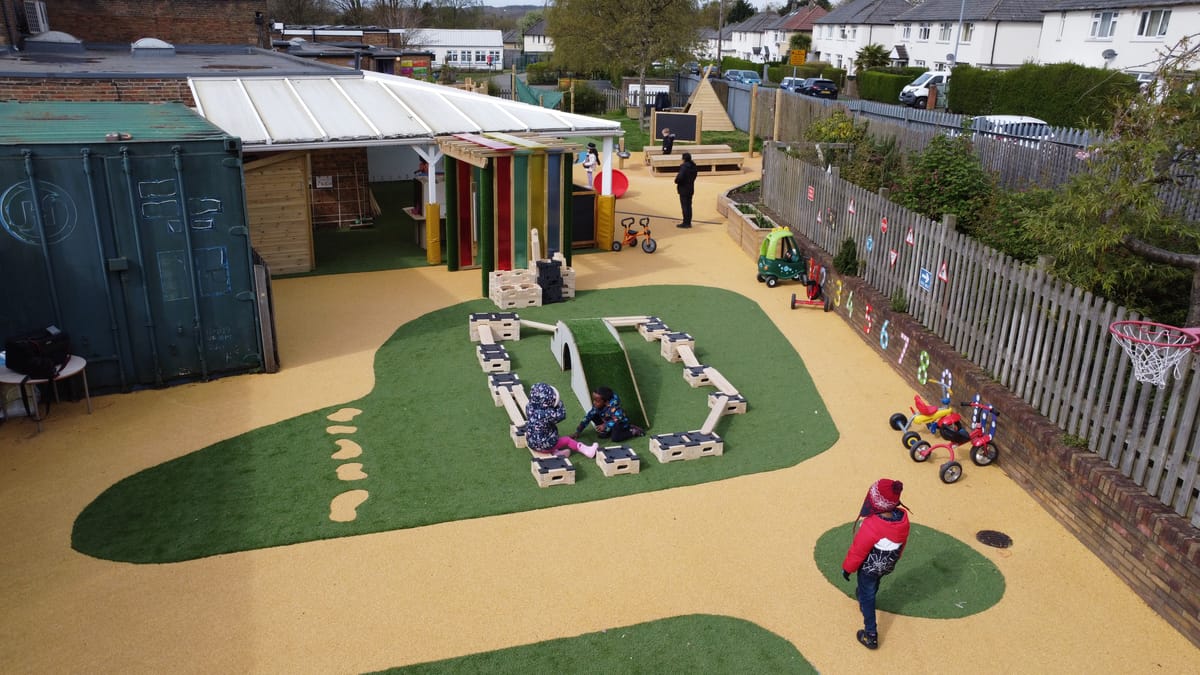
At Pentagon Play, we have the pleasure of working with so many fantastic primary schools across the UK to design and build exciting and engaging accessible playgrounds for their pupils. Here is a little of what we’ve learned about creating the best wheelchair-friendly playgrounds…
Start with Inclusion, Not Adaptation
One of the most important things to begin with is really a mindset shift - to design for inclusion from the outset, rather than retrofitting accessibility into an existing space.
This is because more often than not, when playgrounds are adapted as an afterthought, they can feel separate or limiting. It doesn’t mean to say that adaptations can’t be done well with good care and thoughtful planning, but it’s definitely not a preference.

In contrast, inclusive design from the outset considers the needs of all users at every stage, resulting in a cohesive environment where no child feels singled out.
This also means thinking beyond simply ‘wheelchair access’ and considering the full playground experience. How do children enter their space? How do they move between activities? What kind of variety of play options do they have to choose from? Can they engage independently, or do they rely on adult support?
When inclusion is embedded into the design process, the result is a playground that works well for everyone.
Smooth Surfacing is Key
The foundation of any wheelchair-friendly playground is its surfacing. Uneven, loose, waterlogged or muddy ground can quickly become a barrier, making it difficult or impossible for wheelchair users to navigate the space.
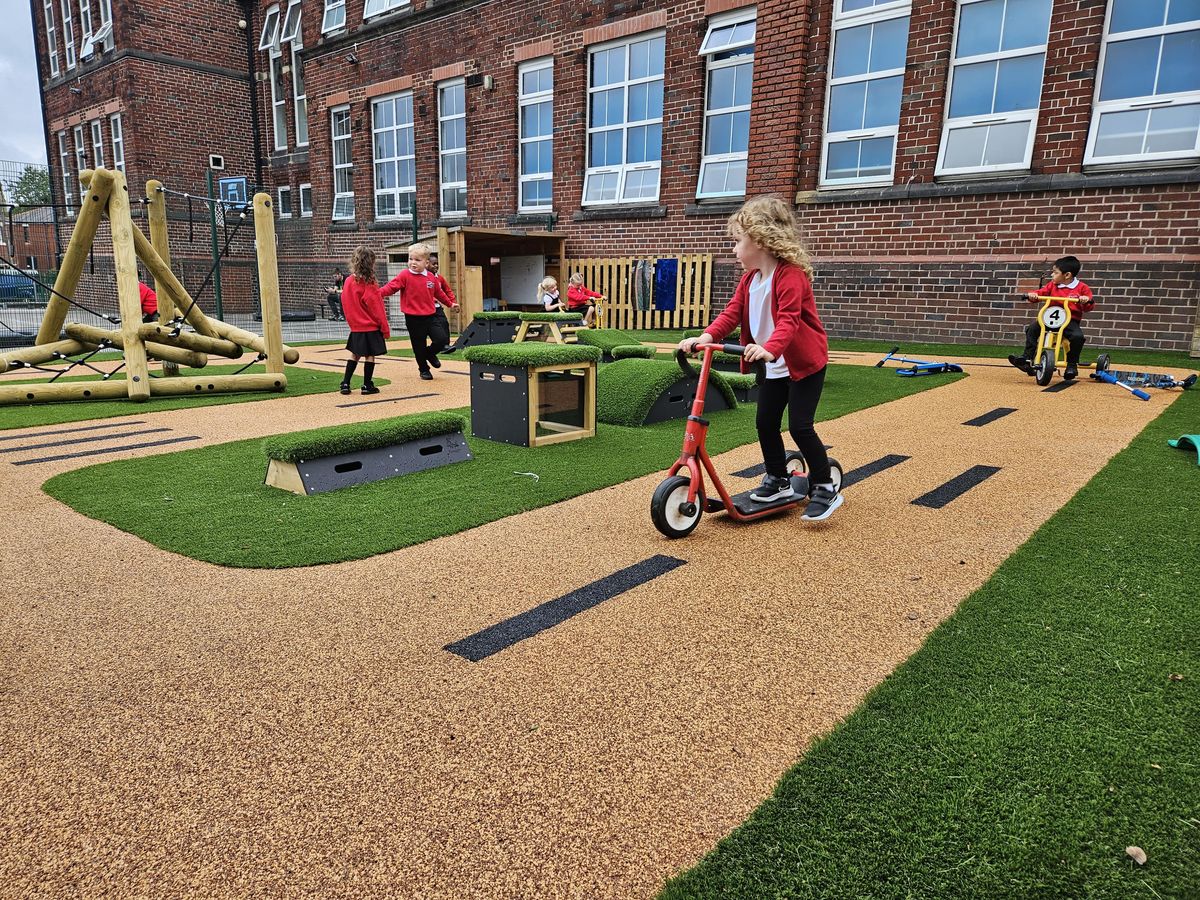
Opt for smooth, durable surfaces such as rubber Wetpour, Playbond or Playturf Artificial Grass. These materials provide a stable base for wheelchairs while also being impact-absorbing, making them safe for running, jumping and all kinds of play that children come up with!
Existing drainage issues in your school’s outdoor space can be resolved during the installation phase - making a huge difference as to how often teachers can get everyone outside by allowing year-round access and unlimited, uninterrupted use of the space.
It’s important to ensure that pathways are wide enough for comfortable movement and also allow for turning circles.
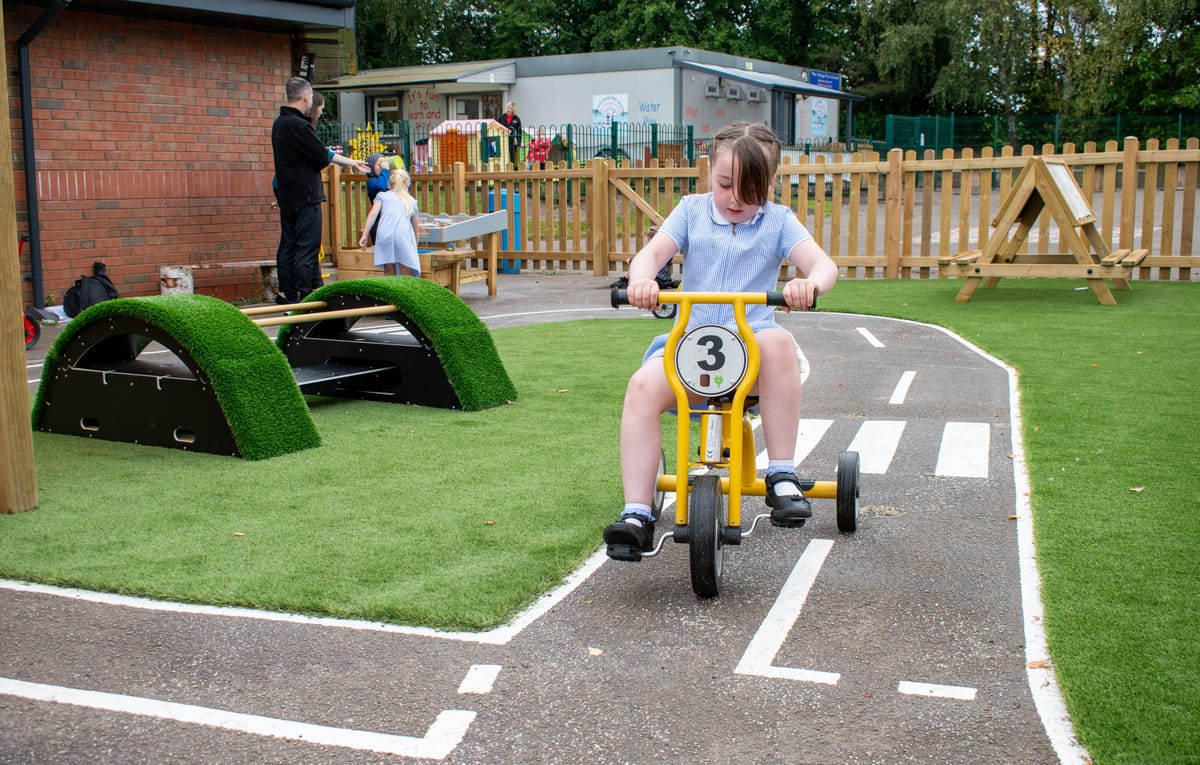
Zoning playgrounds to create different types of activity areas, perhaps a separation between high-energy play spaces, calmer, creative areas and messy play, for example, is a really great tool for inclusive playground design. It’s much safer than having an open, free-for-all space, and it helps children to plan and prepare, and to understand what each space can be used for.
One of the best ways to do this is to use different types of playground surfacing to clearly identify the different zones. However, to do this properly and to ensure accessibility for everyone, transitions between different surfaces must be seamless.
Even small steps or lips can present significant obstacles, so it’s important to achieve a consistent, level finish throughout the playground.
Create Clear, Logical Layouts
A well-planned playground layout makes all the difference to accessibility. Children using wheelchairs should be able to move comfortably and freely from the indoor classroom to the playground, and between different zones within the whole playground, without encountering dead ends or tight spaces.

To achieve this, we have to consider how the playground flows:
- Are key features easily reachable?
- Is there enough space between different play features not just for a wheelchair, but also for children to pass each other comfortably?
- Are there suitable quiet areas where children can take a break if needed?
- Is the layout of zones logical (for example sequencing calmer activities closer to the playground entrance and gradually more high-energy activities further away for safety)?
Visual clarity is important. Clearly defined zones and pathways help all children understand how to use the space, reducing confusion and encouraging independent exploration.
Incorporate Amazing Play Equipment - and Space to Relax!
This is the fun bit! Wheelchair-friendly playgrounds go way beyond ramps and access points. Not every single piece of playground equipment can be completely wheelchair-friendly - but there needs to be a balance so that all children using the space can be challenged in different ways.
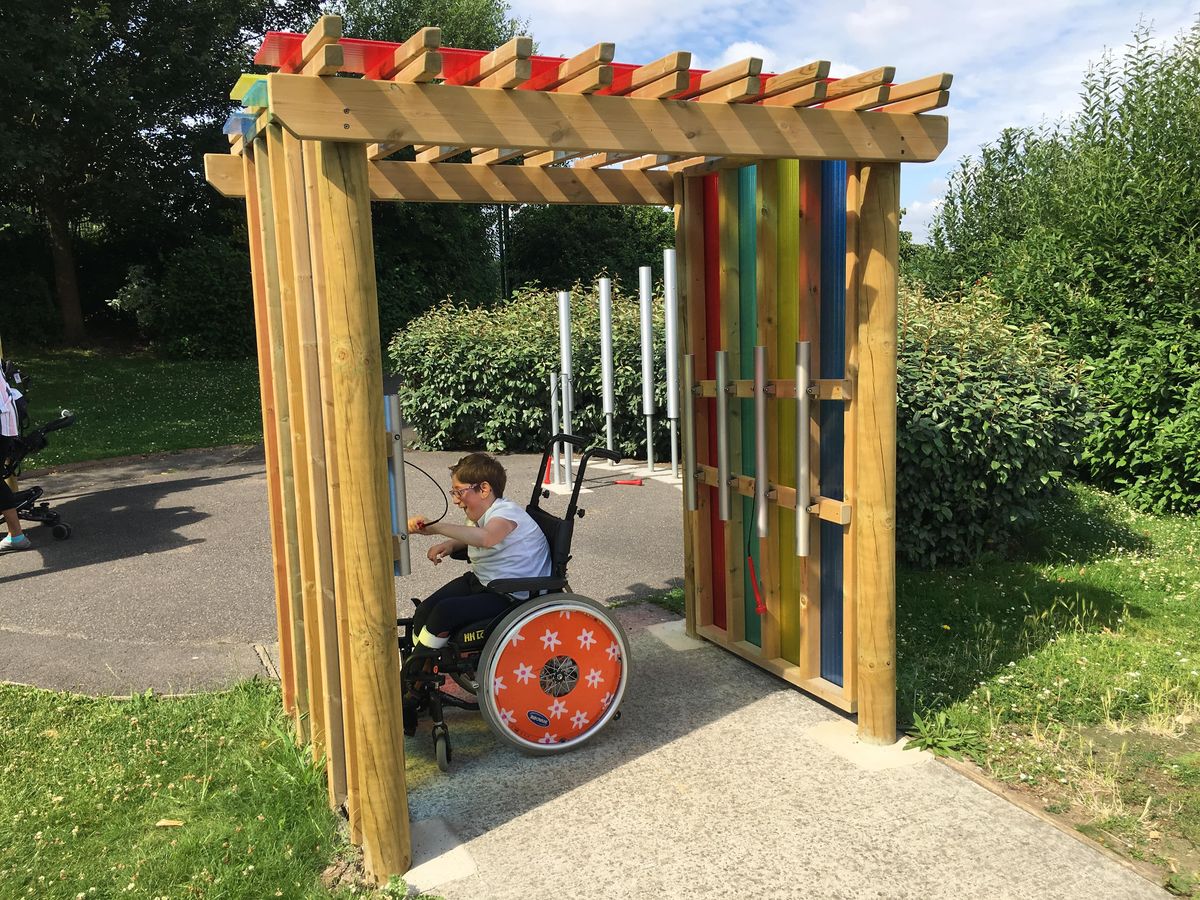
The key message here is to make sure that your playground boasts a good variety of different play options that means there’s something for everyone to enjoy, and that children of all abilities can play together. Because that’s the most important part!
Children want to play together, not separately. Spaces that encourage collaboration - perhaps group games, shared sensory experiences or open-ended play features that invite creativity - help to break down barriers and foster friendships.
Look for features that can be accessed at ground level or via gentle ramps. Interactive sensory play panels with tactile features and outdoor musical instruments are excellent additions, as they provide meaningful play opportunities without requiring climbing or height.
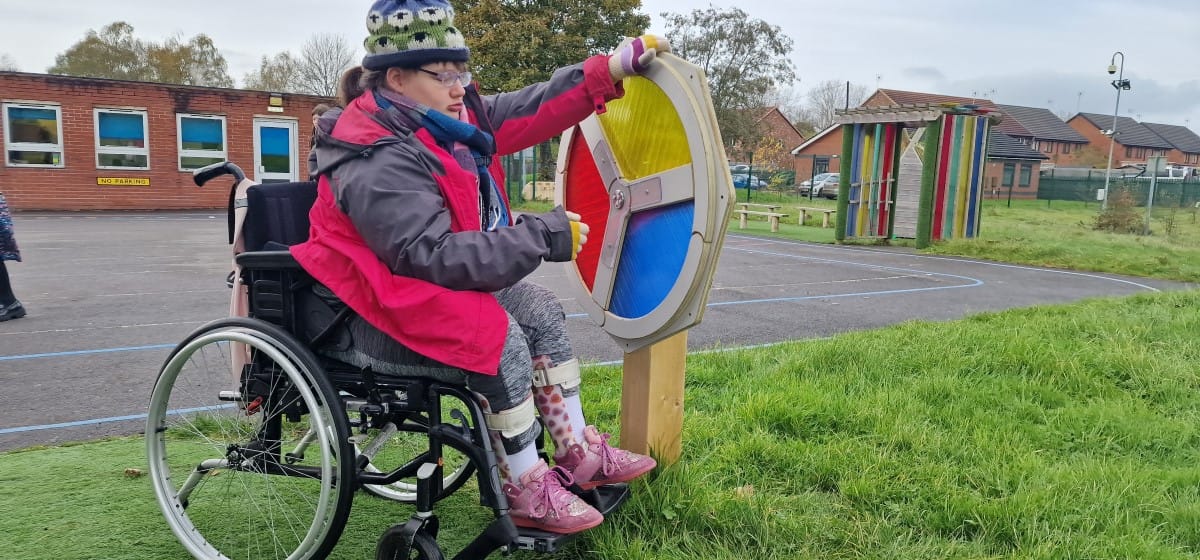
Raised planters and bug hotels can be installed at different heights so they’re easy for children in wheelchairs to enjoy gardening activities alongside.
Where elevated play is included, ensure there are accessible routes to reach it. Wide ramps with appropriate gradients and handrails allow wheelchair users to experience multi-level structures alongside their peers.
Always consider equipment that supports shared play. Roundabouts with flush entry points, for example, allow wheelchair users to join in the fun without transferring.
A good wheelchair swing can be operated by wheelchair users themselves, or by friends - while group seating areas and outdoor storytelling zones that are well placed to accommodate wheelchairs encourage amazing social interaction.
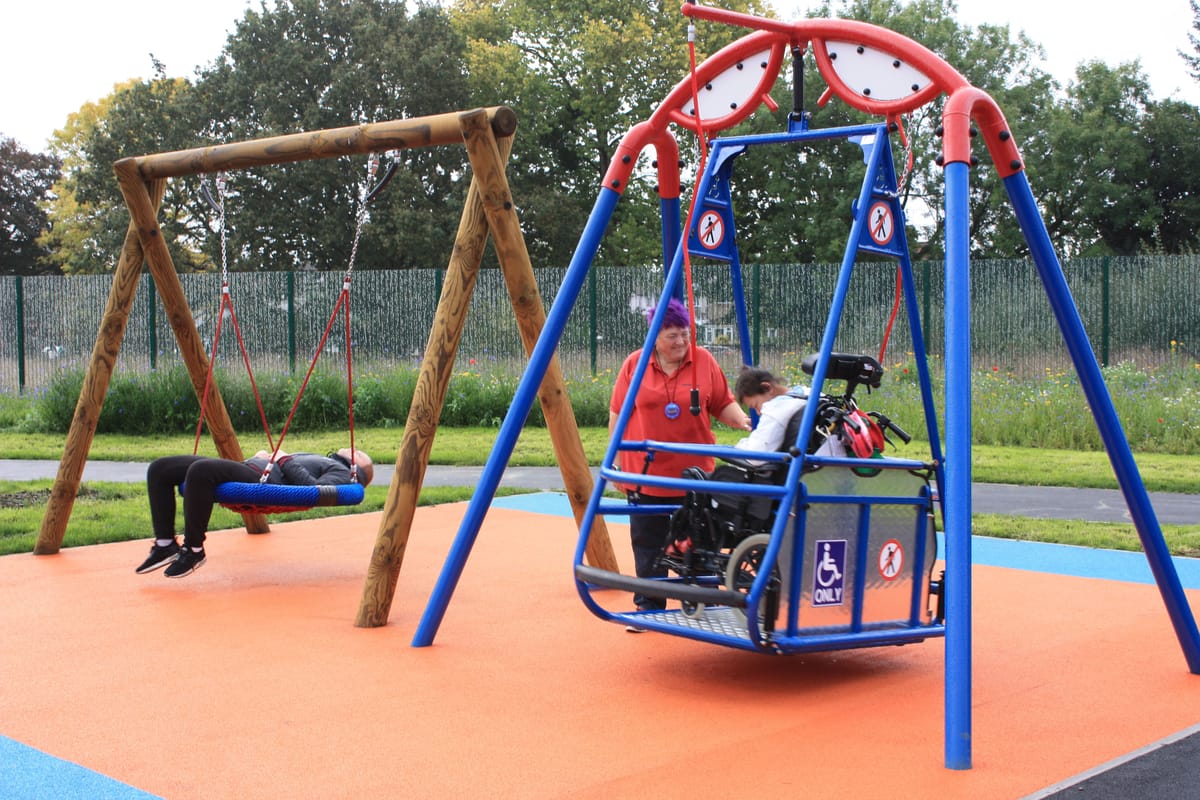
On that note - good seating areas are an absolute essential for inclusivity, full stop! Providing a mix of accessible benches, picnic tables and informal gathering spots gives children places to rest, chat and socialise. Ensure these areas are easy to reach and positioned within the heart of the playground, rather than just on the sidelines.
Don’t Forget Shade and Shelter
Comfort is an often-overlooked aspect of accessibility. Children who use wheelchairs may spend longer periods in one space, making them more susceptible to changing weather conditions.
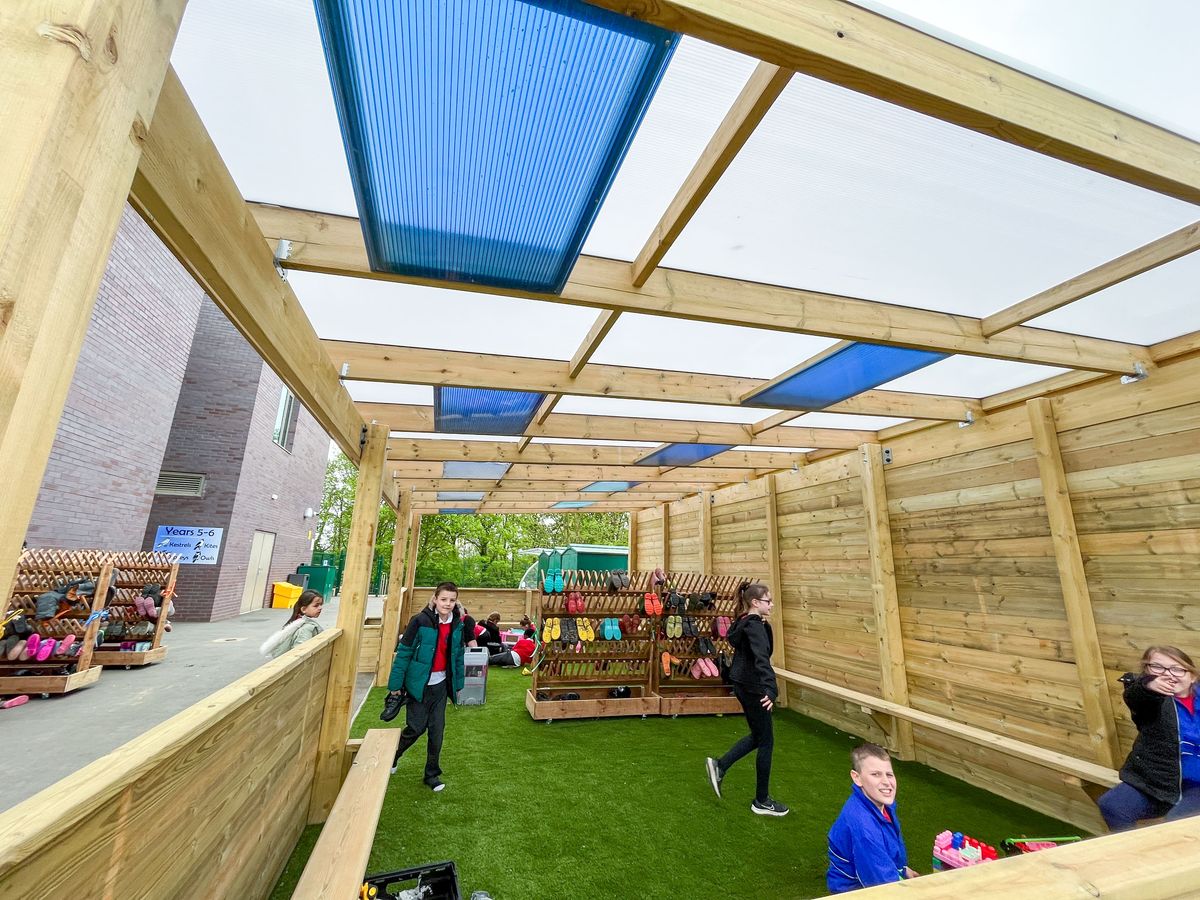
Create shade and shelter with canopies and outdoor shelters to ensure that all children can enjoy being outside in all weathers. Outdoor classrooms provide fantastic (and extremely practical!) opportunities for outdoor play and outdoor learning in all schools.
Provide Opportunities for Independence
Developing and enjoying independence is a key goal for all children. A well-designed playground should empower them to make choices, explore freely and engage in play without constant adult assistance, wherever possible.
Simple design decisions can make a big difference. Clear sightlines allow children to see where they’re going and what’s available. Intuitive layouts reduce the need for instructions.
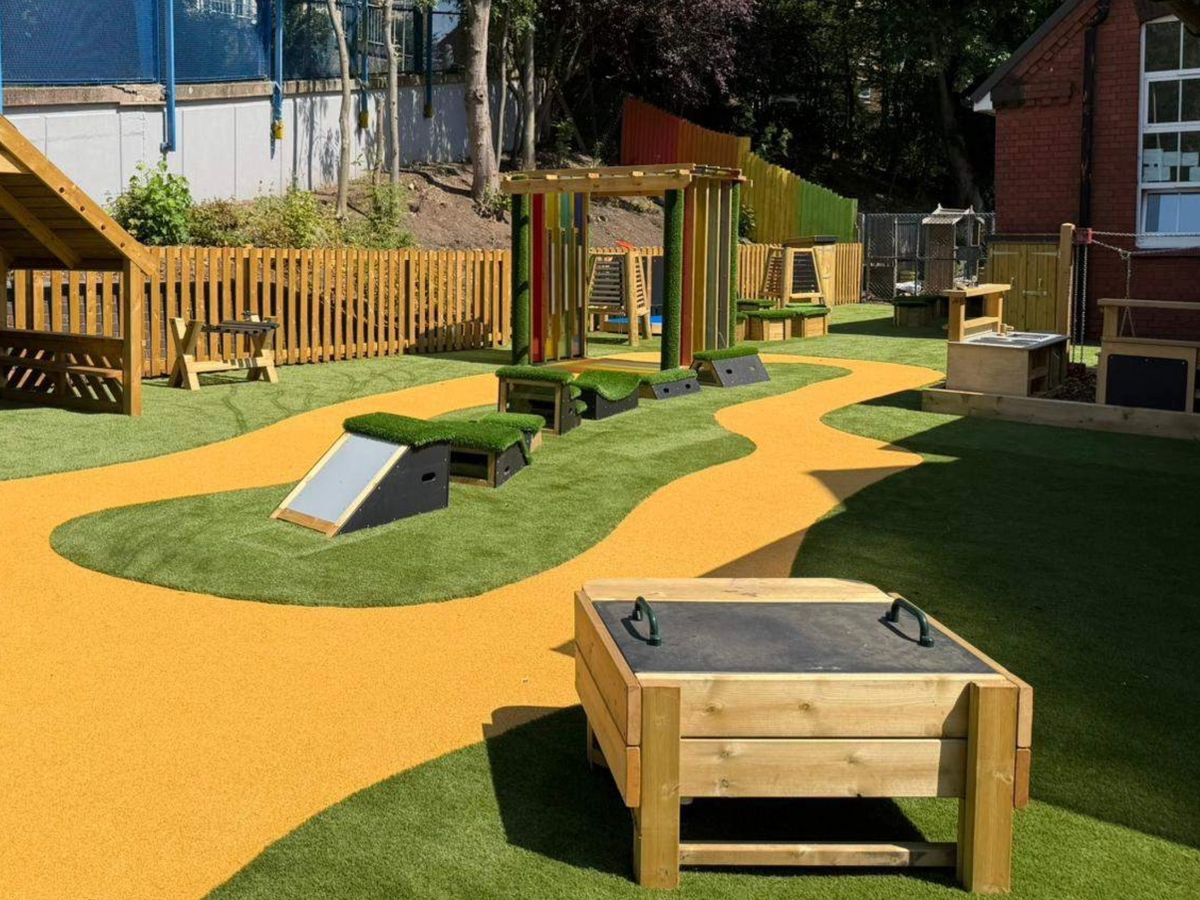
Equipment that is easy to use independently builds confidence and encourages repeat play. Visual and tactile cues can support navigation. These elements help to create a space that is inclusive in every sense.
Engaging the School Community
The most successful playground projects are those that involve the people who will use them. We often find that where schools engage pupils, staff and families in the design process, they get the most valuable insights to ensure that the final space meets real needs - and the children often have the most creative ideas!
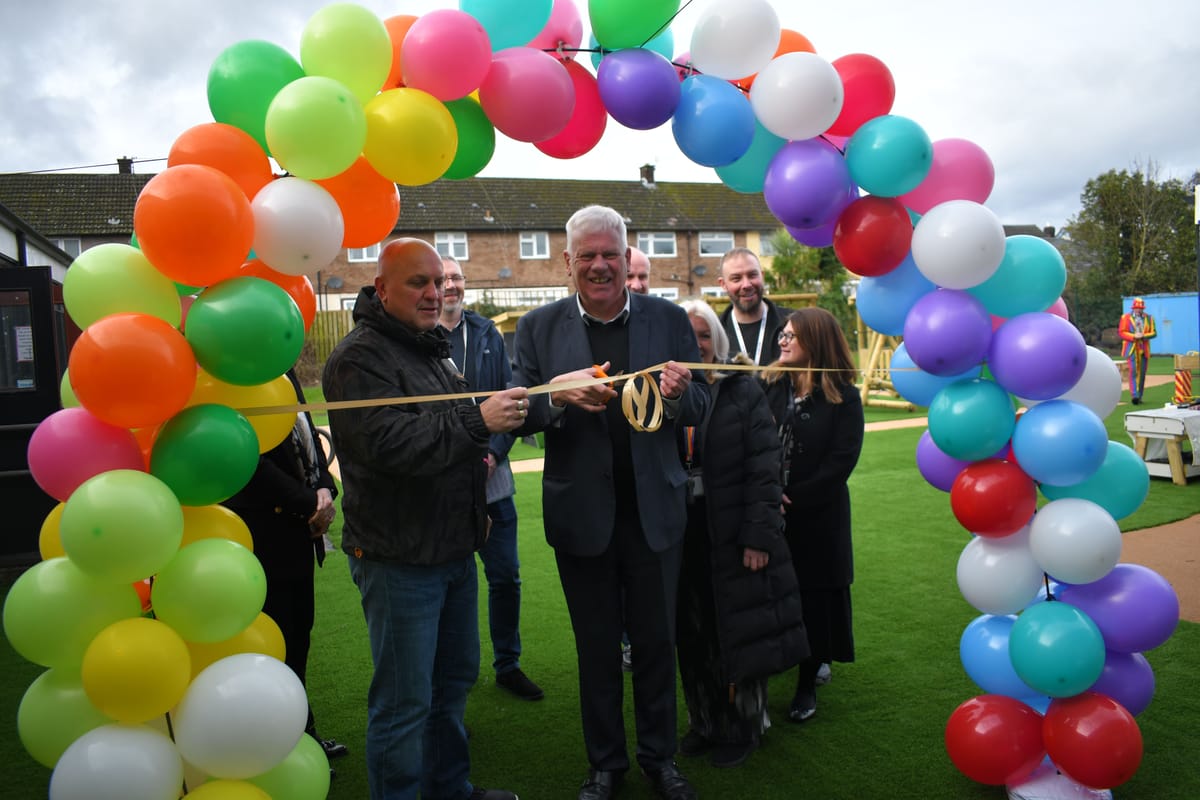
For SENDCos in particular, this is an opportunity to advocate for pupils and highlight specific requirements. Gathering feedback from children who use wheelchairs can reveal challenges that might otherwise be unintentionally overlooked.
This level of consultation builds a sense of ownership and excitement, and when children feel that their voices have been heard, they are more likely to embrace and enjoy the space.
Moving Beyond Compliance
While accessibility standards and guidelines provide a useful framework, truly inclusive playgrounds go beyond compliance. They create environments where every child feels valued, included, interested, engaged, inspired, and able to participate in comfort - as it should be!

For headteachers, investing in an inclusive playground is an investment in your school’s ethos. It demonstrates a commitment to equality, supports pupil wellbeing and enhances their overall learning experience. For teachers and SENDCos, it provides a powerful tool for supporting development, encouraging interaction and promoting independence.
Ready to make your school playground fully accessible? We’re here to help, and we offer all schools a free consultation service - simply Contact Us here and we will be in touch to book you in.