

How Outdoor Spaces Help Anxious Pupils Reconnect With School

For a child experiencing school anxiety, arriving at the school gates can feel overwhelming.
The noise of the playground, uncertainty about the day ahead and pressure to enter a busy classroom may all increase their distress. Some children become tearful or physically unwell, while others freeze, withdraw or struggle to leave home at all.
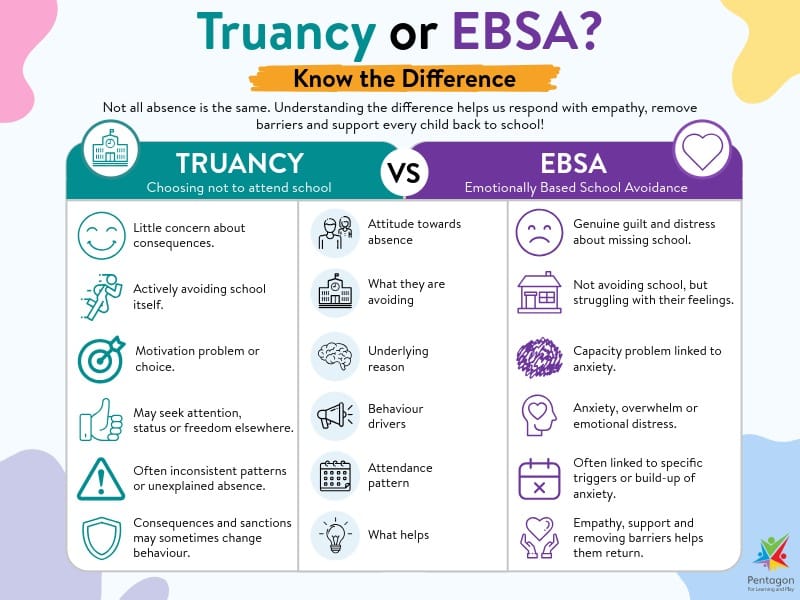
When anxiety reaches the point where a young person feels unable to attend, it is sometimes described as “school refusal”. Many families prefer the term emotionally based school avoidance, or EBSA, because it recognises that the absence is not necessarily a deliberate choice.
Improving the playground will not resolve every underlying cause of EBSA. Children may need pastoral support, reasonable adjustments or help from health and SEND professionals. Nevertheless, a carefully designed outdoor environment can remove some barriers, create opportunities for positive engagement and give pupils somewhere to regulate before entering the classroom.
Why the Outdoor Environment Matters
Children can experience school anxiety for many reasons, including bullying, academic pressure, sensory overload, friendship difficulties and unmet special educational needs.
For some pupils, the physical environment adds to that strain. A crowded corridor, noisy classroom or unpredictable playground can quickly become overwhelming.
Outdoor spaces can provide more room to move, greater choice and less social intensity. Government research has also linked outdoor learning with improved engagement and wellbeing. In one Natural England project, 92% of participating teachers said children were more engaged when learning outdoors, while 90% of pupils reported feeling happier and healthier. (Natural England)
The aim is not to move every lesson outside. It is to use the school grounds as another supportive environment—one that can help children experience safety, achievement and belonging.
1. Create a Calmer Arrival Point
The transition from home to school is often one of the hardest moments for an anxious child.
Instead of expecting every pupil to enter through a crowded playground or busy reception area, schools could offer a quieter arrival route. A sheltered outdoor space with seating, familiar activities and a trusted adult can give children time to settle before joining the main school environment.
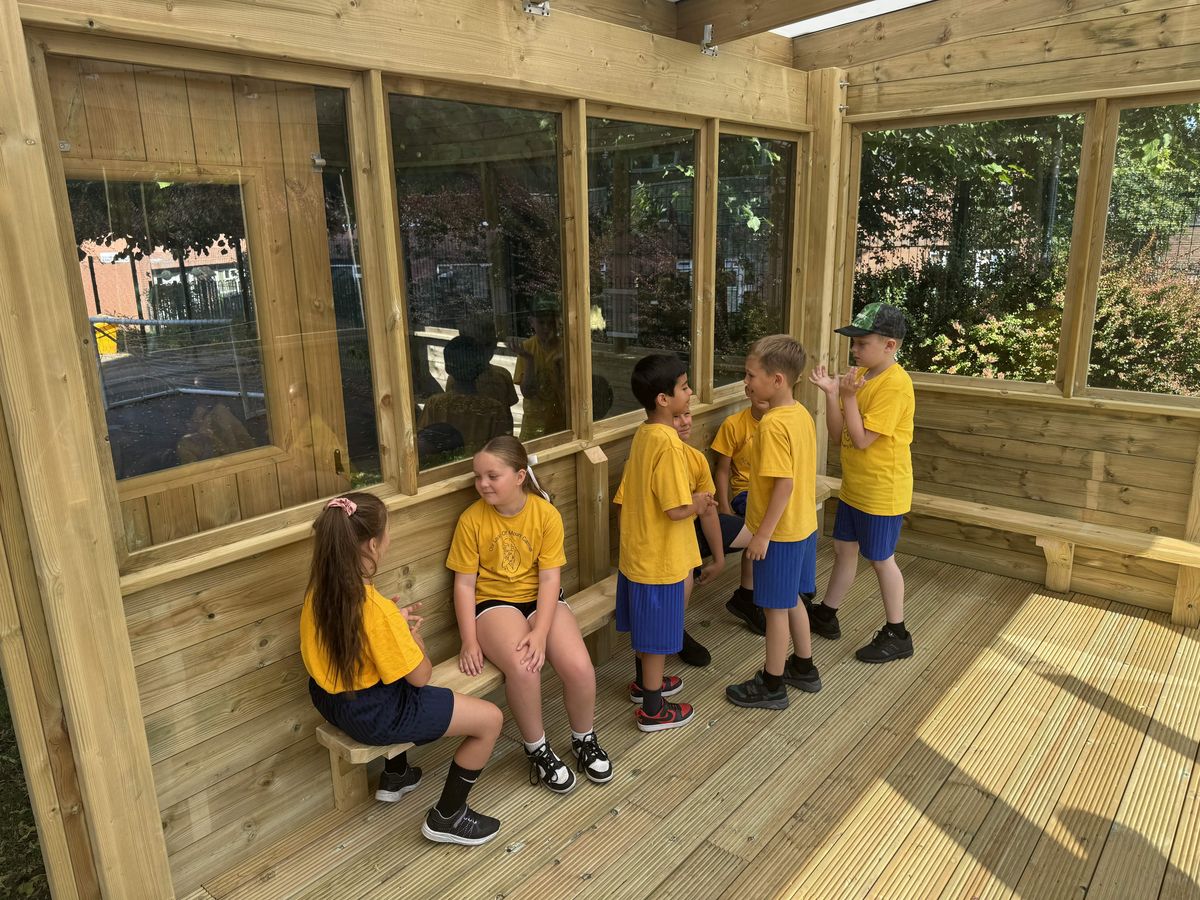
This should not feel like a waiting area for pupils who have done something wrong. It needs to be welcoming, purposeful and clearly included within the school’s support plan.
Some children may benefit from arriving a few minutes earlier, completing a familiar outdoor task or meeting a staff member at the same place each morning.
Predictability can make the transition feel much more manageable.
2. Include a Genuinely Quiet Space
A quiet space should offer more than a bench positioned at the edge of a noisy playground.
Consider the levels of sound, movement and visual stimulation around it. Planting, fencing, canopies or sensory panels can help create separation without completely isolating the child.
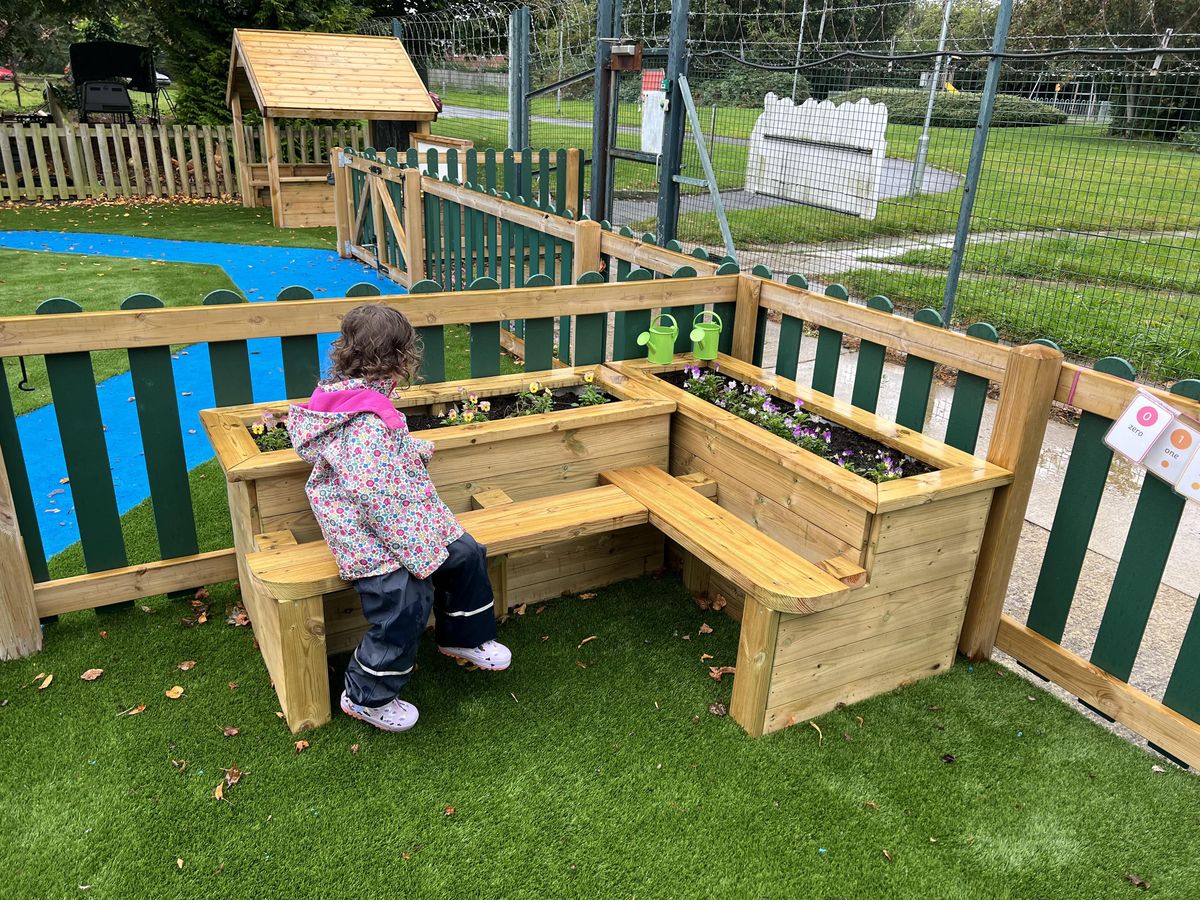
Pupils might use this area to read, draw, talk to an adult or simply regulate for a few minutes.
It is important that children can access the space without attracting unwanted attention. If using it feels like a public announcement that they are struggling, many pupils will avoid it.
Schools should also agree how the space will be supervised and how children can signal that they need it.
3. Make the Playground More Predictable
Unstructured time can be particularly difficult for pupils who struggle with social communication, anxiety or sensory processing.
A large open playground may appear full of possibilities to an adult, but to a child it can feel chaotic. Clear zones can make the environment easier to understand.
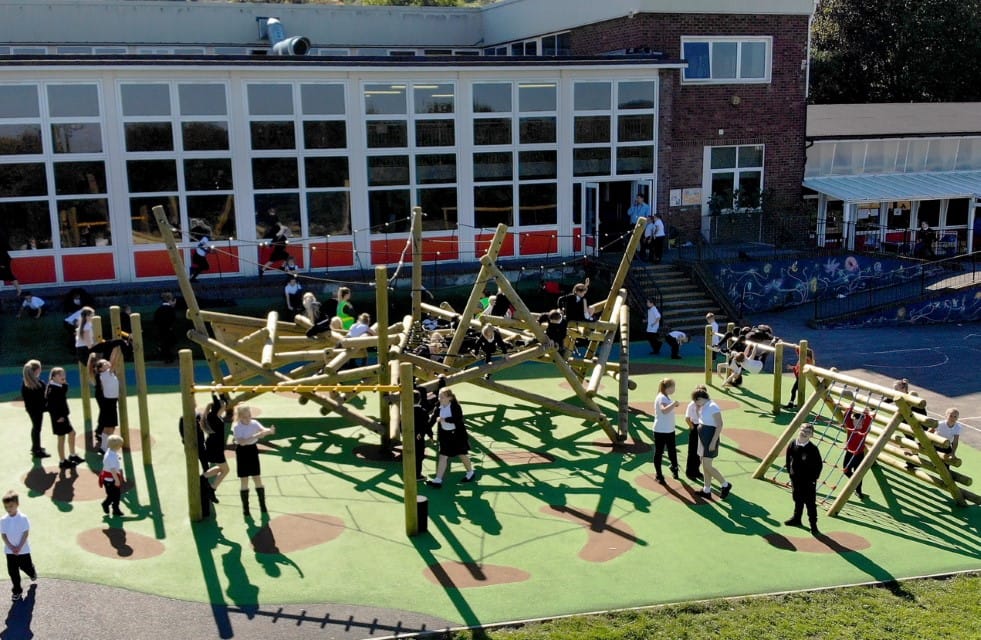
A school might provide separate areas for:
- Active physical play
- Imaginative and role play
- Small-group games
- Outdoor reading
- Sensory activities
- Gardening and nature
- Quiet conversation
- Time alone
Visual signs or coloured surfacing can help children understand what happens in each space. Staff can also introduce the zones during lessons, rather than expecting pupils to navigate them independently for the first time at break.
Predictability does not remove choice. It makes the available choices easier to process.
4. Provide Opportunities for Purposeful Movement
Anxiety is not experienced only through thoughts. It can appear physically as restlessness, nausea, headaches, shaking or an intense need to escape.
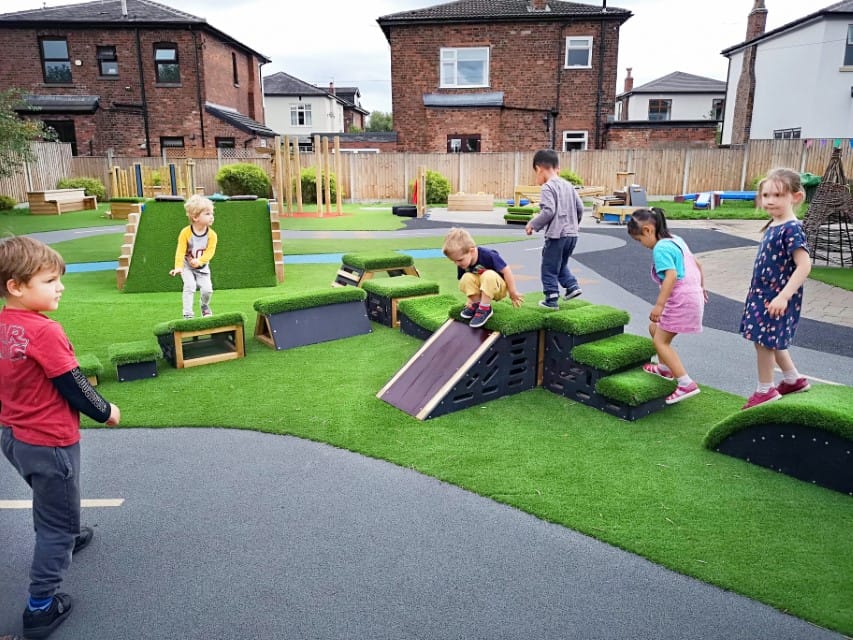
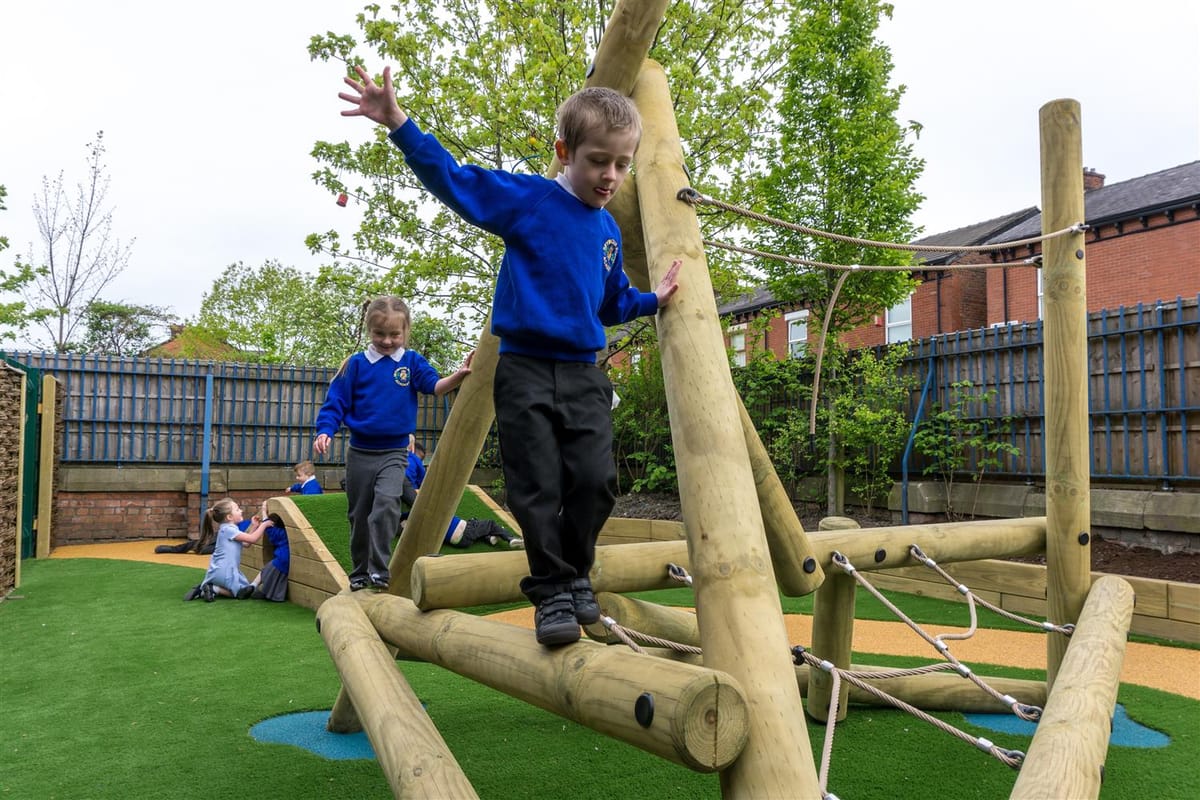
Movement can help some children regulate before attempting a task that feels difficult. Climbing, balancing, pushing, pulling and following a simple trail all provide physical and sensory feedback.
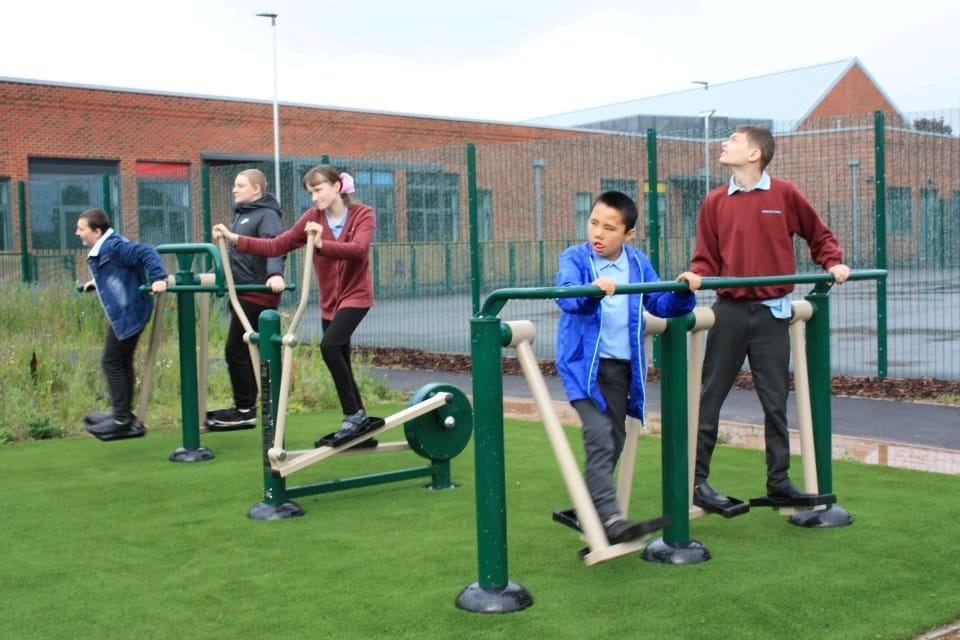
Outdoor equipment can therefore support more than PE and breaktime. A short, planned movement session may help a pupil settle before a lesson, following a difficult transition or after a period of sensory overload.
Schools should work with the child and relevant professionals to decide which activities are appropriate. The aim is not to make exercise a condition of receiving support, but to offer movement as one useful option.
5. Take Small-group Learning Outdoors
A pupil who cannot manage a busy classroom may still be able to participate in a smaller outdoor session.
Storytelling areas, sheltered classrooms and activity tables can support curriculum-based learning without reproducing the sensory and social demands of the main classroom.
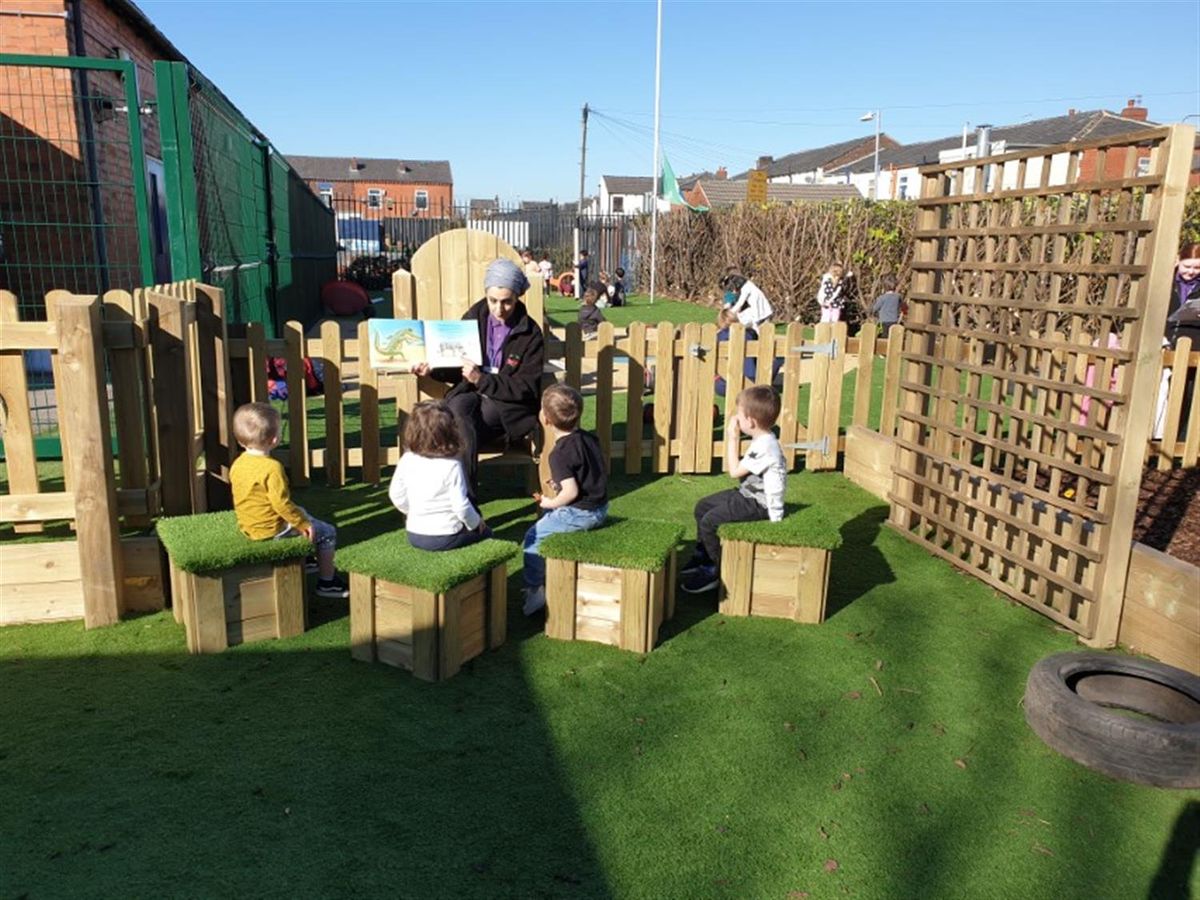
Schools could begin with an activity linked to the child’s interests. Gardening might introduce science and measurement; den-building can involve design, teamwork and problem-solving; a nature survey can support observation, writing and data collection.
These sessions should remain meaningful rather than becoming somewhere to send pupils when classroom learning becomes inconvenient. Clear objectives and skilled adult support are still important.
Outdoor learning works best when it is treated as a valuable part of education, not a lesser alternative.
6. Build Confidence Through Manageable Success
Children experiencing anxiety may feel that school has become a continuous record of things they cannot do.
Outdoor activities can create different opportunities to succeed. A pupil might care for a plant, complete a balance trail, help organise equipment or contribute an idea to a group project.
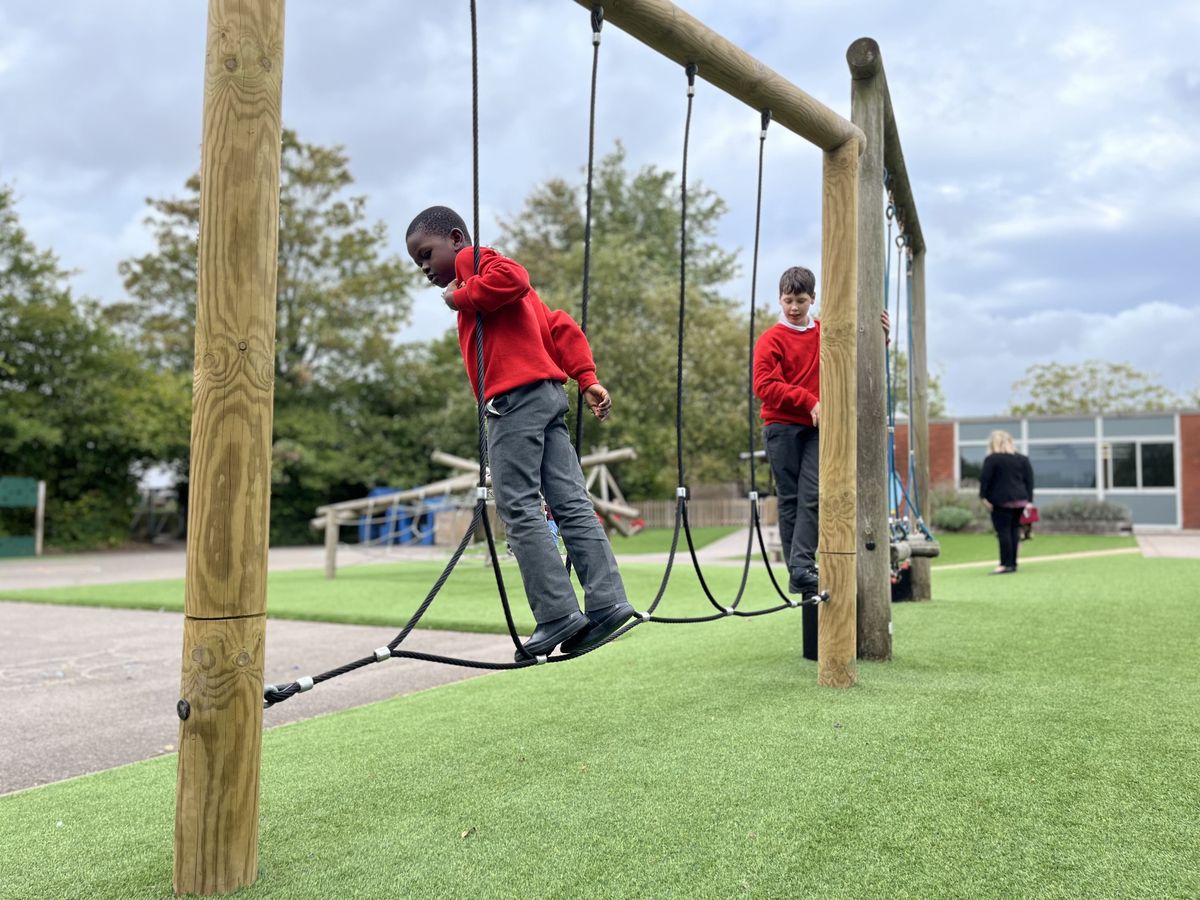
These achievements may look small, but they can challenge a child’s belief that they are incapable of coping at school.
Praise should be specific and measured. Rather than offering a general “well done”, an adult might say, “You came back to the activity after taking a break,” or, “You explained your idea clearly to the group.”
This helps children recognise the strategies and strengths behind their progress.
7. Use Structured Play to Support Connection
Anxious pupils may want friends while finding open-ended social situations difficult.
Structured outdoor activities can reduce some of that uncertainty. Small gardening groups, construction challenges, scavenger hunts and adult-supported playground games give children a shared purpose and clearer expectations.
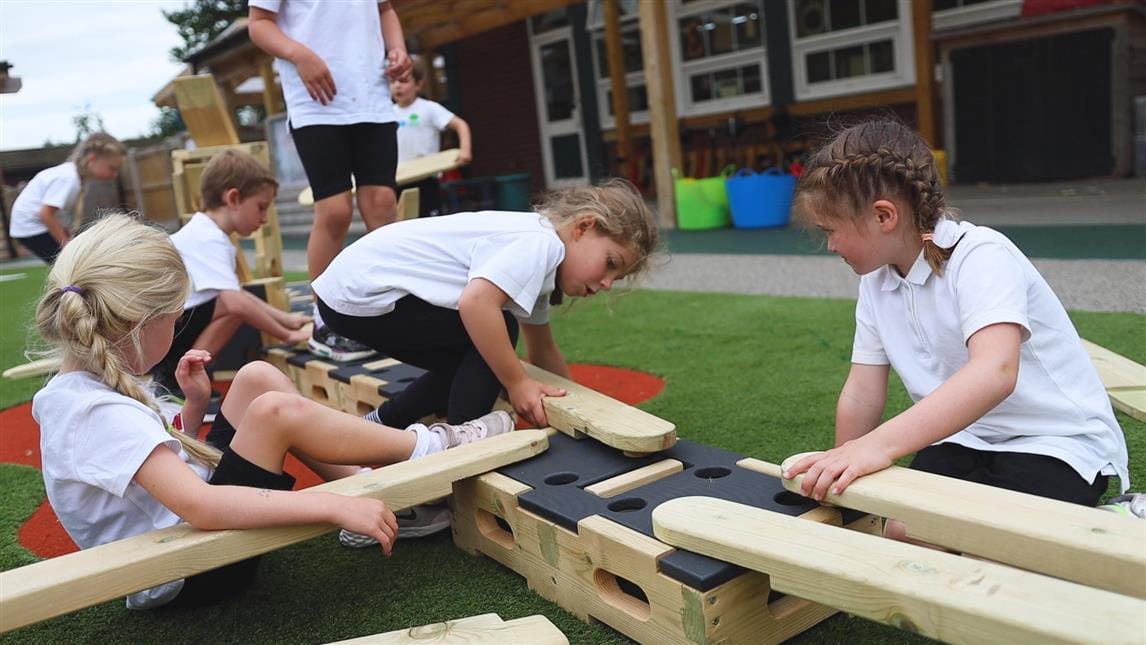
Schools could also introduce playground buddies or peer mentors. These schemes need careful supervision, but they can help pupils feel that someone will notice and include them.
No child should be forced into group play when they need quiet time. The goal is to offer accessible routes into social contact, not to make constant interaction another source of pressure.
8. Ask Pupils What Would Help
Adults can invest in a beautiful outdoor area and still miss what children actually need.
Consult pupils before making changes. Ask where they currently feel comfortable, which areas they avoid and what would make arriving, learning or spending breaktime outside easier.
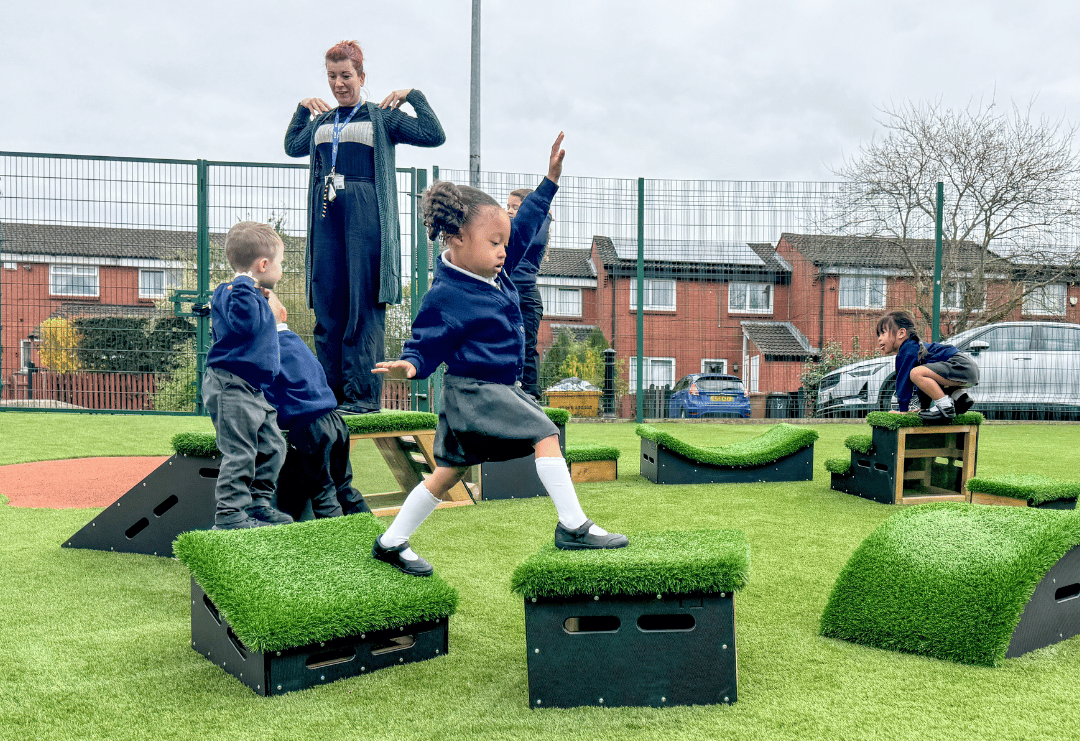
Some children may communicate more effectively through drawings, photographs or a walk around the school grounds than through a formal meeting.
Consultation should continue once a space is in use. Patterns of behaviour can reveal whether a quiet zone is truly calm, whether particular equipment creates conflict or whether children need more support to access an area confidently.
Outdoor Provision Should Form Part of a Wider Plan
Outdoor spaces can reduce pressure and support engagement, but they should not be used in isolation.
The YoungMinds guide to school anxiety recommends meeting with families, identifying specific difficulties, agreeing changes and arranging a date to review their impact.
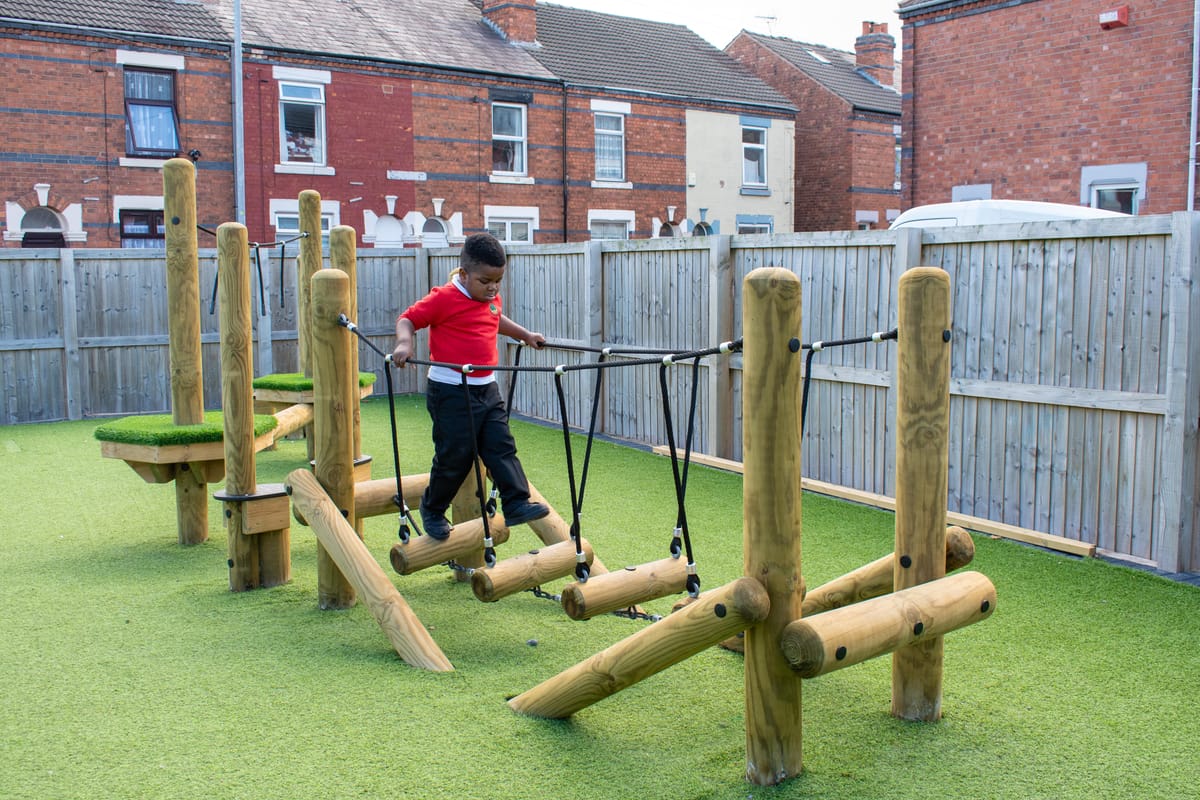
A pupil’s plan might combine a quieter arrival, access to an outdoor regulation area, sessions with a pastoral lead and gradual steps towards increased attendance. Schools should record what is being tried and involve the child, family, SENCO and relevant professionals.
Support also needs to address the causes of anxiety. A calm playground cannot compensate for unresolved bullying, inappropriate academic demands or unidentified SEND needs.
When a Different Environment may be Necessary
For some children, adjustments within their current school are enough to help them re-engage. Others may require specialist provision, a reduced timetable or a different educational setting.
Online education is one option that families, schools and local authorities may consider. At Minerva Virtual Academy, students aged 11 to 18 combine flexible independent learning with teacher-led live lessons and weekly personal mentoring. Clubs, social rooms and in-person events are designed to support connection alongside academic learning.

Online school will not suit every pupil and should not be treated as a quick solution to anxiety. For some young people, however, learning in a calmer environment can provide an opportunity to rebuild confidence while remaining connected to structured education.
Designing Spaces That Communicate Belonging
An inclusive outdoor environment sends pupils an important message: there is more than one acceptable way to participate in school life.
Some children need active play. Others need a calm conversation, a sensory activity or a few quiet minutes before they can join a lesson. Providing these options does not lower expectations. It gives pupils a better chance of meeting them.
When outdoor spaces are predictable, inclusive and connected to a wider support plan, they can become much more than somewhere children spend breaktime. You can read more tips on how to tackle anxiety on the playground here.
They can provide a safer first step back into school.