

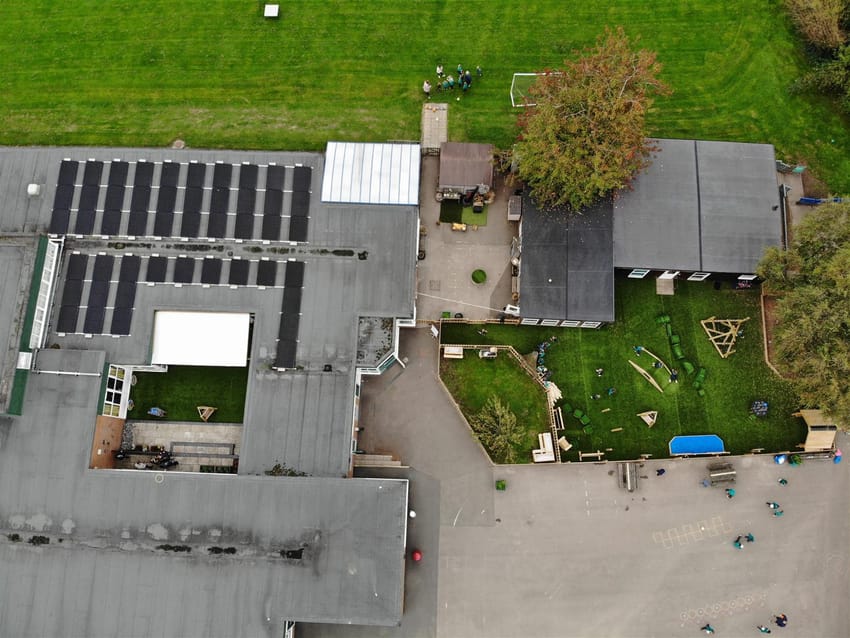
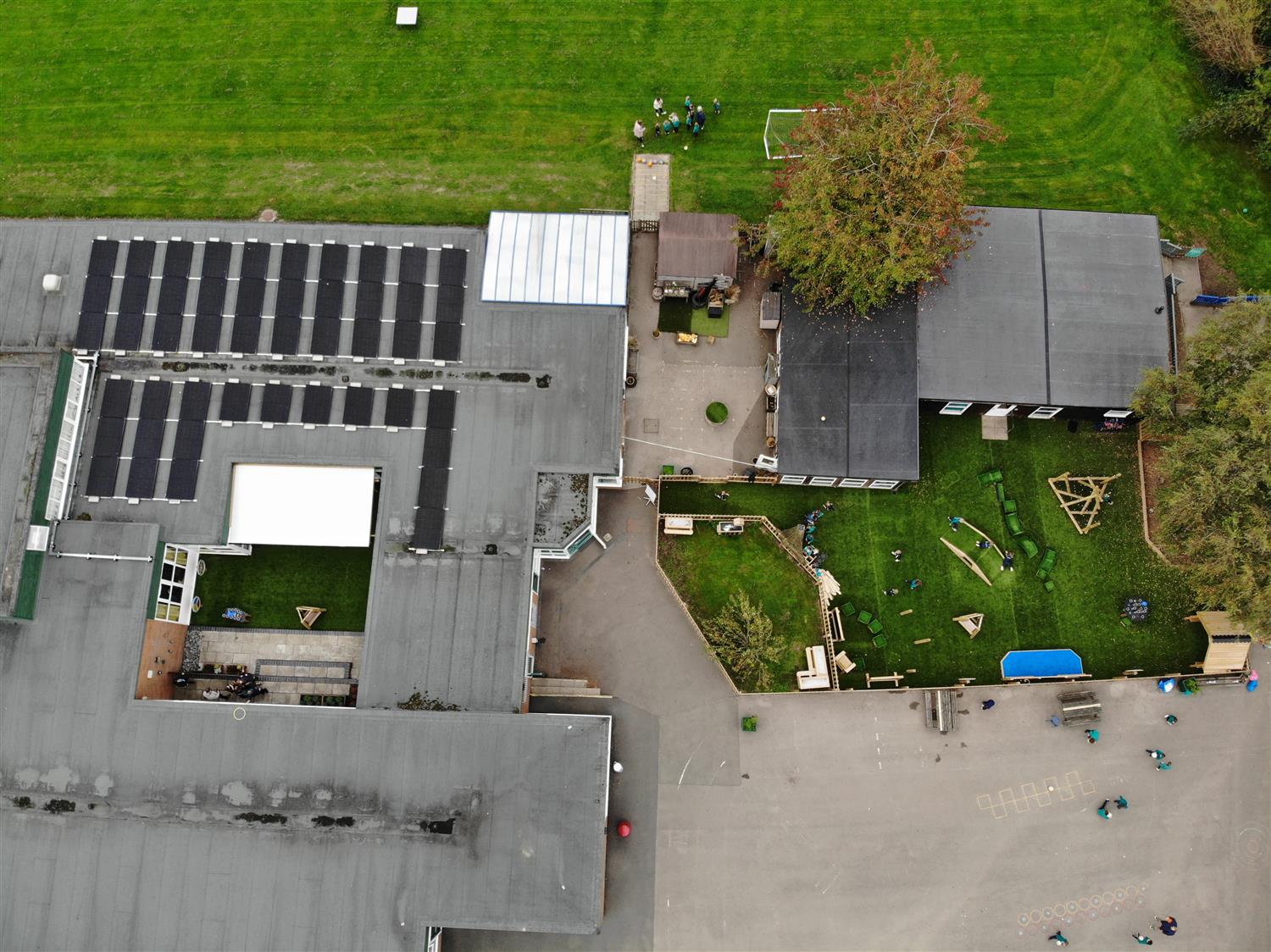
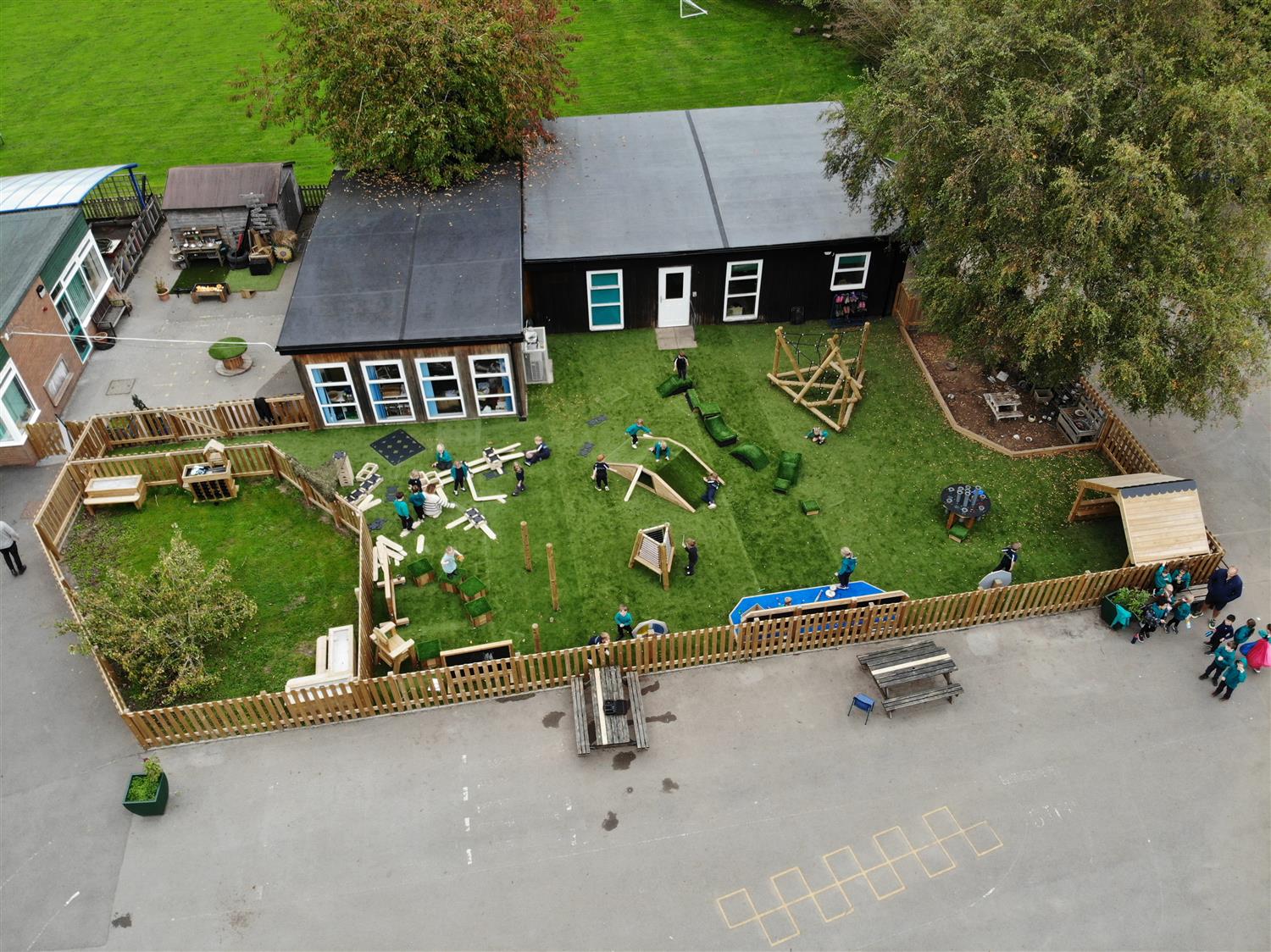
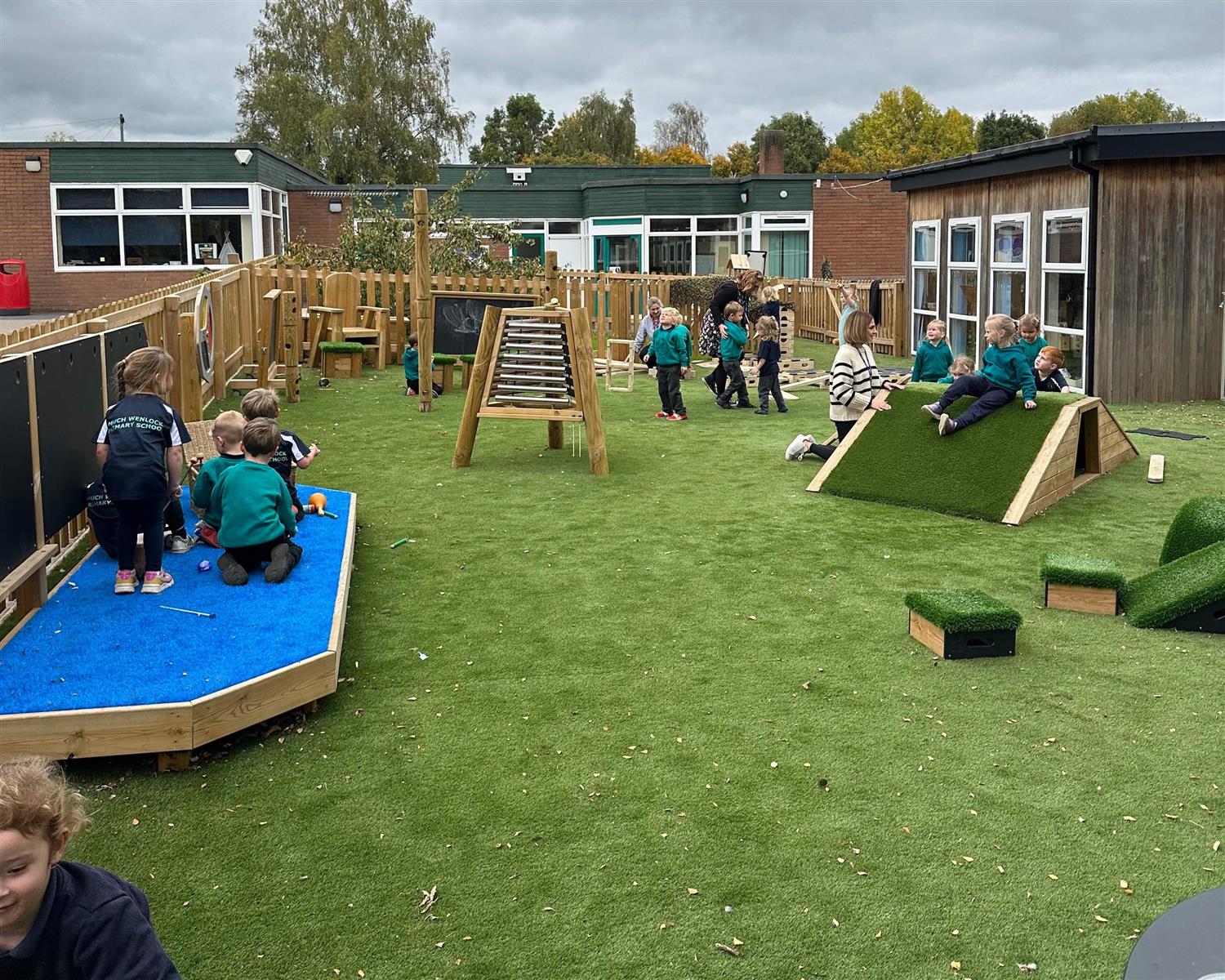
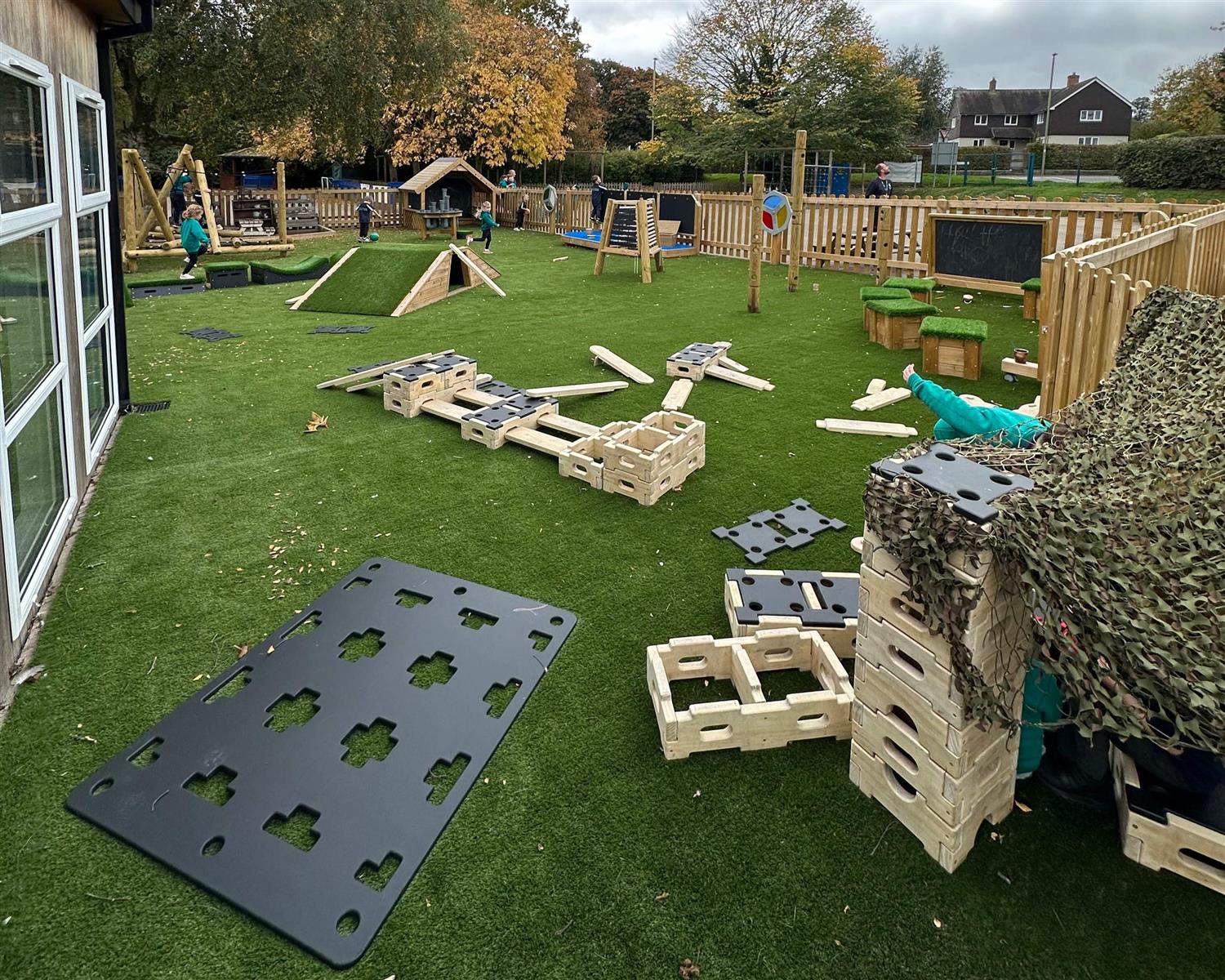
Much Wenlock Primary School in Shropshire, part of The 3 to 18 Education Trust, is a nurturing setting where early years development is at the heart of school life. The team are passionate about creating environments that support every child’s individual needs, giving them the confidence to explore, learn and grow from the very beginning.
With their existing EYFS garden ready for a refresh, the school saw an opportunity to create a space that better reflected their approach to early years learning. Emma Nicholas, the school’s SENCO, was particularly keen to ensure the environment supported a wide range of needs, offering opportunities for sensory exploration, imaginative play and calm, focused activity.
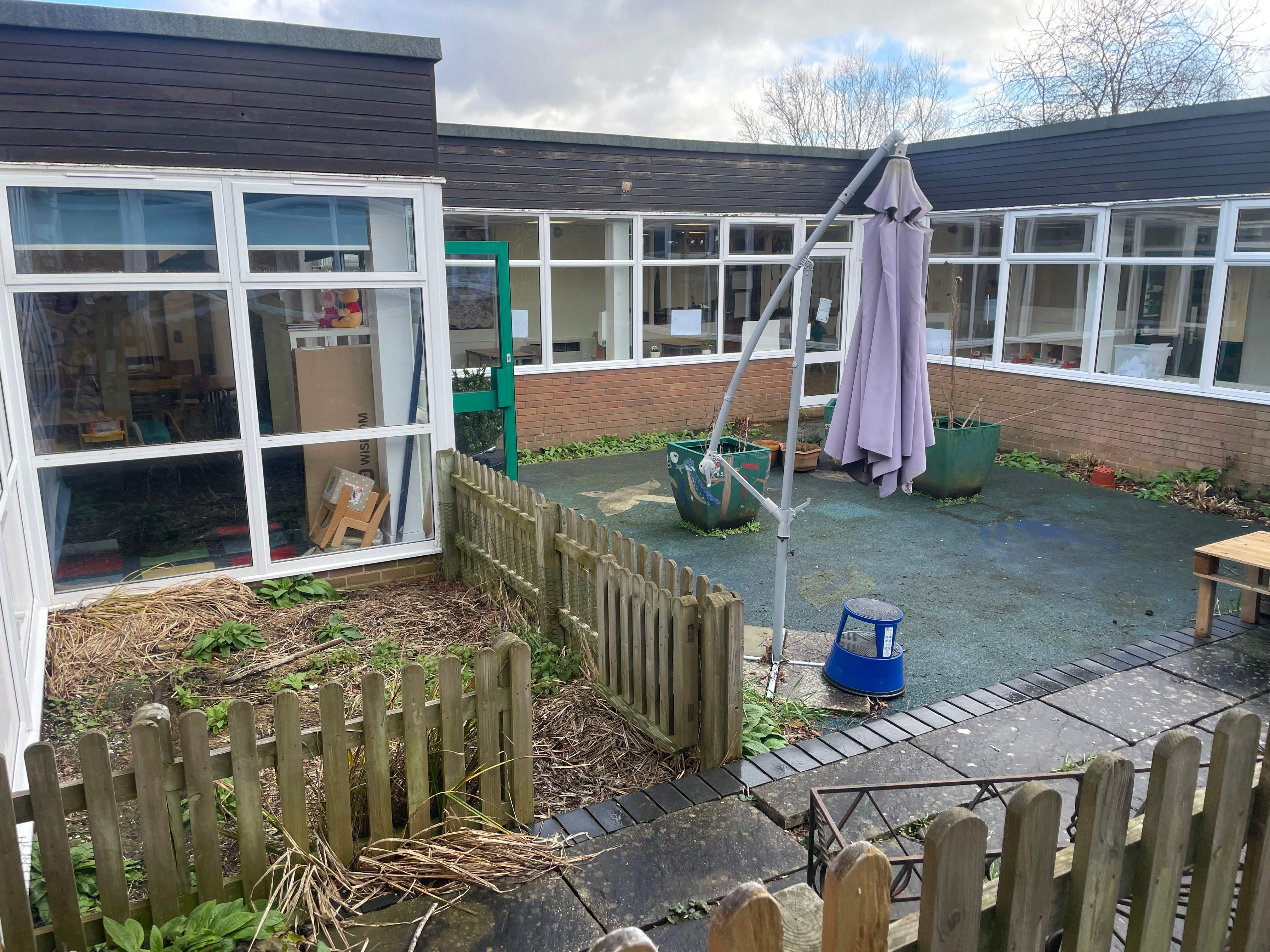
Having discovered Pentagon Play through an online search, the school reached out with a clear goal in mind, to redesign the EYFS garden into a more purposeful and engaging space. With funding dependent on a quick turnaround, there was also a strong sense of urgency, making it important to develop ideas that were both impactful and ready to present within a short timeframe.
Working closely with Outdoor Learning Consultant Lewis Cranston, the school began exploring how the garden could be transformed into a space that felt inclusive, inspiring and well suited to the needs of their early years pupils.
Designing an EYFS Garden with Purpose
Speaking with Emma Nicholas, Lewis Cranston quickly understood that this project was about much more than refreshing a space. As SENCO, Emma brought a clear focus on ensuring the EYFS garden would support a wide range of needs, creating an environment where every child could feel comfortable, engaged and able to learn through play.
One of the key challenges was redesigning an existing space rather than starting from scratch. The garden already had structure, but it needed to be reimagined in a way that made better use of the layout while introducing more purposeful play opportunities. The aim was to create a space that felt intuitive for young children to navigate, with clear areas for different types of play.
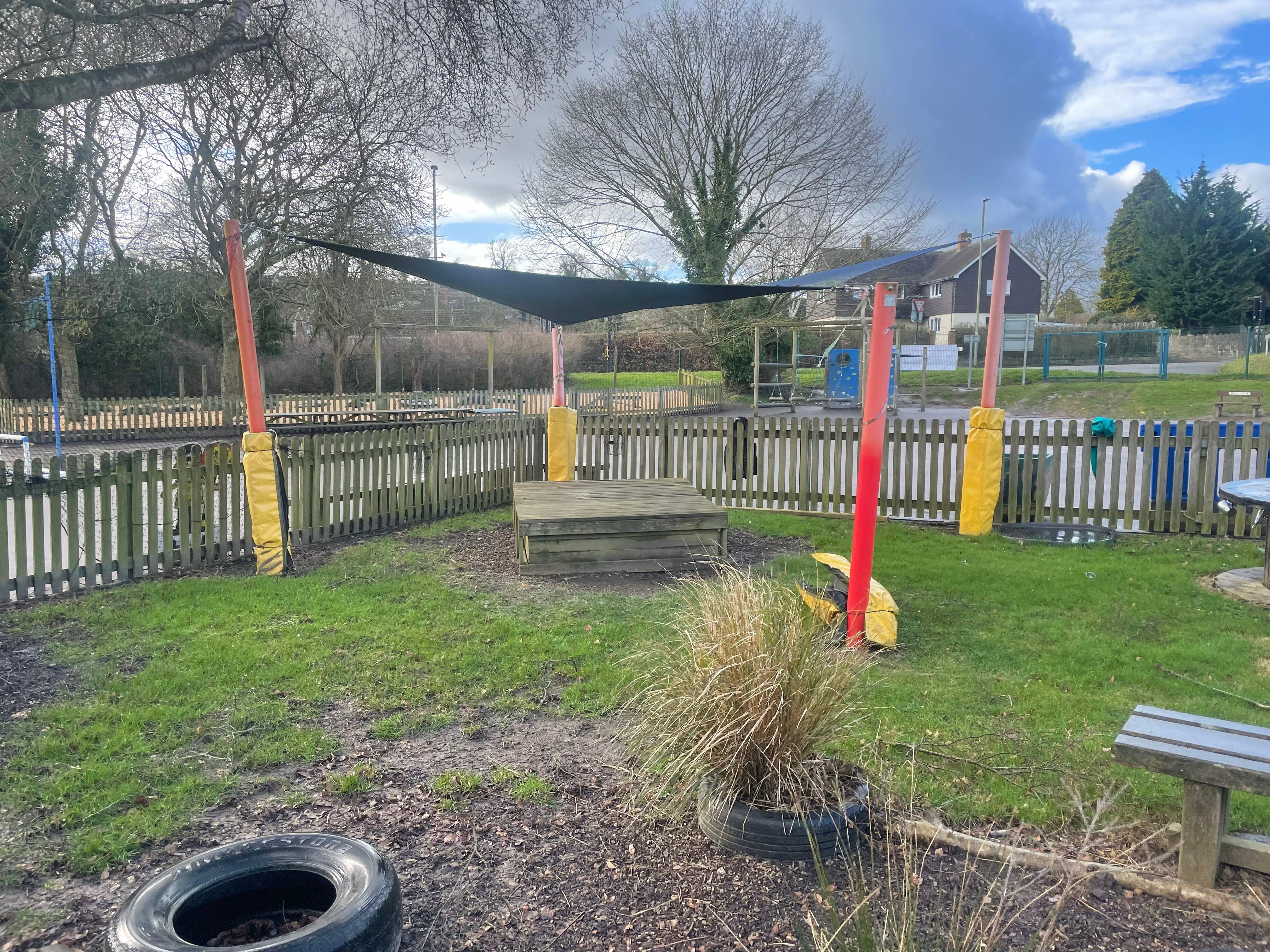
Time was also a major factor. With funding dependent on a quick turnaround, there was limited opportunity for long planning phases. Lewis needed to quickly develop ideas that could be presented with confidence, ensuring the school had everything they needed to secure approval from their Trust.
Another consideration was the unknown budget. Without a confirmed figure, the design needed to be flexible and scalable, offering strong core ideas that could be adapted as needed. This meant carefully balancing creativity with practicality, ensuring the final proposal could deliver real impact regardless of the final investment.
With these challenges in mind, Lewis began shaping a design that would transform the EYFS garden into a more engaging, inclusive and purposeful outdoor learning environment.
Shaping a Garden Designed for Every Child
With a clear understanding of the school’s priorities, Lewis Cranston moved quickly to turn ideas into a structured and thoughtful design. Working closely with Emma Nicholas and the wider team, the focus was on creating a space that felt calm, engaging and easy for children to explore, while supporting a wide range of developmental needs.
To help bring the vision to life, our visualisation team created detailed 2D and 3D designs that allowed the school to fully picture the transformation. These visuals made it easier to see how different areas of the garden would work together, helping staff understand how the space would support both active play and quieter, more focused moments.
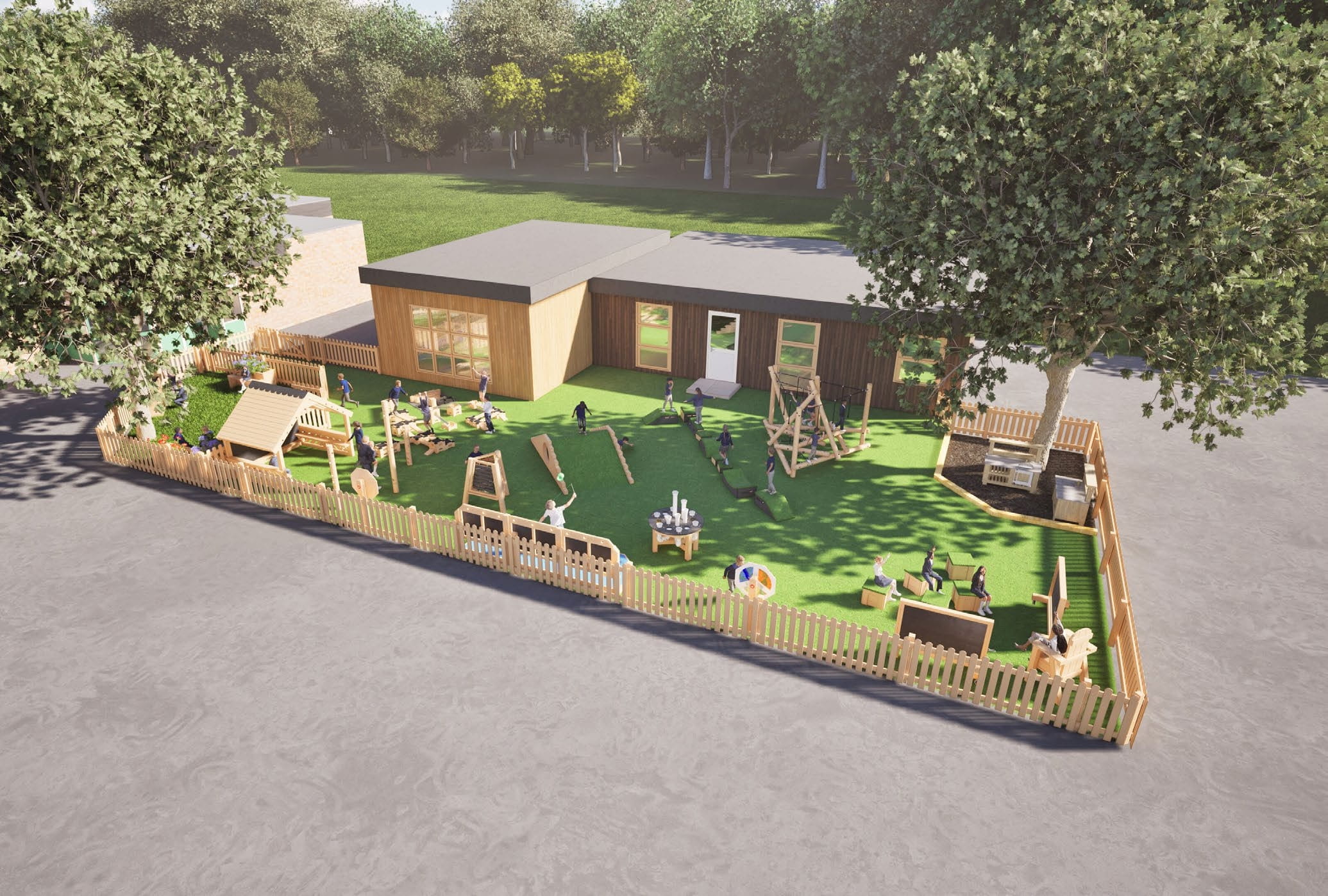
The design was carefully shaped to include a balance of experiences. Sensory elements, imaginative play opportunities and spaces for calm reflection were all considered, ensuring the garden would cater to children with different needs, preferences and energy levels. Every feature was chosen with intention, creating an environment that felt inclusive and supportive from the moment children stepped outside.
With a flexible approach built into the design, the school were able to confidently present the proposal to their Trust. The combination of clear visuals, thoughtful planning and a strong focus on impact helped ensure the project could move forward, setting the stage for a meaningful transformation of the EYFS garden.
A Garden That Supports Every Child
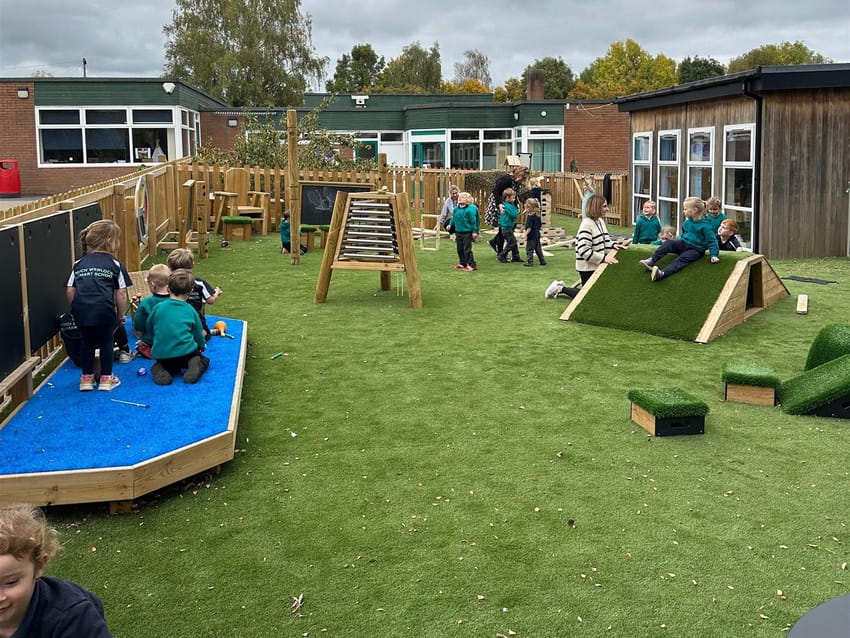
As the redesigned EYFS garden began to take shape, the impact of the changes quickly became clear. What was once a space with untapped potential had been transformed into a more purposeful and engaging environment, where children could explore, play and learn in ways that felt natural to them.
Children were seen moving more confidently around the space, engaging with different areas depending on their interests and needs. Some were drawn to more active forms of play, while others gravitated towards quieter, sensory experiences. This freedom of choice allowed pupils to regulate their own play, creating a calmer and more inclusive atmosphere across the garden.
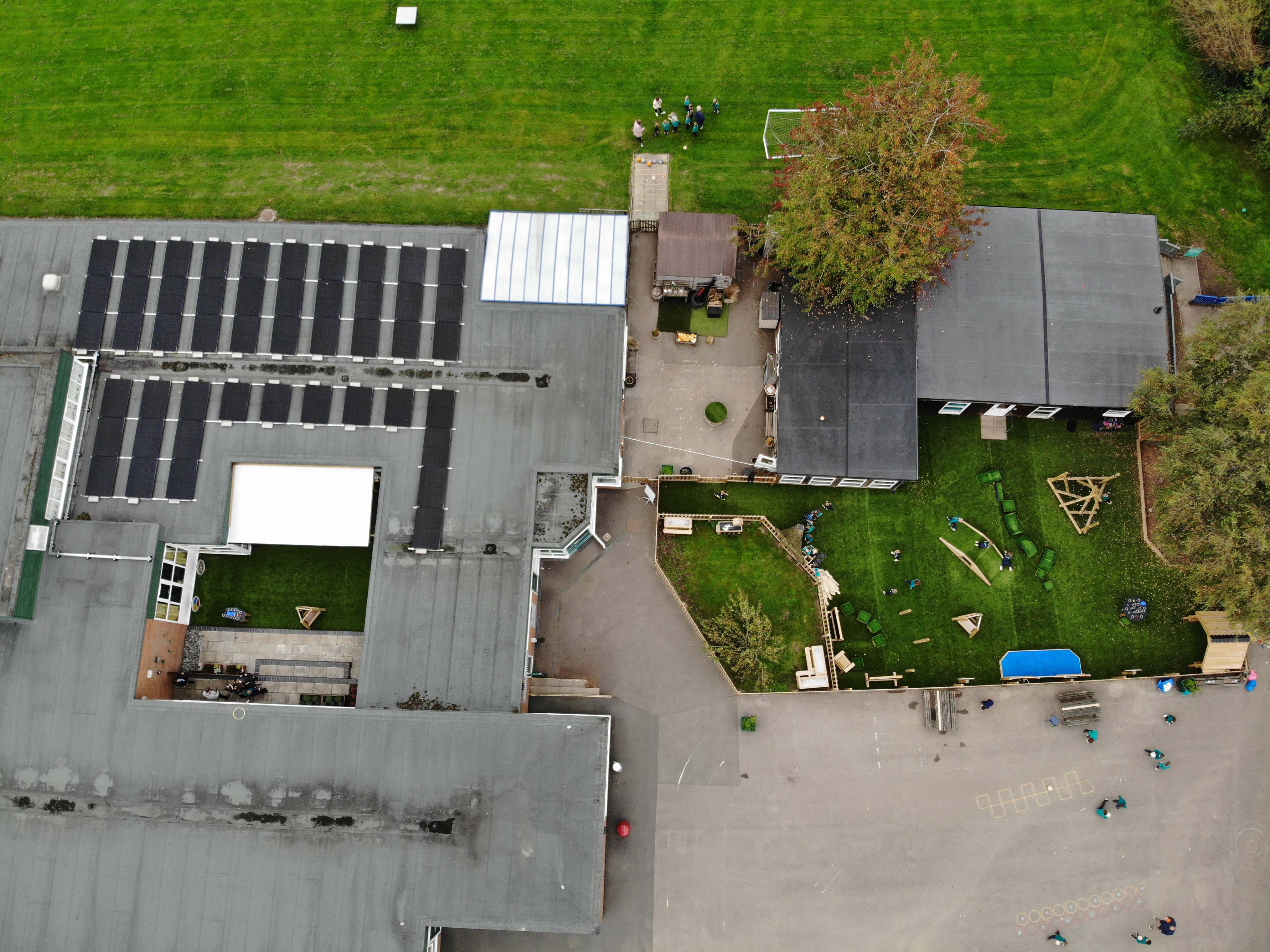
Staff shared how much of a difference the new layout had made, particularly for children with additional needs. The space now offered a better balance of stimulation and calm, helping pupils feel more settled and engaged during outdoor time. One member of staff commented that the garden now “feels like a space where every child can find something that works for them.”
Overall, the transformation went beyond just improving the look of the garden. It created an environment that actively supports development, independence and wellbeing, giving Much Wenlock Primary School an EYFS space that truly reflects their values and approach to early years learning.
Surfacing and Fencing
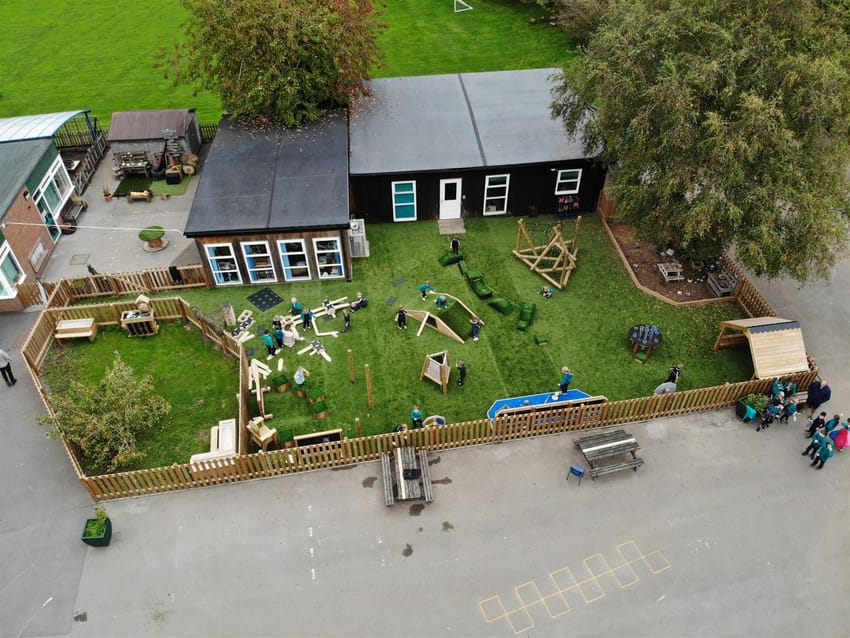
The transformation of the EYFS garden began with the introduction of artificial grass surfacing, instantly creating a cleaner, softer and more inviting environment for children to explore. The fresh green finish helped bring a natural feel to the space, encouraging children to move freely and engage in play without the limitations of uneven or worn surfaces. It also provided a consistent and comfortable base that could be used throughout the year.
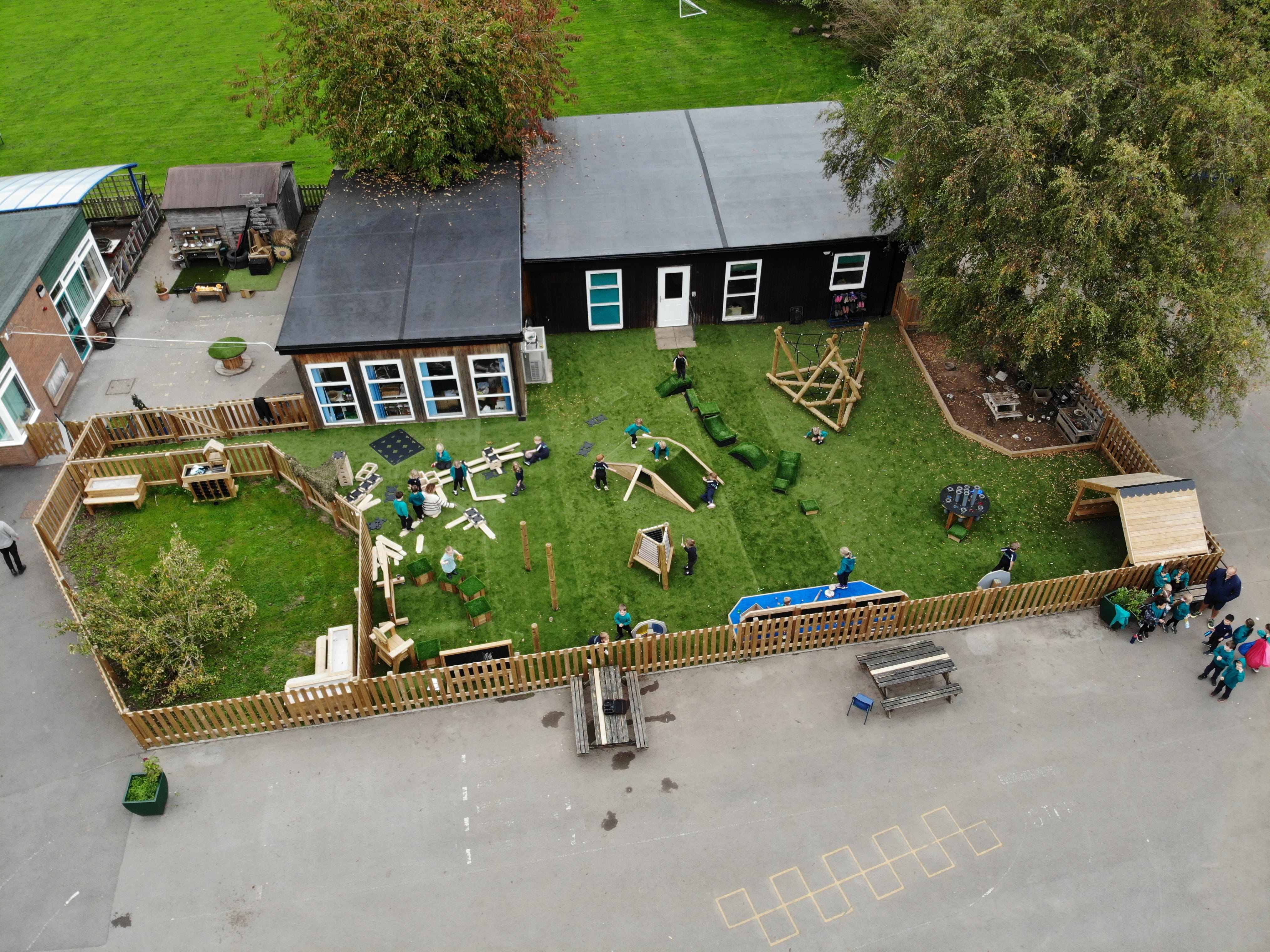
Surrounding the area, the addition of bow top timber fencing helped define the space while ensuring children could play safely and securely. This created a clear boundary that gave staff peace of mind, while still maintaining an open and welcoming feel within the garden. Together, the surfacing and fencing laid the groundwork for a space that felt both safe and full of potential.
Overall, this playground included:
Investigative Science and Nature Zone
Stepping into the investigative science and nature zone, it was clear that this area had been designed to spark curiosity and encourage children to explore the natural world. The introduction of planter benches brought a softer, more organic feel to the space, giving children the opportunity to engage with plants, textures and seasonal change in a hands on and meaningful way.
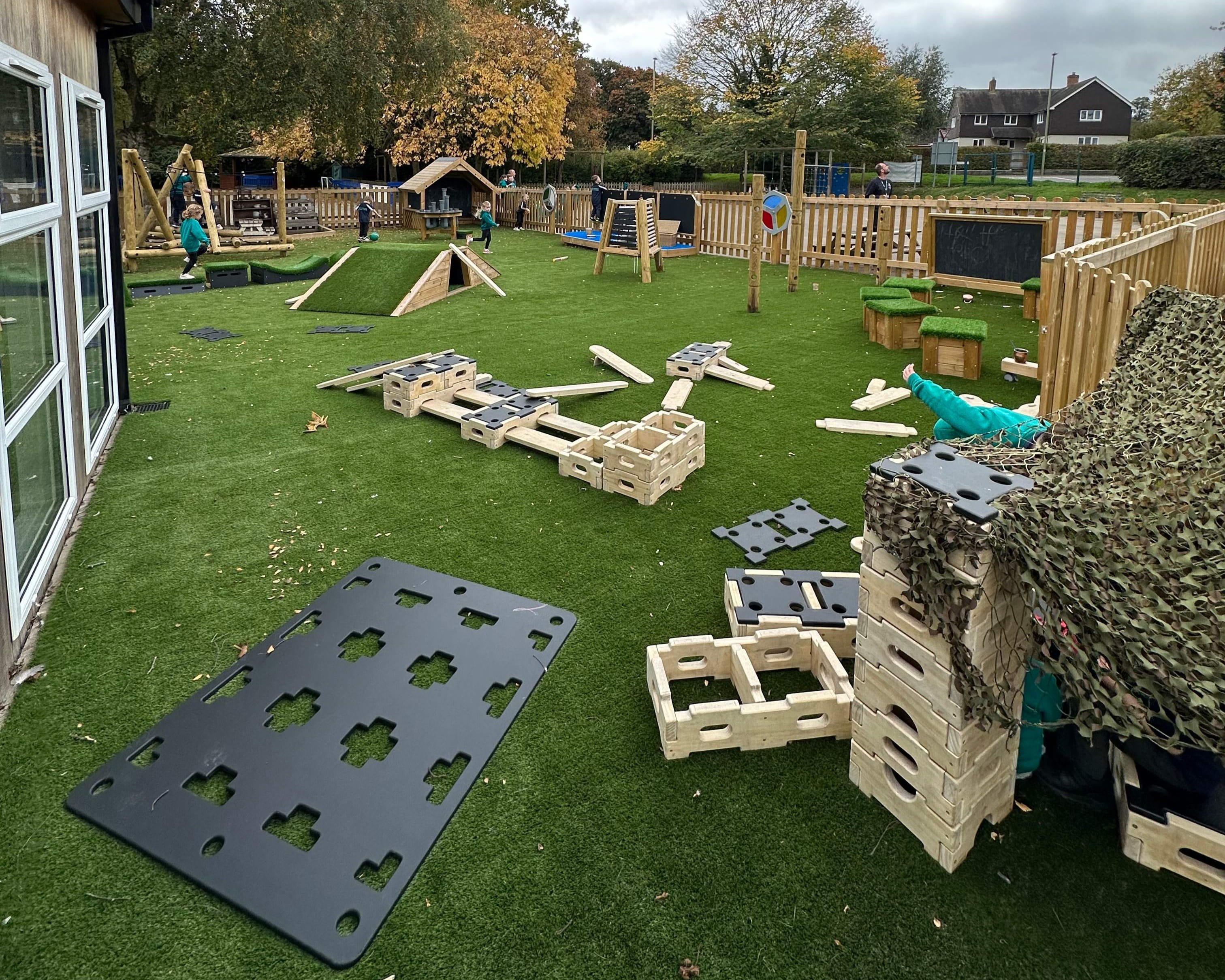
One of the standout features in this area was the bug hotel with individual pods. This quickly became a focal point for discovery, encouraging children to observe, investigate and learn about insects and their habitats. Staff shared how this type of feature supports early scientific thinking, helping children ask questions, make observations and develop a deeper understanding of the world around them, all through play.
Overall, this area included:
Physical Development Zone
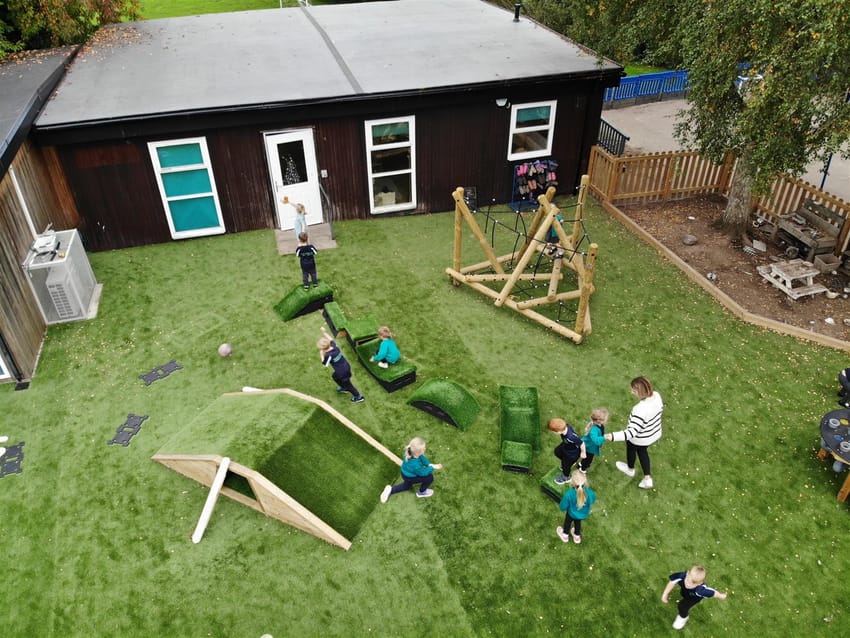
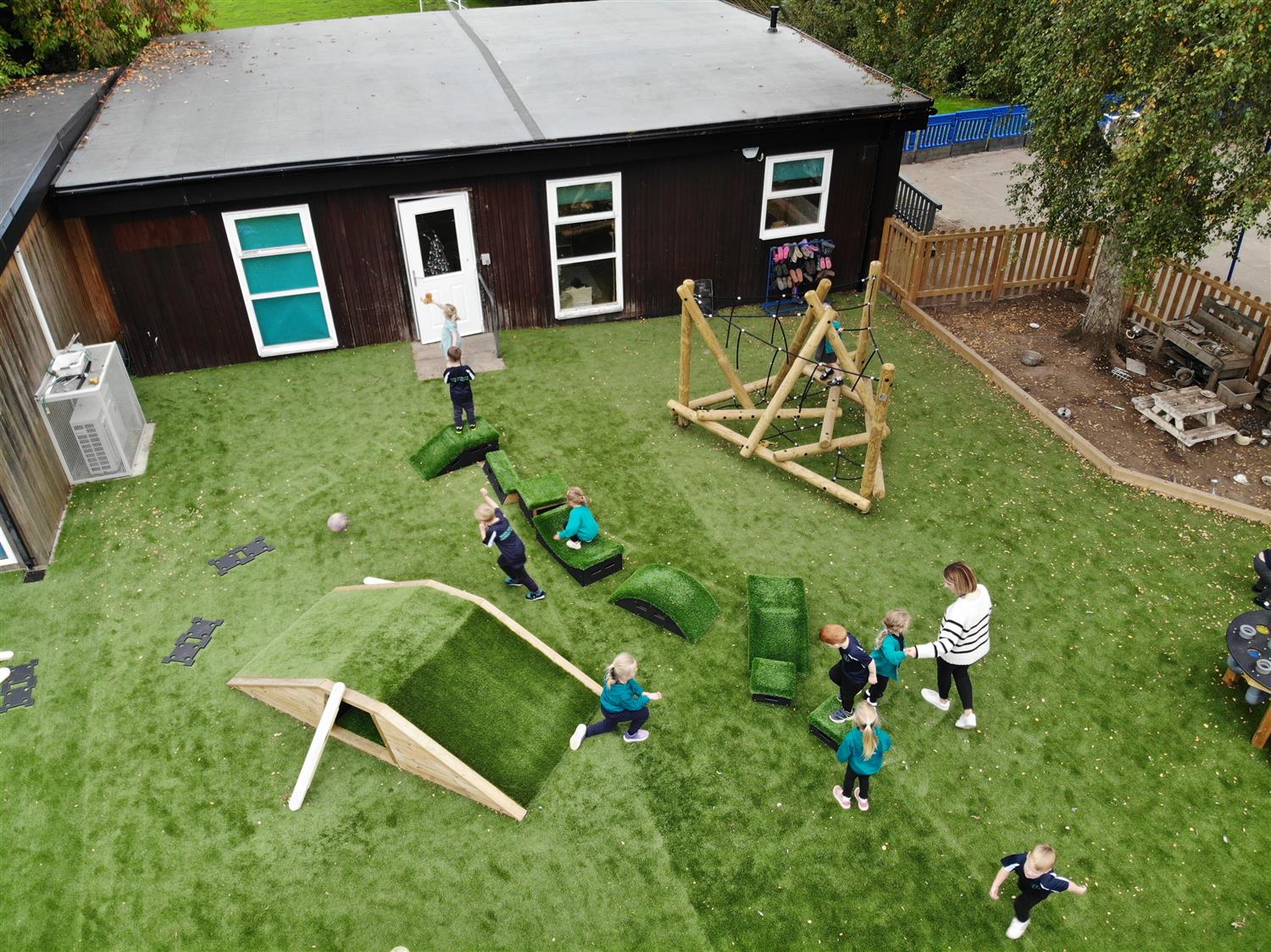
The physical development zone was designed to encourage movement, challenge and confidence building in a way that felt accessible to all children. From the moment pupils entered the space, they were drawn to the variety of climbing and balancing opportunities, giving them the chance to test their abilities and develop key physical skills through play.
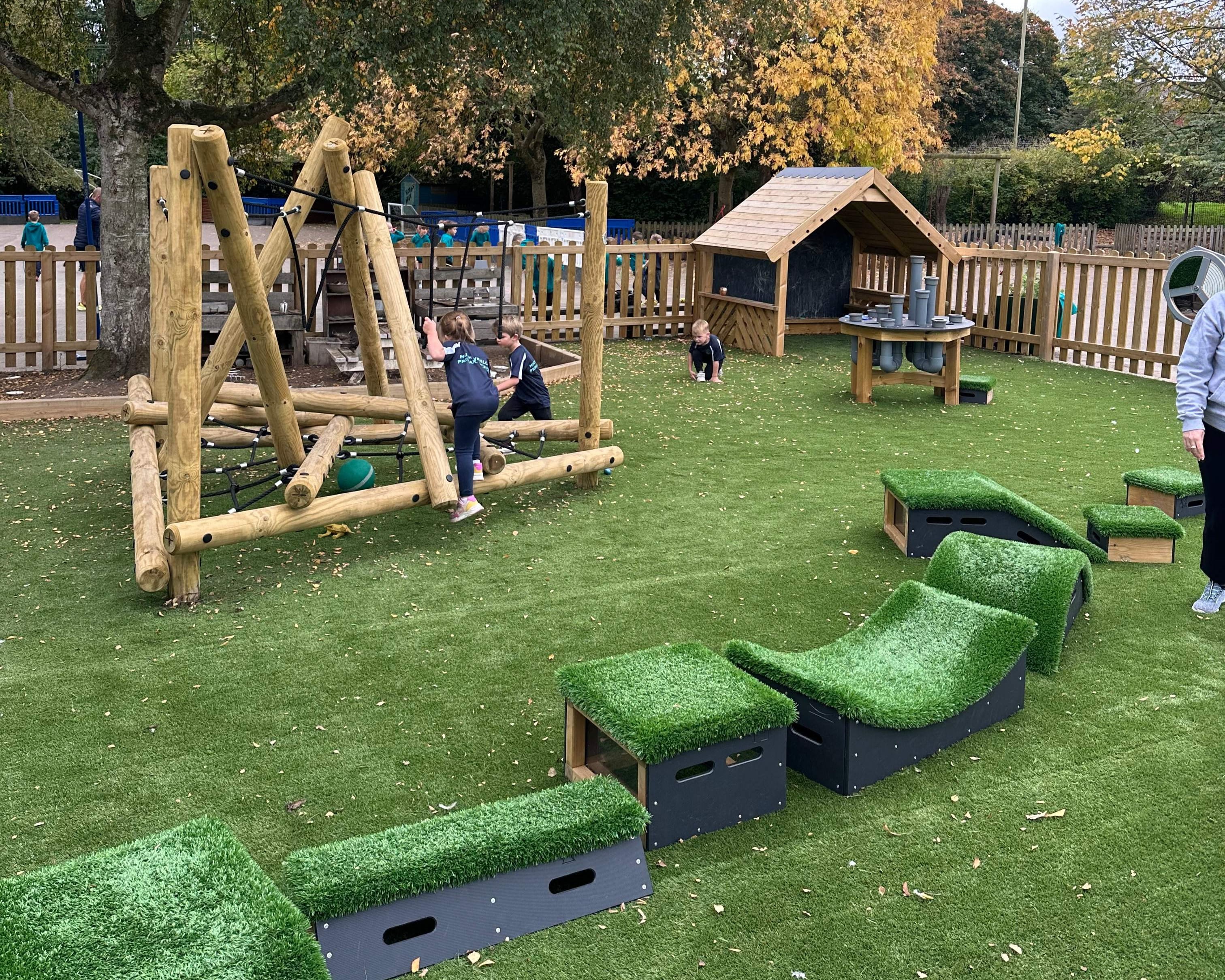
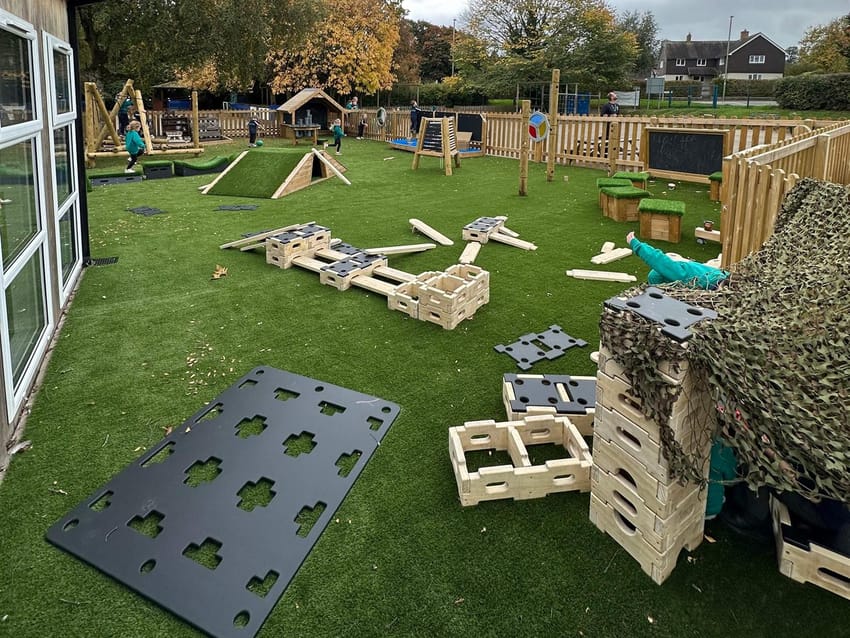
A standout feature within this area was the Mam Tor Mountain Climber, which offered children an exciting but manageable challenge. Alongside this, the Get Set Go Blocks and Play Builder Engineer Set introduced a more creative element, allowing children to design their own routes and obstacles. The addition of the Climb Through Tunnel Hill provided another layer of exploration, encouraging crawling, climbing and imaginative play. Staff noted how this mix of structured and open ended equipment helped children build confidence while staying fully engaged.
Overall, this area included:
- A Get Set Go Blocks Pennine Set
- A Mam Tor Mountain Climber
- A Play Builder Engineer Set
- A Climb Through Tunnel Hill
Den Making and Imaginative Play
Across the EYFS garden, opportunities for den making introduced a whole new layer of creativity and child led play. These features encouraged children to use their imagination, transforming the space into anything they wanted it to be, from cosy hideaways to role play settings and storytelling spaces.
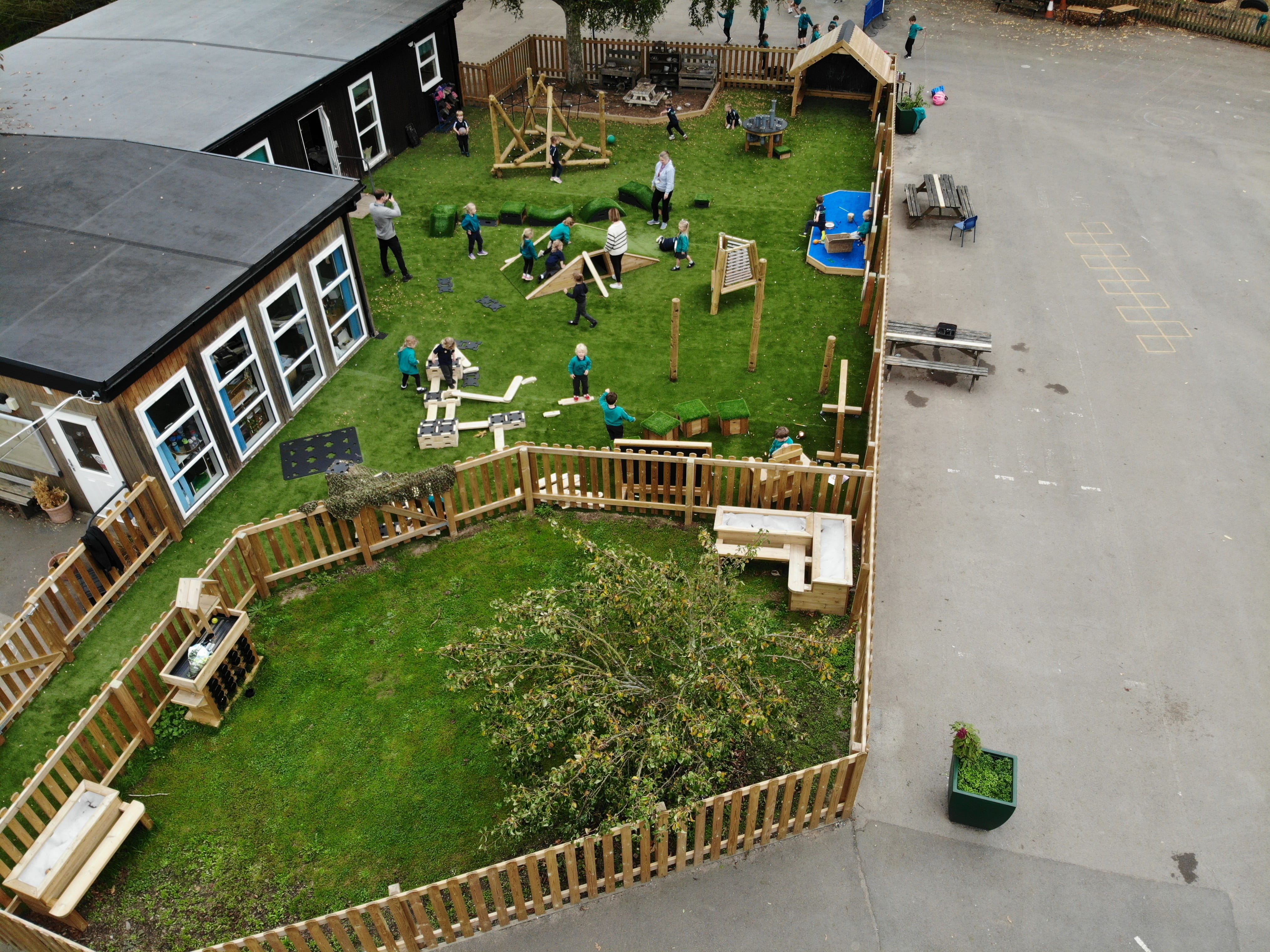
The den making posts, in a variety of sizes, gave children the flexibility to build and adapt their own structures using different materials, supporting problem solving, teamwork and independence. The addition of the giant playhouse provided a more permanent focal point for imaginative play, where children could gather, act out scenarios and create their own little worlds. Staff shared how these elements had helped children become more confident in leading their own play, with many returning to the area to build and rebuild new ideas each day.
Overall, this area included:
- A Large Den Making Post with Holes
- A Medium Den Making Post with Holes
- Small Den Making Posts with Holes
- A Giant Playhouse
Performance and Music Zone
The performance and music zone brought a vibrant and expressive energy to the EYFS garden, giving children a space to showcase their creativity and build confidence through play. Whether performing in front of their peers or experimenting with sound, this area quickly became a hub for self expression and social interaction.
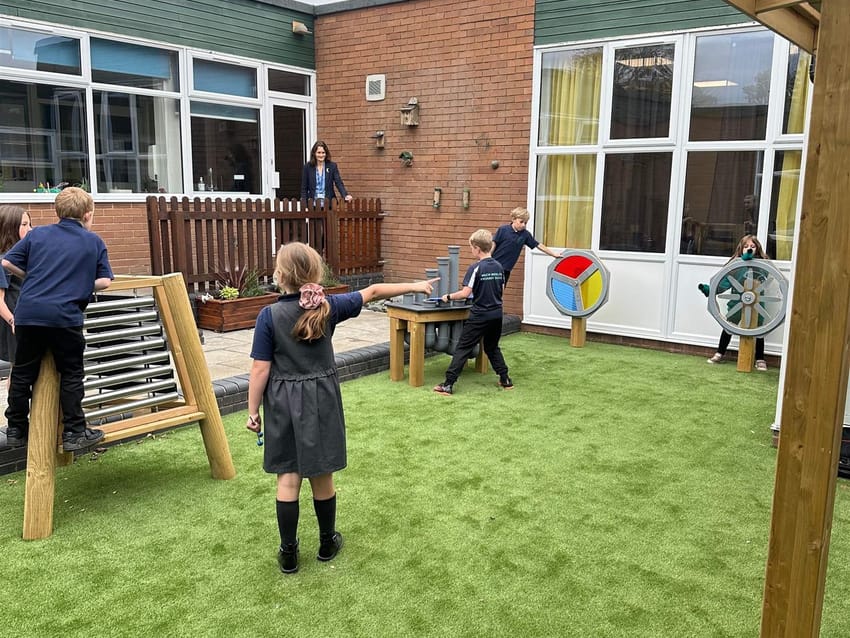
At the centre of the space, the large performance stage with chalkboard provided the perfect platform for storytelling, role play and group activities. Alongside this, the musical features such as the group Batonka and musical triad encouraged children to explore rhythm and sound in a fun and accessible way. The addition of sensory spinners added a calming yet engaging element, supporting focus and providing a gentle sensory experience. Staff shared how this area had helped children grow in confidence, with many enjoying the opportunity to perform, collaborate and express themselves freely.
Overall, this area included:
- A Large Performance Stage with Chalkboard
- A Group Batonka
- A Musical Triad
- A Light Sensory Spinner
- A Touch Sensory Spinner
Communication and Language Zone
The communication and language zone was designed to support conversation, storytelling and collaborative play in a more relaxed and flexible setting. As children gathered in this area, it became a natural space for sharing ideas, building friendships and developing confidence in speaking and listening.
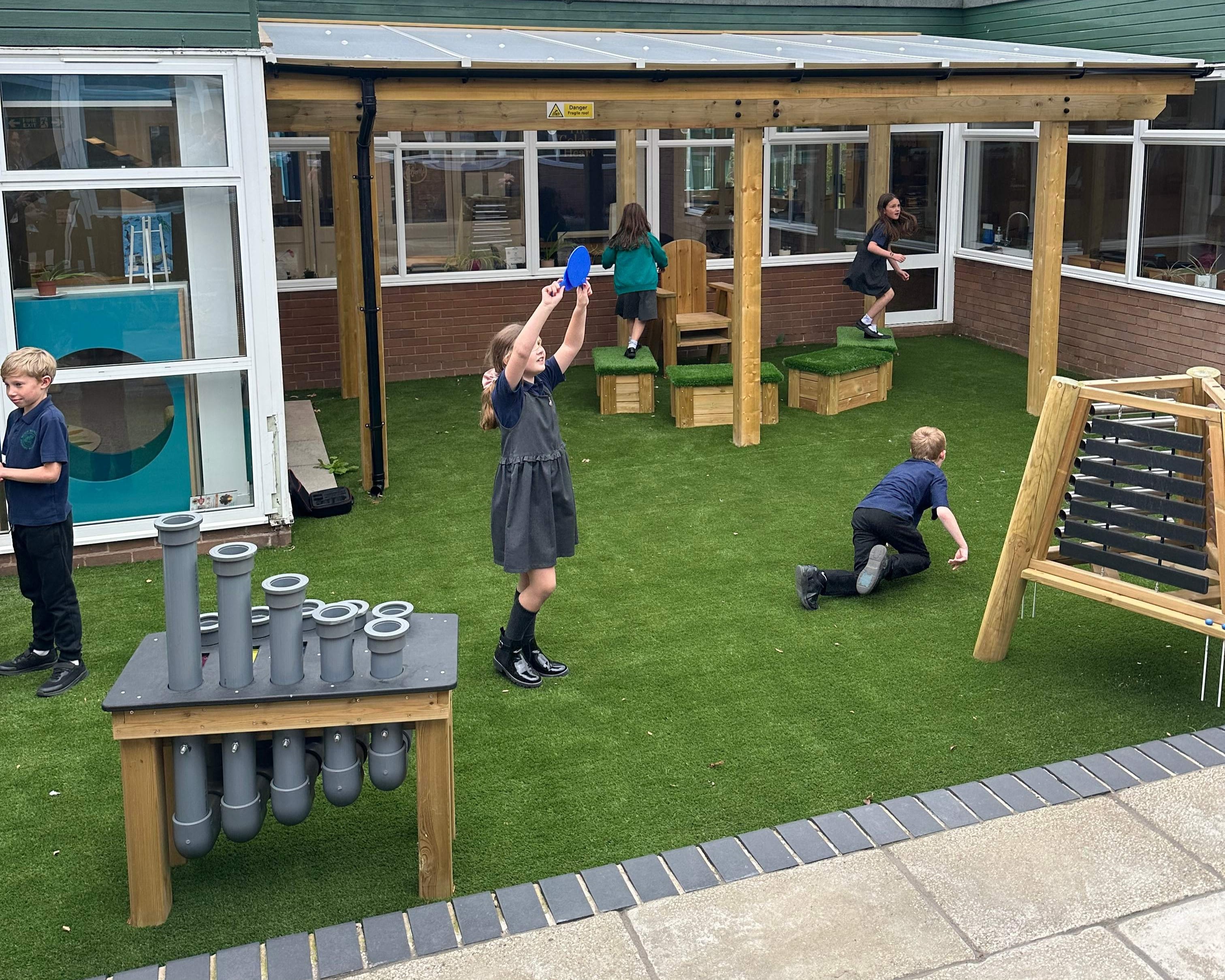
The interactive chalkboard panels on wheels allowed children to express themselves creatively, drawing, writing and using marks to communicate their thoughts. Paired with the moveable grass topped seats, the space could be easily adapted to suit different activities, from small group discussions to imaginative role play. Staff noted how this area encouraged more meaningful interactions, helping children develop key communication skills in a comfortable and engaging environment.
Overall, this area included:
Quad Play Area
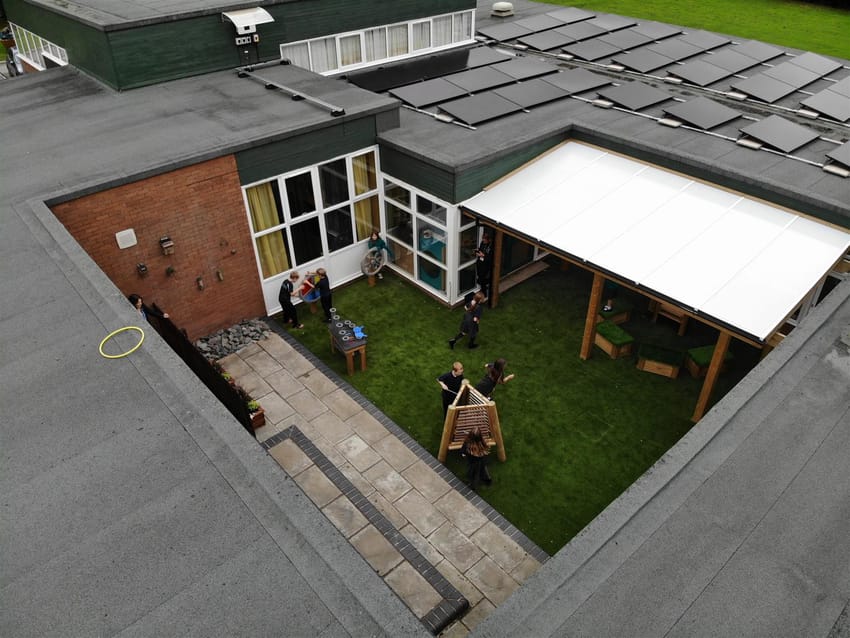
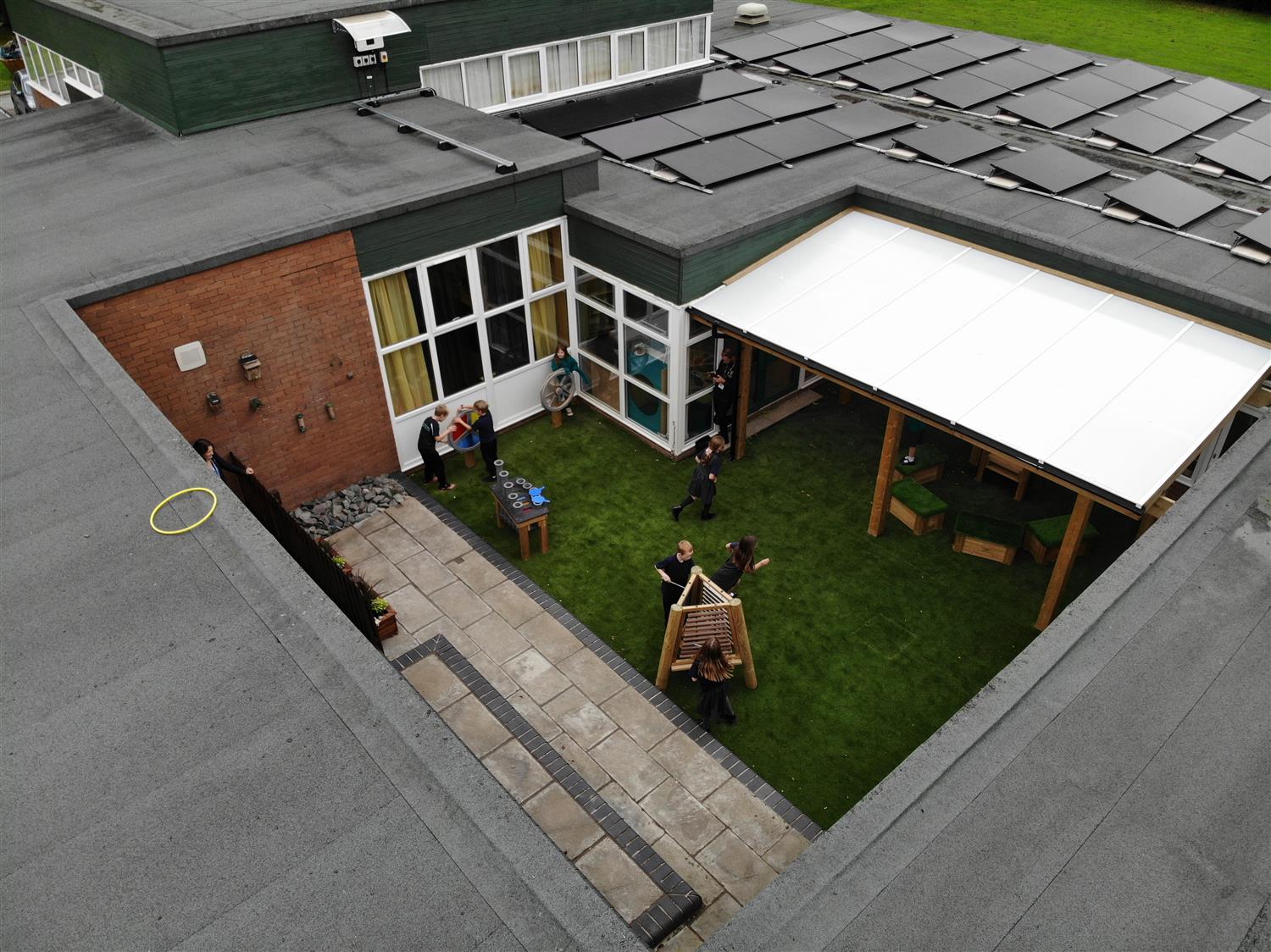
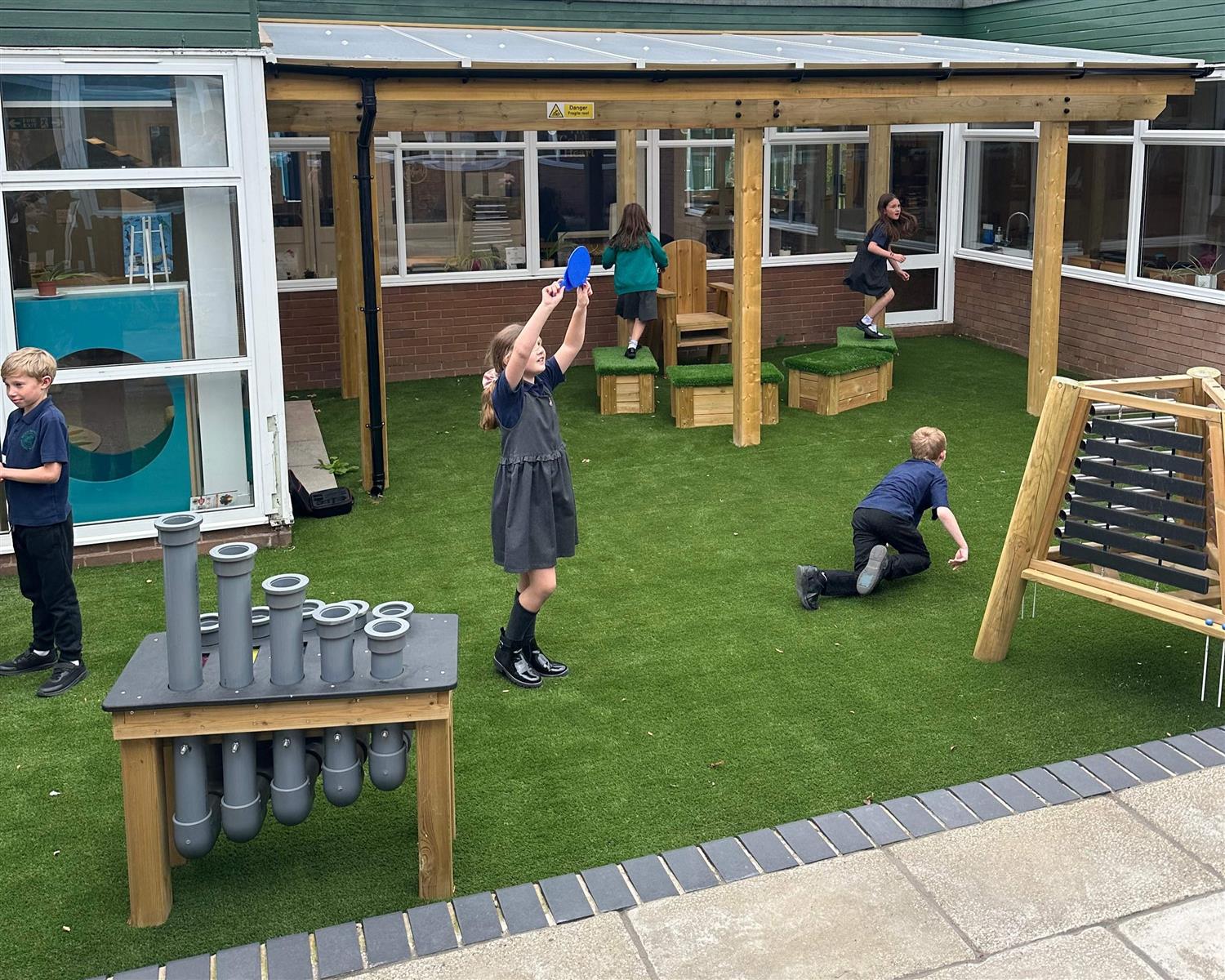
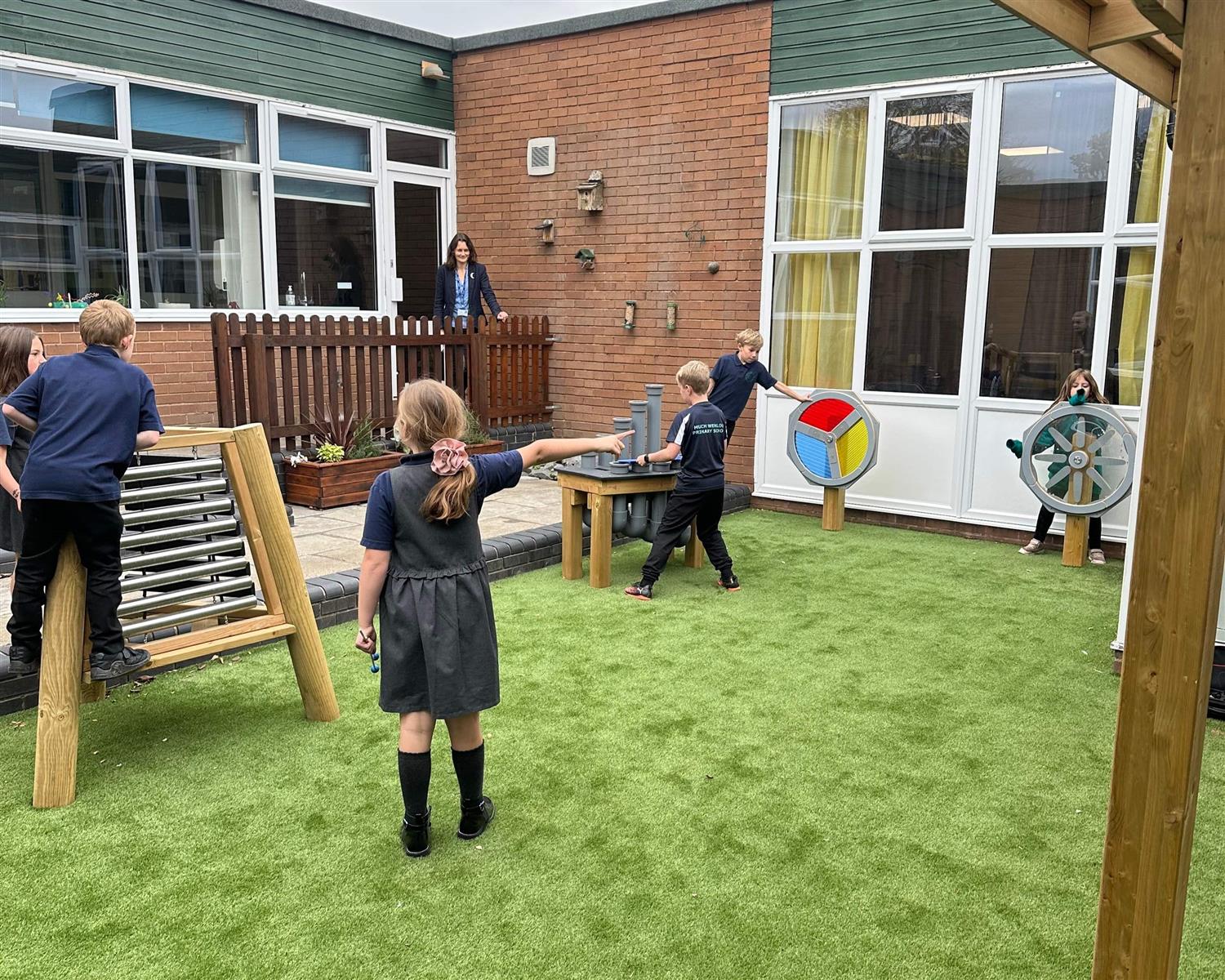
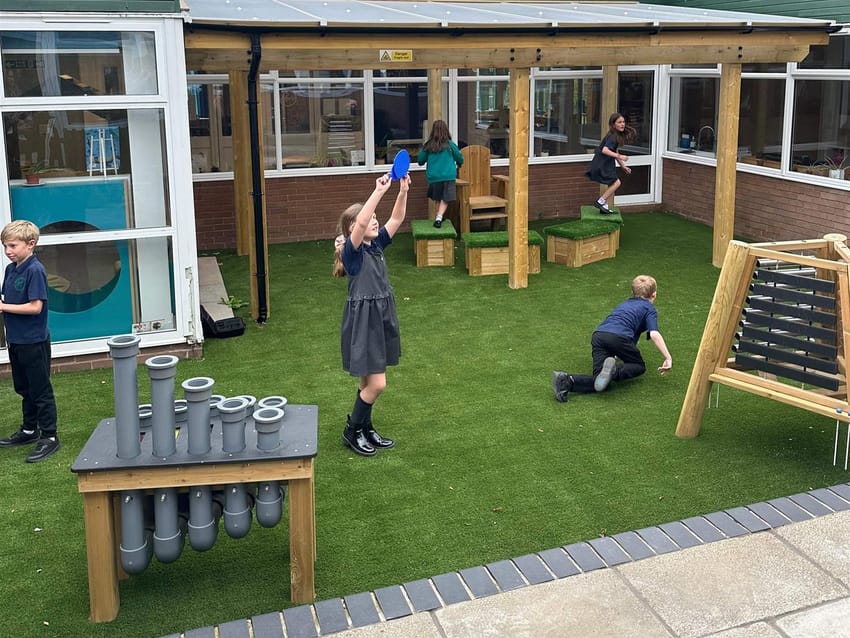
The quad area brought everything together, offering a versatile space that could be used throughout the day in all weather conditions. At the heart of this zone was the bespoke timber canopy, which immediately stood out as a key feature within the EYFS garden. Providing shelter and structure, it created a welcoming outdoor space where children could gather, learn and play, no matter the weather.
This covered area quickly became a valuable extension of the classroom. Whether used for group activities, storytelling or quieter moments of play, it gave staff the flexibility to take learning outdoors while maintaining a sense of comfort and routine. Surrounding features such as sensory spinners, musical elements and movable seating added to the experience, allowing children to engage in both creative and social play within a more sheltered environment.
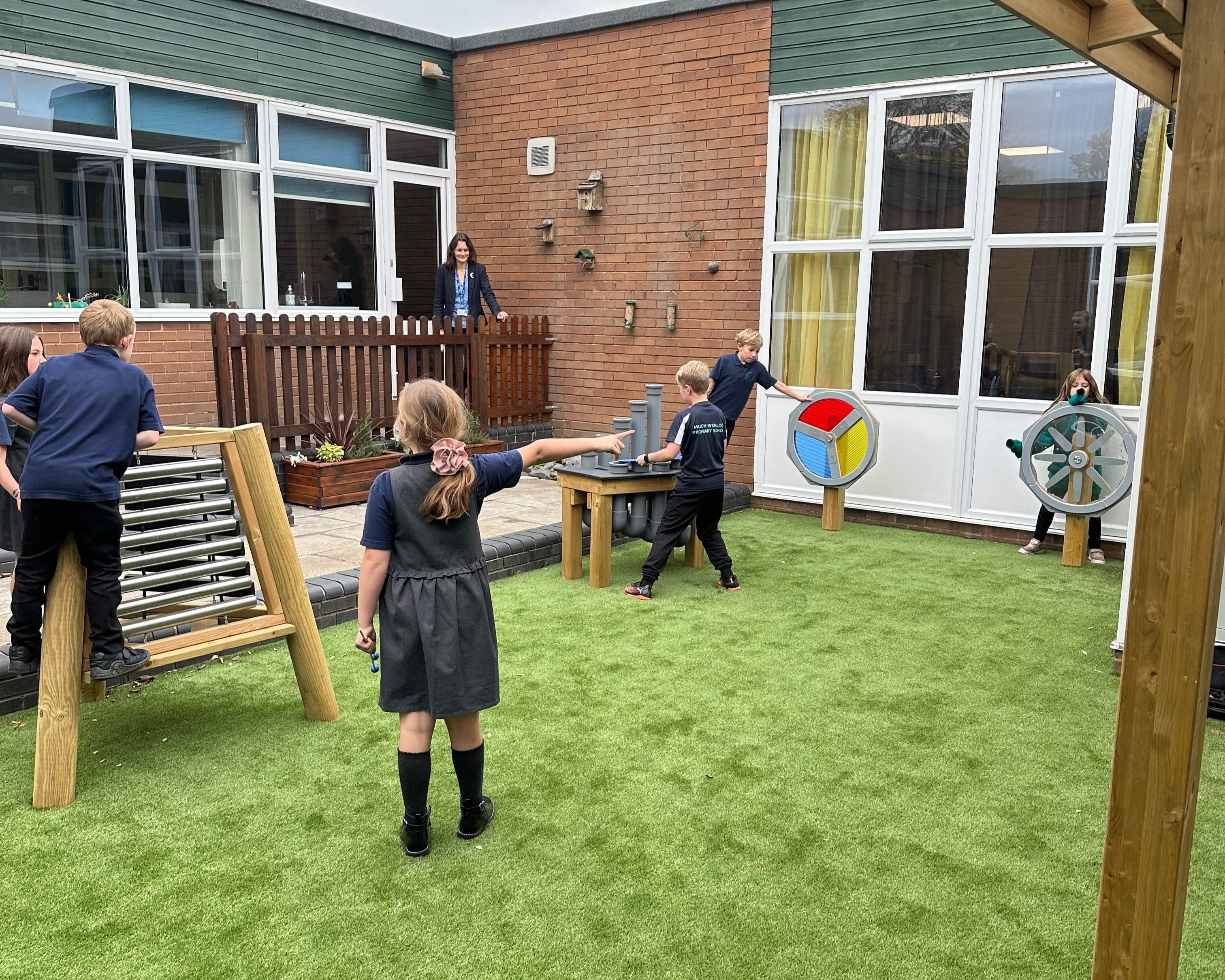
Staff shared how impactful the canopy had been, particularly in supporting year round use of the space. It ensured that outdoor learning could continue consistently, while also providing a calm and structured area that children could return to throughout the day.
Overall, this area included:
- A Bespoke 6m x 3.5m Timber Canopy
- A Sensory Spinner Wind Farm Package
- A Straight Planter Bench
- A Batonka
- A Musical Triad
- Four Large Moveable Artificial Grass Topped Seats
- A Freestanding Storytelling Chair
- 68m² of Artificial Grass Surfacing
A Garden That Grows with Every Child
Working with Much Wenlock Primary School has been a truly rewarding experience for our team. From the very first conversation with Emma Nicholas, it was clear how much thought and care was going into creating an environment that would genuinely support every child’s development, particularly those with additional needs.
What makes this project stand out is how intentionally the space has been designed. Every area of the garden now serves a purpose, whether that is encouraging physical development, supporting communication, or providing opportunities for calm, sensory play. The result is a space that feels balanced, inclusive and full of opportunity.
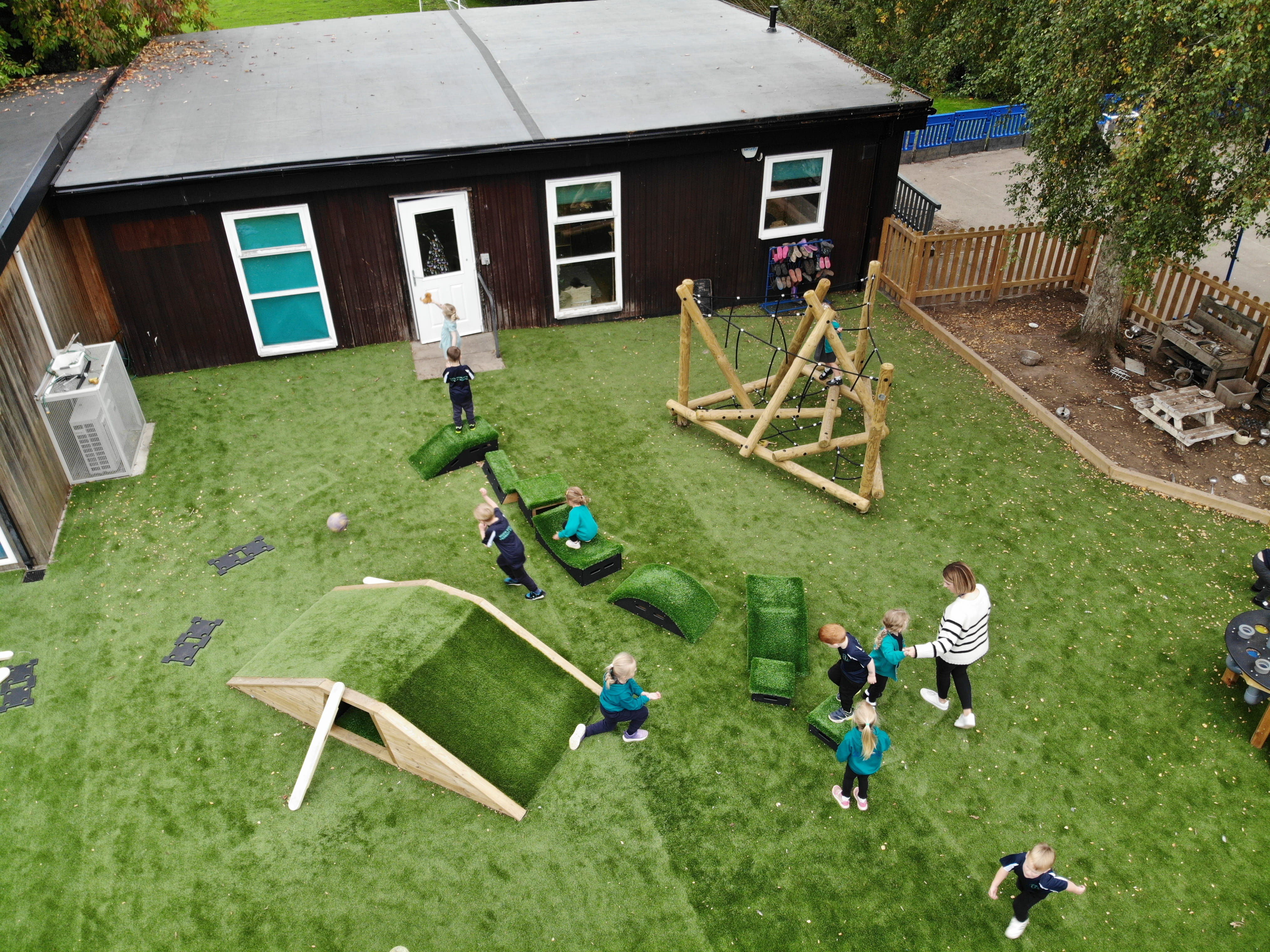
Staff spoke positively about how the redesigned garden has changed the way children engage with outdoor play. Pupils are more confident, more independent and more willing to explore, with many moving naturally between areas depending on their needs and interests. It is this freedom of choice that has made such a meaningful difference.
We are proud to have supported Much Wenlock Primary School on this journey and look forward to seeing how the EYFS garden continues to support their pupils as they grow, learn and thrive!