

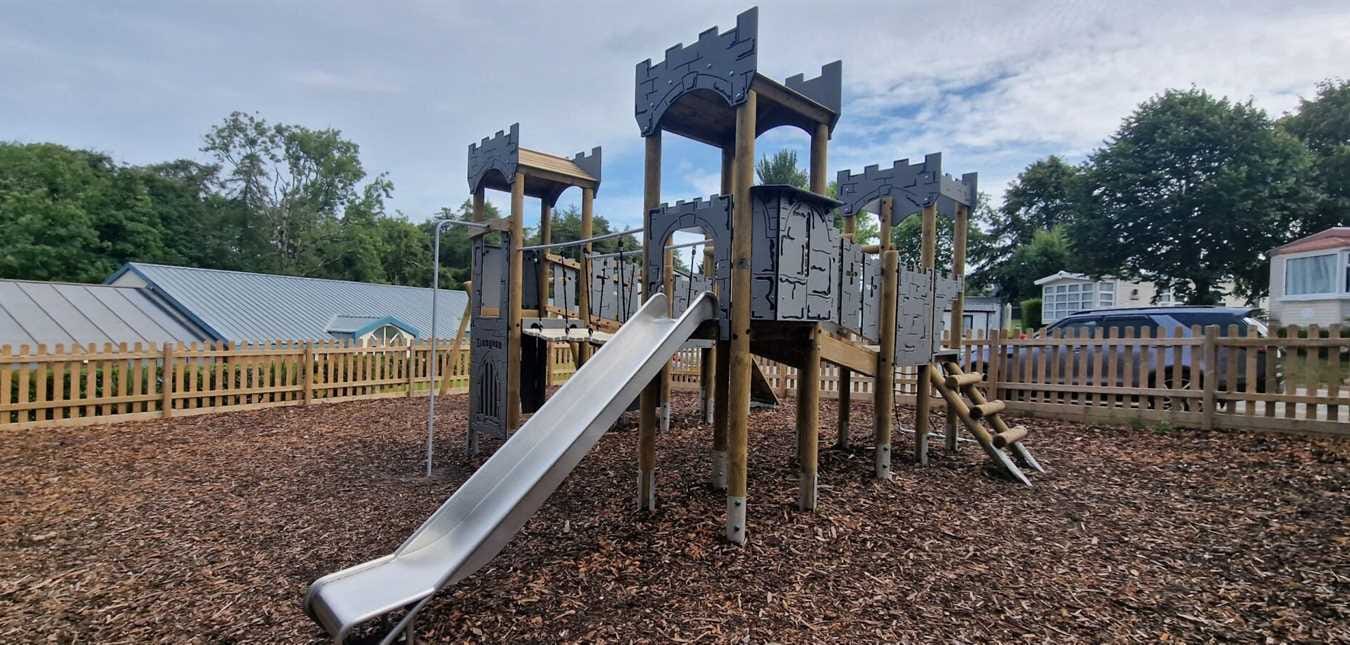
How to Design a Playground for a UK Holiday Park!

With millions of Brits travelling up and down the UK for their holidays, holiday parks play a huge role in providing a safe space for holiday goers to explore new places, whilst taking a well-deserved break.
From campsites to caravan parks, a study from Mintel revealed that there is over 6,100 holiday parks across the UK, meaning competition to attract new and returning visitors is tougher than ever. But, you might be surprised to hear that your playground could be the key to introducing your park to thousands of people!
Research from VisitBritain showed that over 60% of families consider child-friendly facilities essential when choosing a domestic holiday. Furthermore, playgrounds consistently ranked in the top three most valued amenities (alongside swimming pools and family dining).
In this guide, we're going to walk you through the process of creating a highly engaging bespoke play area, and how certain elements can take a plain playground to a whole new dimension!
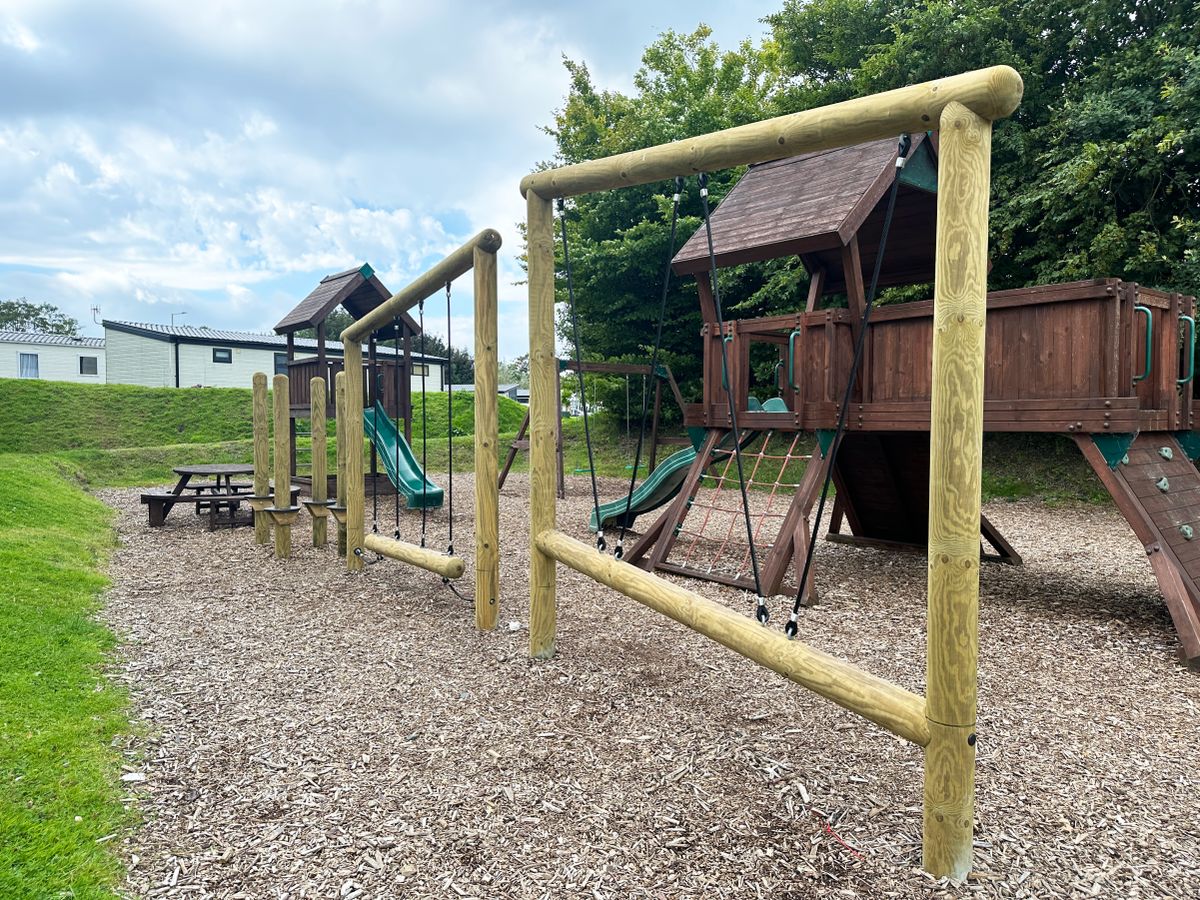
Why a Holiday Park Playground is Different to Any Other
Holiday park playgrounds face unique pressures and challenges that community or school playground don't. These include:
- High rates of seasonal footfall
- Mixed age ranges
- Lower adult supervision
- Need to work in all weather conditions
- It needs to be memorable
By understanding these specific pressures, it will help you take the first step into delivering the perfect playground project for your holiday goers.
A Guide on Creating a Bespoke Playground for your Holiday Park
Now, lets move on to the fun part: creating a high-quality playground for your holiday park! However, it's important to note that to design an effective playground, every element must be considered. From positioning to surfacing, the combination of all these different factors is what leads to an incredible play space.
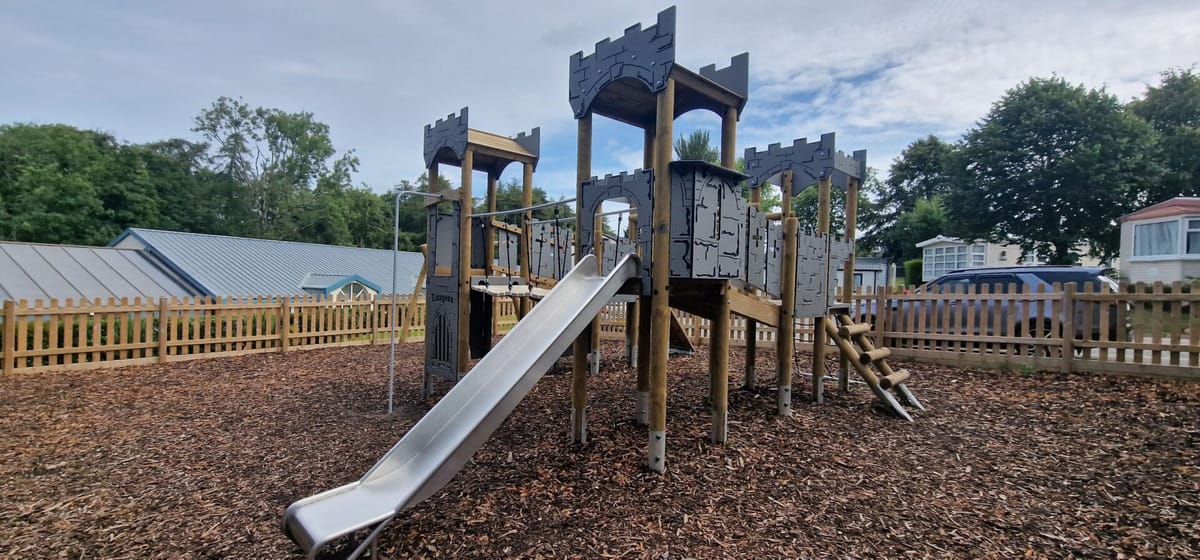
In addition, the more thorough you are with this process, not only will the quality of your play area increase, but your new playground will be a safe space for children to develop both physically and cognitively.
By creating a safe, inclusive playground, you can be guaranteed that your play space will be a hit with holiday goers, and will remain a core memory for thousands of children to look back on and smile about.
Step 1 - Define Your Outdoor Play Space and User Profile
Before a single piece of equipment is chosen, the most important work in designing a holiday park playground happens on paper (and often, it's the stage operators are most tempted to rush!).
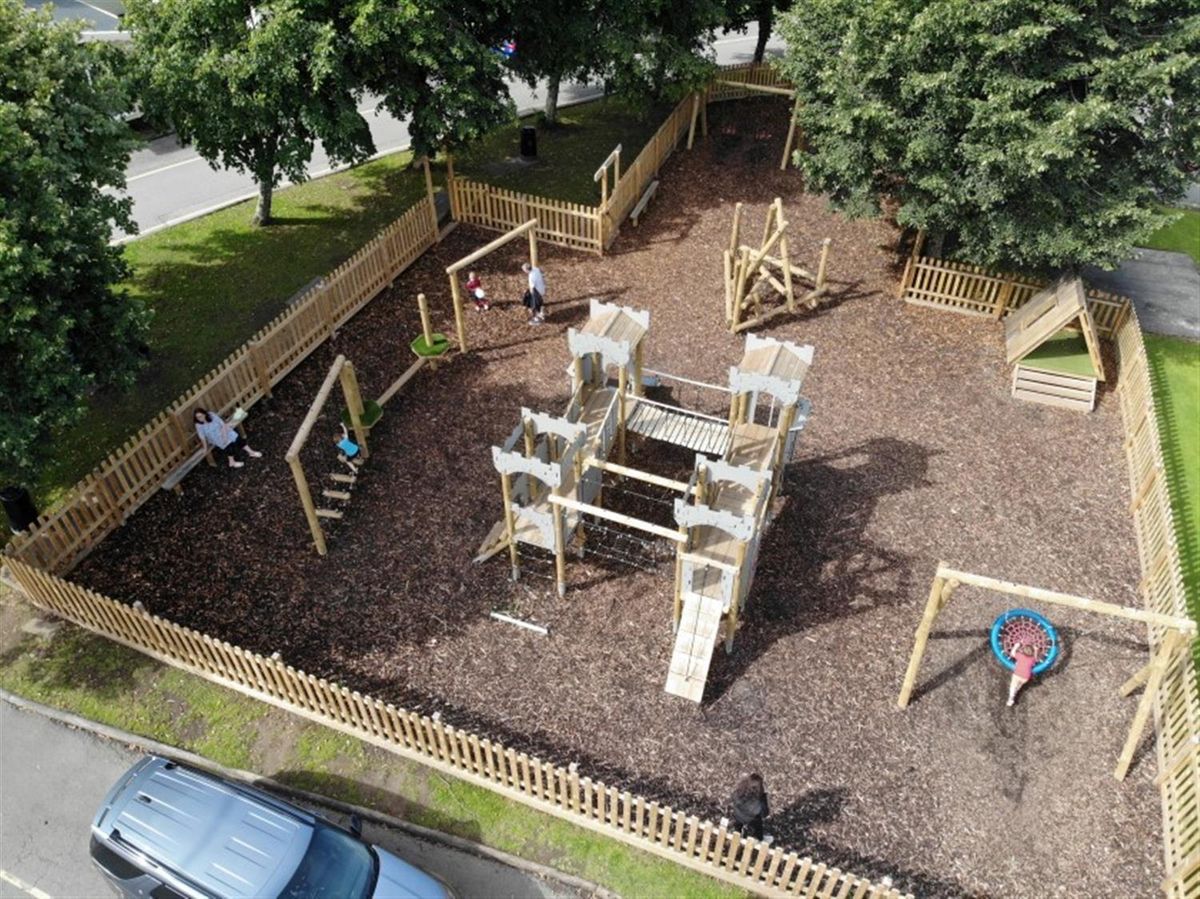
Getting the space assessment and user profile right at the outset saves significant time, money, and frustration later. Getting it wrong is one of the most common reasons playground projects end up underdelivering on their potential.
Assessing Your Space
Start with what you have, your available area. This space will help you shape every future decision regarding your playground, from the number of pieces of play equipment and surfacing types to how the area will be zoned out and the flow of the space.
To get started, walk around your empty space with fresh eyes (and maybe a coffee!) and start to consider the following factors:
- Gradient and ground conditions - just because your space is on a slop doesn't mean that you can't create a great playground! However, it will require more careful planning around elements like levelling, drainage and equipment placement. Addressing this early can improve safety surfacing performance and the stability of the installed equipment.
- Drainage - from our experience, poor drainage is one of the most frequently overlooked factors when it comes to picking a location to install a playground. If the space is prone to waterlogging, this could lead to your playground becoming unsafe and unusable during periods when your guests need it the most (such as autumn half term, Easter and wet summer weeks). Assess how water moves across the area and research safety surfacing that would suit and assist it.
- Proximity to accommodation and amenities - a lot of our clients are always surprised to hear this one, but location is one of the most important factors for your new playground! positioning your playground within a natural sightline of parent amenities like seating areas, cafés, or outdoor dining spaces isn't just about convenience. It directly affects how long families spend in and around the play area, which has a measurable impact on secondary spend and overall guest satisfaction!
- Sightlines and supervision - similar to the previous point, placing the play area in a well-situated space not only means that guests will utilise it and hang around longer, but it also provides a great way for parents to supervise their children without being directly involved. Unlike school playgrounds which have constant adult supervision, holiday parks need to understand that parents are relaxing too, so try to place the play area in open layouts and aim to make the entire space visible from a single vantage point (where possible).
- Shade and shelter - we're sure that this comes as no surprise, but the UK weather and climate is unpredictable (putting it politely!). Due to this, play spaces need to be built with shade and shelter in mind. Integrating natural shade through planting and landscaping, or incorporating sheltered structures within or adjacent to the play area can be a huge help in ensuring children can remain comfortable whilst playing.
Understanding Your User Profile
Once you understand the space, the next step is understanding exactly who will be using it. Whereas this step is relatively easy for schools and community projects, this can be incredibly complex for holiday parks than it first appears.
Unlike a school playground, which serves a defined age range within a relatively narrow band, a holiday park playground needs to cater for the full spectrum of family guests. A family arriving for a week's stay might include a toddler of 18 months, a six-year-old, and a ten-year-old. All of these ages will need to find something engaging in the same space, ideally within sight of each other so parents aren't being pulled in different directions.
.jpg)
Think about the typical profile of your guests. A glamping site or boutique lodge park is more likely to attract younger families with children under five, meaning the play provision should lean heavily towards toddler and early years equipment with appropriate surfacing and lower fall heights. A large traditional holiday park or caravan site with a broader family demographic needs a wider equipment range that scales from toddler play through to more physically challenging structures for older children and pre-teens.
Consider also the pattern of use. Holiday park playgrounds experience intense bursts of use (particularly in the late afternoon and early evening when families return from days out) followed by quieter periods. Equipment choices and layout should account for this, making sure the space can comfortably absorb a high volume of simultaneous users during peak periods without creating bottlenecks or unsafe crowding around individual pieces.
Planning for Budget and Phasing
Few holiday park playground projects are delivered in a single phase, and nor should they need to be. A well-designed masterplan allows operators to invest in the highest-priority elements first. This typically involves the main play structure, safety surfacing, and fencing. While this is happening, you should continue to plan future phases to ensure your investment is spread evenly.
Getting the masterplan right at the outset is essential even if the full vision won't be delivered immediately. Installing a main play structure without accounting for where future equipment will sit, or laying surfacing that doesn't allow for expansion, creates costly constraints further down the line.
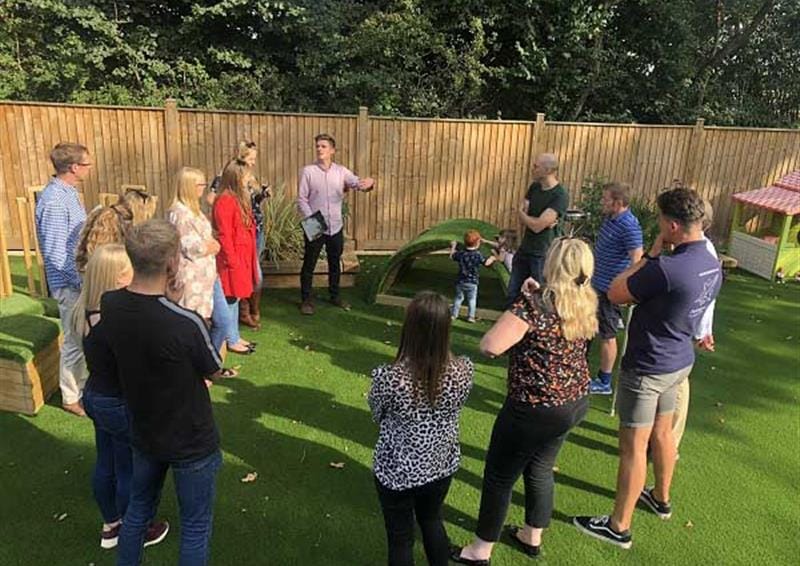
Pentagon Play's free site consultation is designed specifically to work through these questions with you before any commitments are made. Our team will assess your space, talk through your guest profile and commercial objectives, and help you build a phased plan that works for your budget today and your ambitions for the future.
Step 2 - Age Zoning: Designing for Everyone at Once
For holiday park owners, one of the biggest design challenges is creating a play experience that works for everyone at once. Unlike a school playground serving a single year group, your play area needs to engage a toddler, a seven-year-old, and a ten-year-old from the same family, at the same time and ideally within sight of each other (simple, right?)!
The solution to this problem is zoning. Zoning is where you divide the pace into distinctive areas that offer an appropriate range of play equipment for different age groups, whilst keeping the overall space feeling connected rather than fragmented.
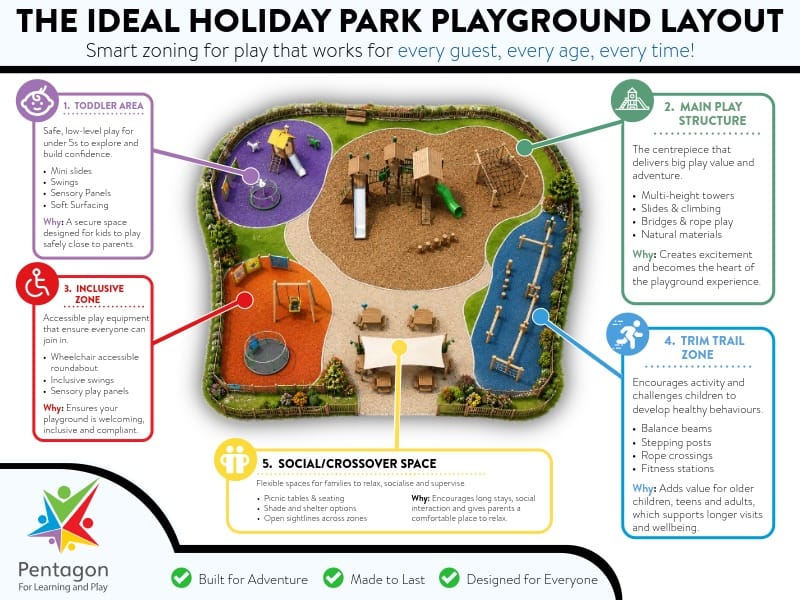
Below are a few example zones that a lot of our holiday park clients have requested for their play spaces.
Zone 1 - Under 5s
This zone should prioritise lower equipment with gentle physical challenges, sensory play elements, and surfaces appropriate for younger children. Thermoplastic markings, low-level climbing frames, sand and water play, and simple role play structures all work well here. Keep this zone closest to parent seating so younger children can be supervised easily while older siblings use the rest of the space independently.
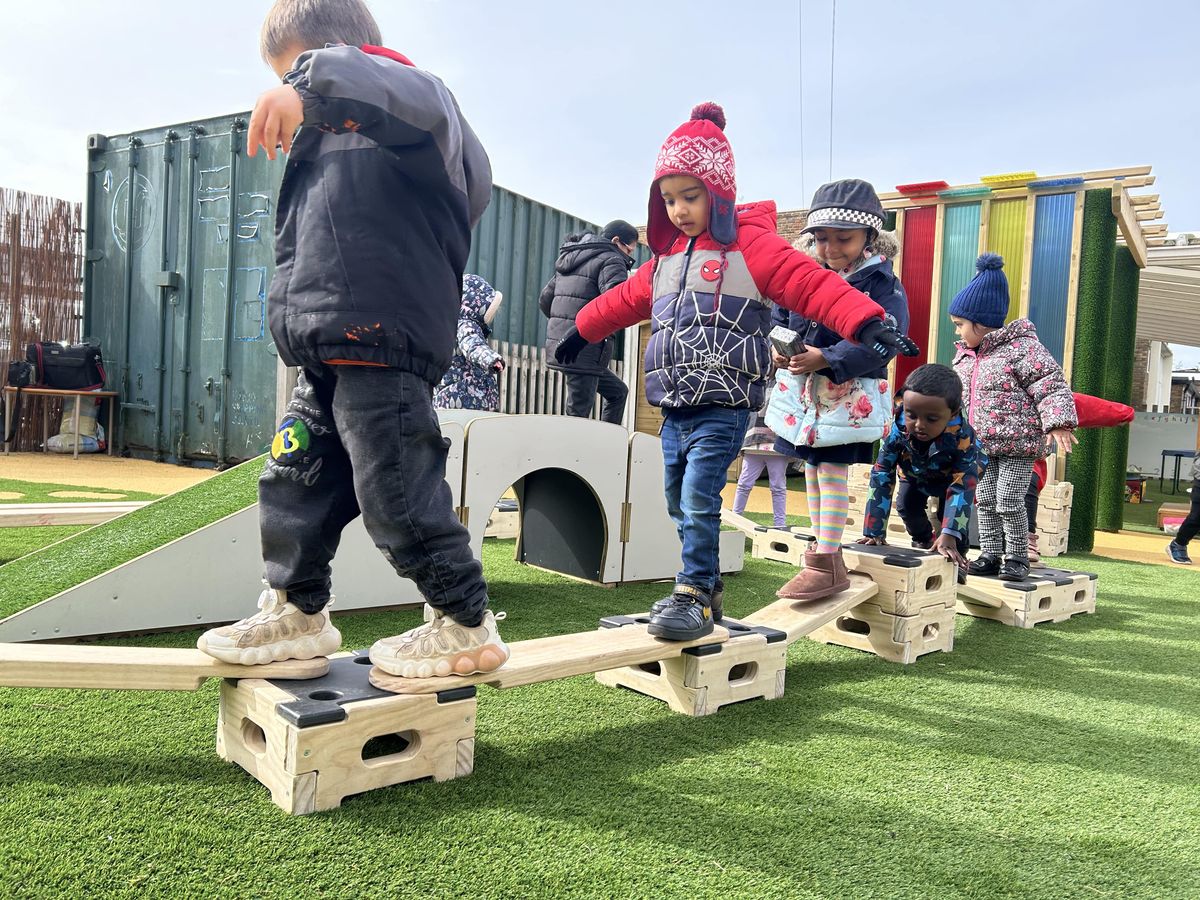
Zone 2 - 5 to 11s
This is typically the largest zone and the one that anchors the whole play area. Multi-level play towers, trim trails, play frames, swings, and slides all sit here. Play equipment in this zone should offer kids a genuine physical challenge (which will engage them more as they are pushed beyond their comfort zone.). This is where Pentagon's play towers and adventure frames tend to become the centrepiece of the design.
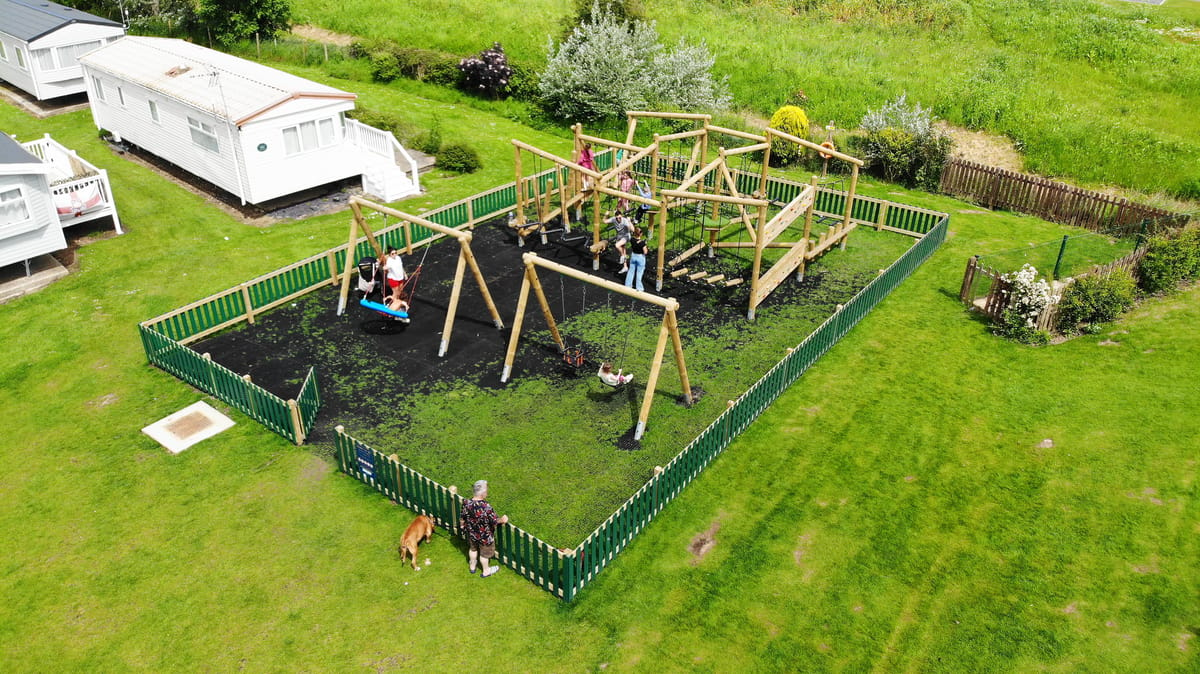
Zone 3 - Crossover and Social Play
The most effective holiday park playgrounds include at least one area where different ages naturally interact, with elements like collaborative play structures, group swings, or open space for imaginative and free play. These crossover zones are what create the family-fun atmosphere that keeps guests coming back.
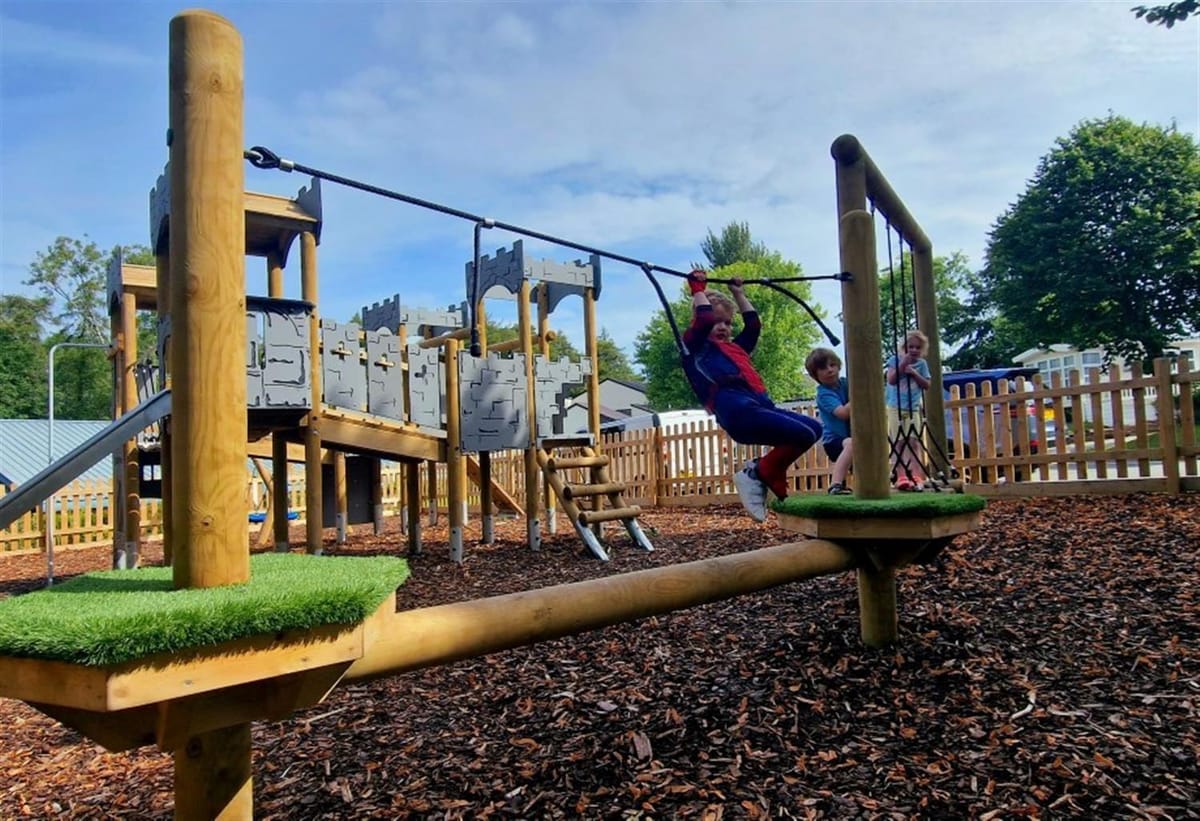
Connecting the Zones
It's important to note that zoning doesn't mean building three separate playgrounds. The most successful designs use surfacing, landscaping, and natural sight lines to guide children between zones intuitively, while keeping the whole space visible to parents from a single seating area.
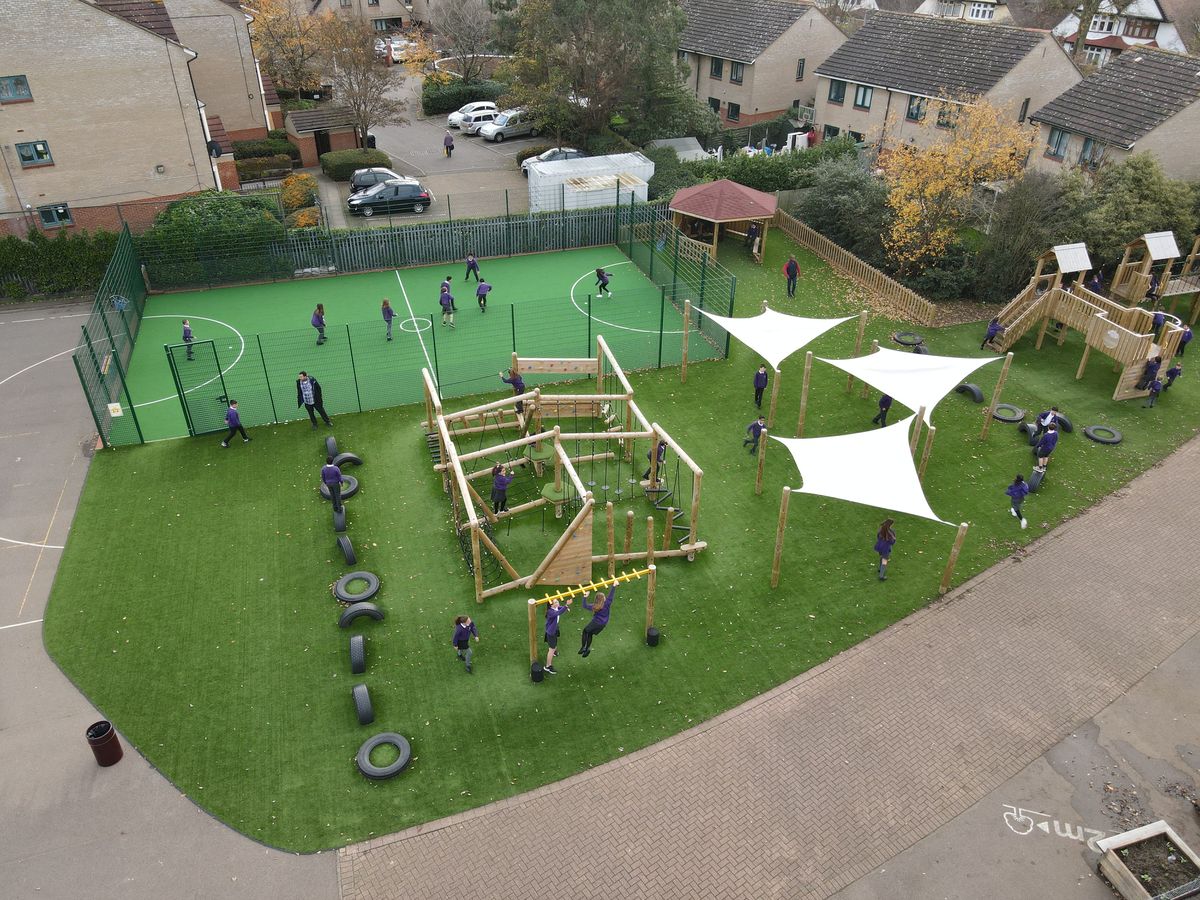
A trim trail that weaves between zones, or planting that softly defines boundaries without creating barriers, keeps the space feeling cohesive and adventure-led rather than segmented.
Step 3 - Choosing the Right Equipment for Heavy Commercial Use
Holiday park playground equipment works harder than almost any other category of play provision. Whereas aa school playground is used intensively for perhaps an hour a day across 190 days a year, a busy holiday park playground can see continuous use across a full day, every day, throughout peak season, in all weathers, by children of varying ages and weights, with minimal supervision between visits. No pressure, right?
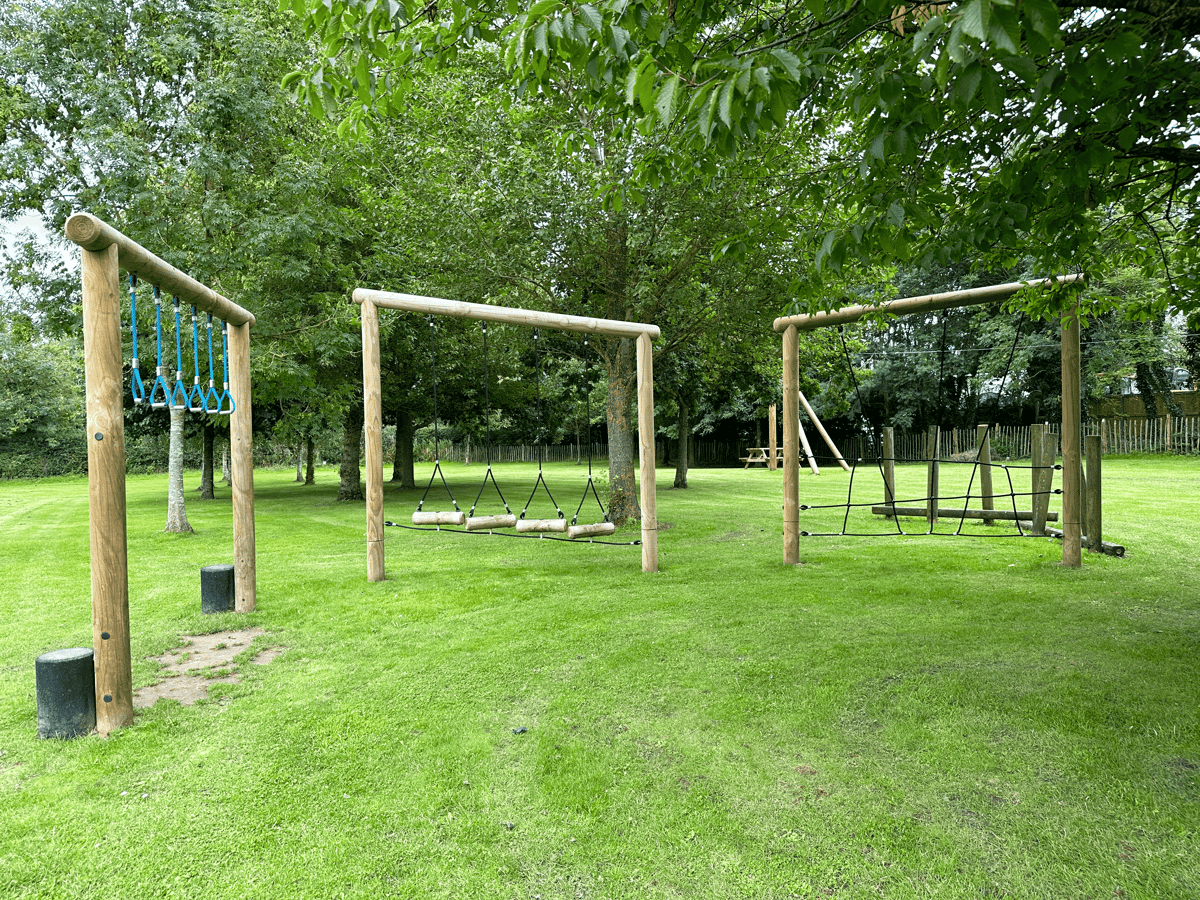
That intensity of use changes the specification conversation entirely.
Durability Has to Come First
The materials and manufacturing process that are great for a school setting may not stand up to the demands of commercial holiday park use. Timber quality, fixing specifications, rope grades, and surface finishes all need to be specified for heavy, repeated use rather than standard residential or educational environments.
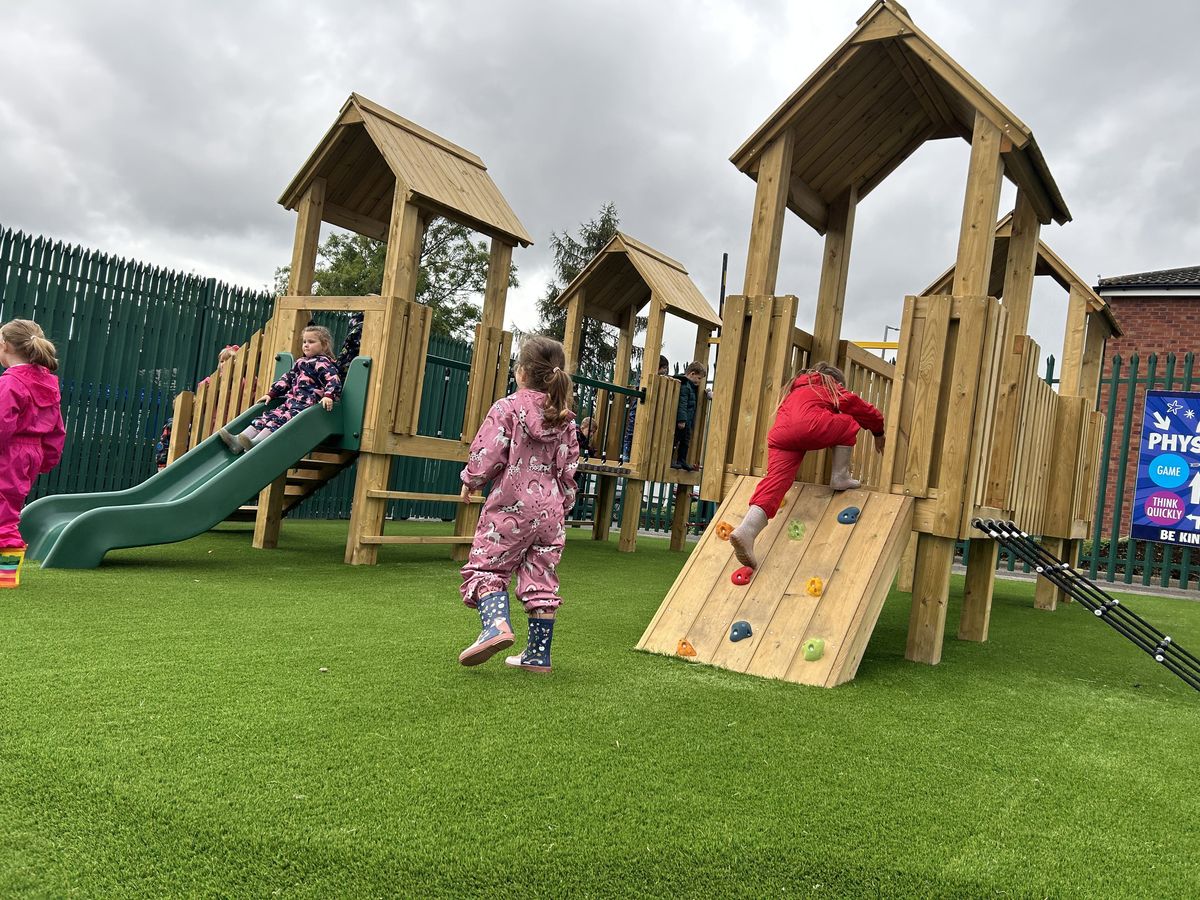
Pentagon Play uses sustainably sourced play-grade timber throughout its commercial range, backed by a 15-year timber guarantee. That longevity matters commercially, as equipment that degrades visually or structurally within a few seasons becomes a liability rather than an asset, both in terms of maintenance costs and the impression it creates on arriving guests.
Equipment That Works in This Setting
Not every piece of playground equipment is suited to a holiday park environment. The most effective choices tend to be:
- Play towers - multi-level structures with slides, bridges, climbing nets and platforms are consistently the most-used pieces in commercial settings. They accommodate multiple children simultaneously, offer different challenge levels within a single structure, and create the visual centrepiece that makes a playground feel worth visiting.
- Trim trails - obstacle courses that encourage physical play activities across balance, coordination and strength. They work particularly well in holiday parks because they can be designed to weave through a space, creating a sense of journey and exploration that suits the adventure-led expectations of holiday guests.
- Swings - popular across all age groups and a staple of any play experience that families expect to find. Specify commercial-grade swing sets with appropriate fall zones and impact-absorbing surfacing beneath.
- Inclusive equipment - roundabouts, accessible platforms, sensory panels and ground-level play features ensure all children can engage with the space regardless of ability. Increasingly, families actively seek out settings where every child in their group can play together.
- Themed structures - bespoke theming that reflects the character of your park creates a memorable, photogenic play area that guests share on social media and remember when choosing where to book next year. Pentagon's in-house design team can develop themed equipment that complements your surroundings, whether that's a coastal aesthetic, a woodland adventure setting, or something entirely bespoke to your brand!
A Note on Ongoing Maintenance
Heavy commercial use means maintenance needs to be factored into the design decision from the outset, not treated as an afterthought. Equipment that is difficult to access for inspection, uses parts that are hard to replace, or uses materials that degrade quickly in outdoor conditions will cost significantly more to maintain over its lifetime than equipment specified correctly from the start.
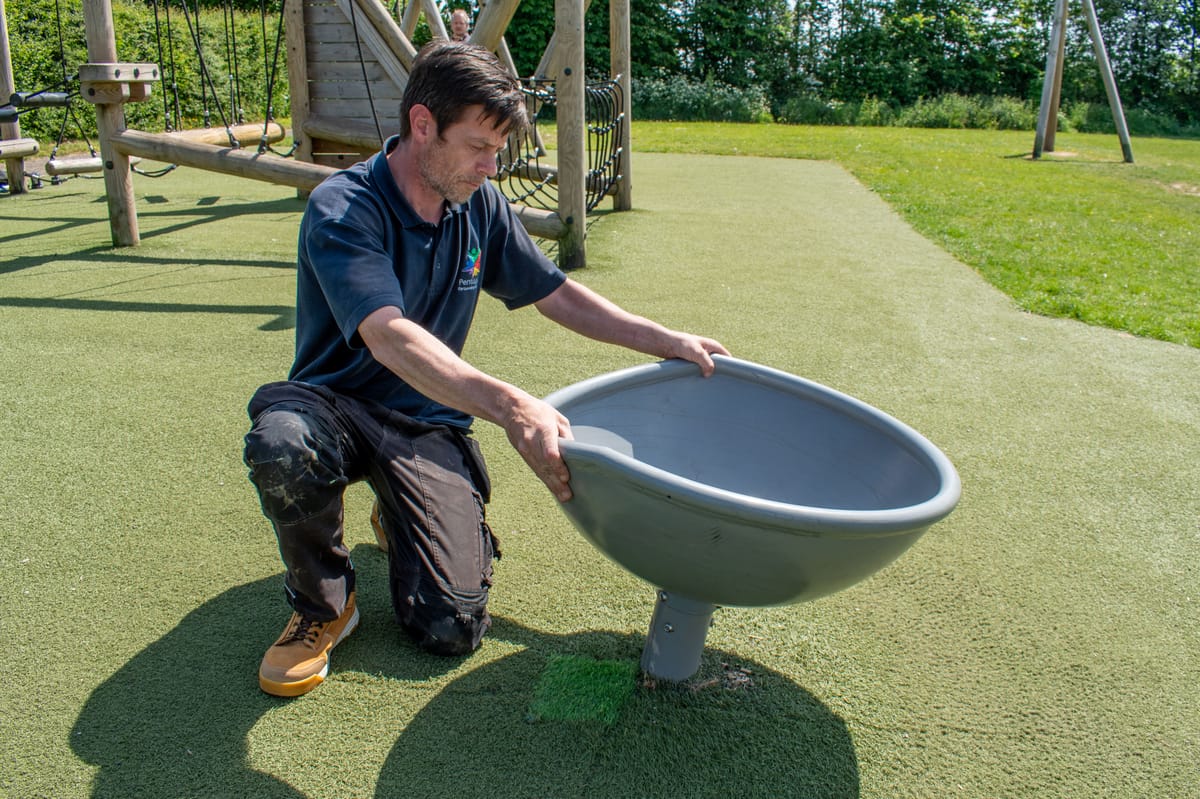
Pentagon's inspections and maintenance service is designed specifically for commercial operators who want a documented, professionally managed maintenance programme, which helps in keeping equipment safe, compliant, and looking its best throughout the season.
Step 4 - Theming to Match Your Park's Identity
For holiday park owners, theming is one of the most powerful tools available when designing a play area, and one of the most underused. A well-themed playground doesn't just entertain children, but it creates a visual identity for your park that guests notice the moment they arrive, photograph throughout their stay, and remember when they're deciding where to book next year.
The starting point for any theming decision should always be the park itself. What is the character of your setting? What do guests come to you for? The most successful themed playgrounds feel like a natural extension of the park's surroundings and brand, rather than a brightly coloured structure plopped into a field!
From our experience working with the biggest holiday parks in the UK, we've listed some of the most common themes that are sure to leave an impact.
Coastal and Maritime
For parks in coastal locations, nautical theming (such as ship structures, lookout towers, rope bridges, and wave-form surfacing) creates an immediate sense of place that resonates with the seaside holiday experience guests are seeking.
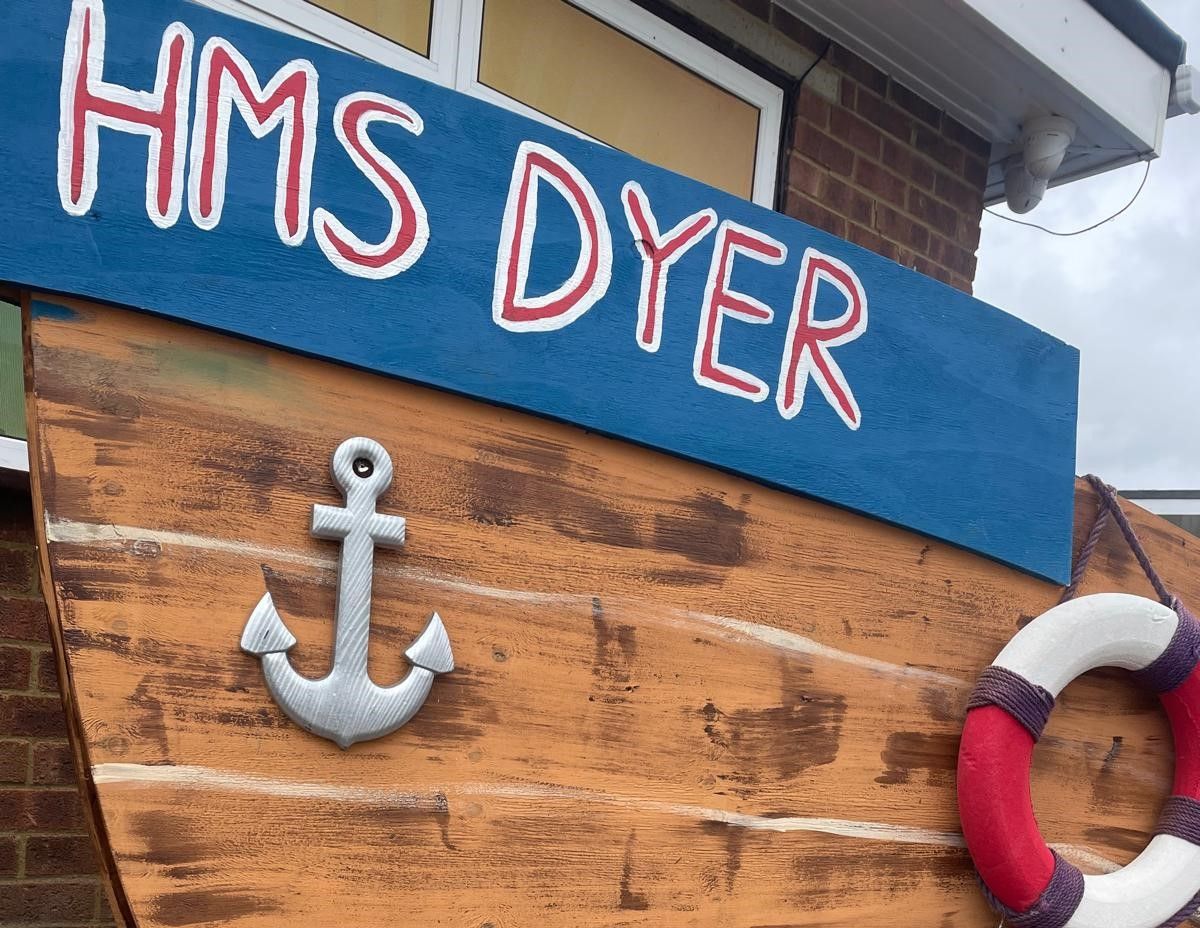
Natural timber with rope detailing and subtle touches of colour works particularly well in these settings, complementing the landscape rather than competing with it.
You can see more of this theme from the work we did on Dyer's Caravan Park!
Woodland and Nature
For countryside, forest, or rural glamping settings, a nature-led aesthetic is almost always the right choice.
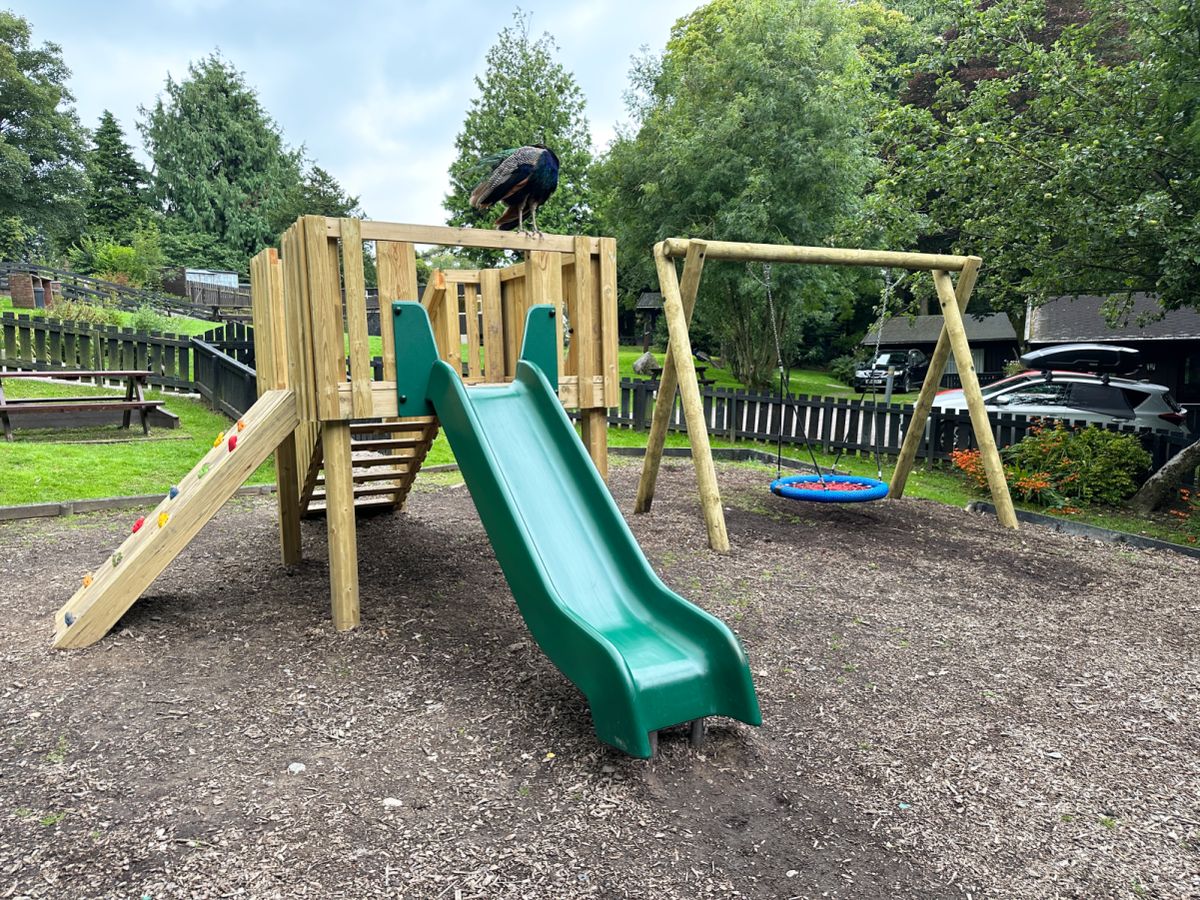
Pentagon's sustainably sourced timber structures blend naturally into woodland surroundings, and can be complemented with nature planting structures, log trails, and bark or grass surfacing that feels organic rather than imposed on the landscape. This aesthetic is increasingly sought after by the growing glamping market, where guests are specifically choosing a natural outdoor experience.
A great example of this theme in action can be seen in our work with Bowland Fell Holiday Park!
Adventure and Explorer
For parks that want to position themselves as active, outdoor destinations, an adventure theming (with elements like rope courses, climbing towers, climbing frames, and exploration-led structures) communicates that message visually and immediately to arriving families.
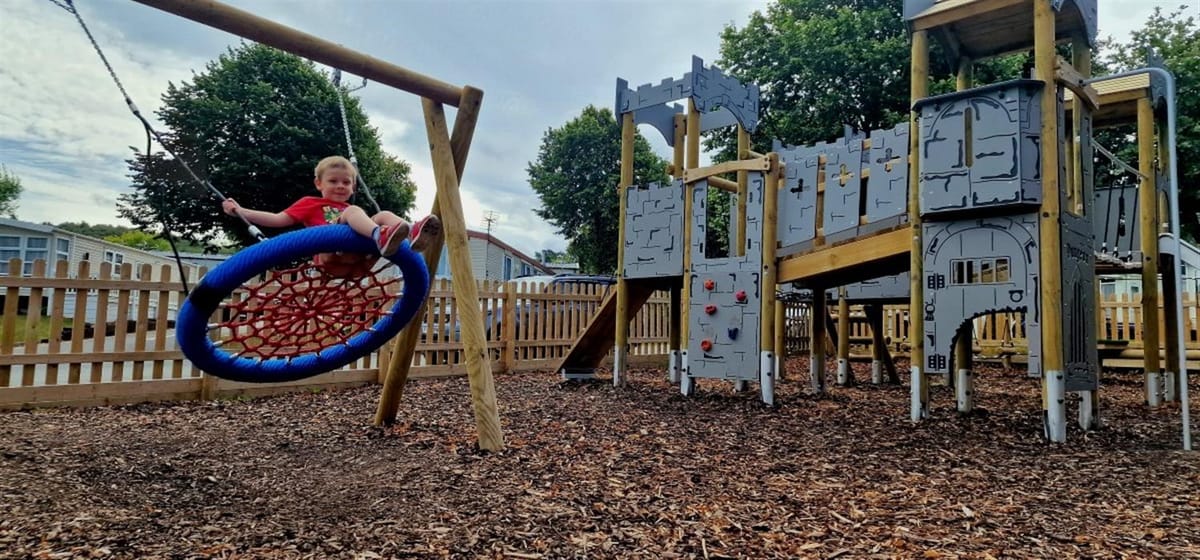
This theming works across a wide age range and tends to drive the most active, repeat use of the play area throughout a stay. A great example of this was our work with Brynteg Holiday Park!
Bespoke Brand Theming
For parks with a strong existing brand identity, Pentagon's in-house design team can develop genuinely bespoke themed structures that incorporate your colours, logo, or a story that's unique to your setting.
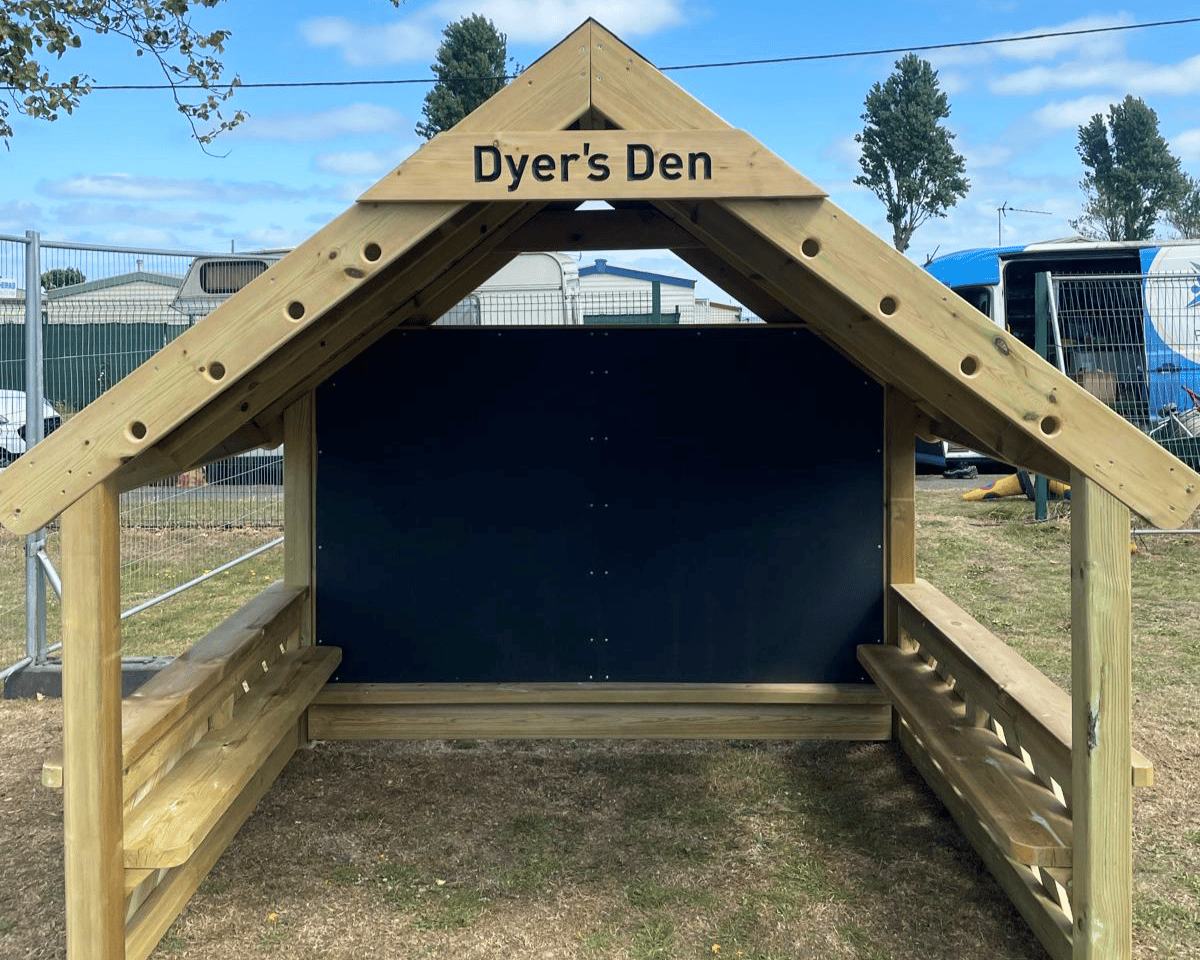
This level of customisation creates a play area that no other park has, which creates a tangible, photogenic USP that supports your marketing as much as it supports your guests' enjoyment.
A Practical Note
Whatever theming direction you choose, ensure it works at the equipment specification level rather than just the aesthetic level. Theming applied as surface decoration to standard equipment fades, chips, and dates quickly. Theming that is built into the design and construction of the equipment itself (through timber shaping, structural forms, and quality finishes) maintains its appeal across the lifetime of the installation.
Step 5 - Inclusive Design: Catering for Every Child
Inclusive design is no longer an optional extra in commercial playground provision. It's an expectation. Families that include children with disabilities, sensory differences, or additional needs actively research play facilities before booking, and a playground that excludes any child in the group is one that reflects poorly on the park as a whole.
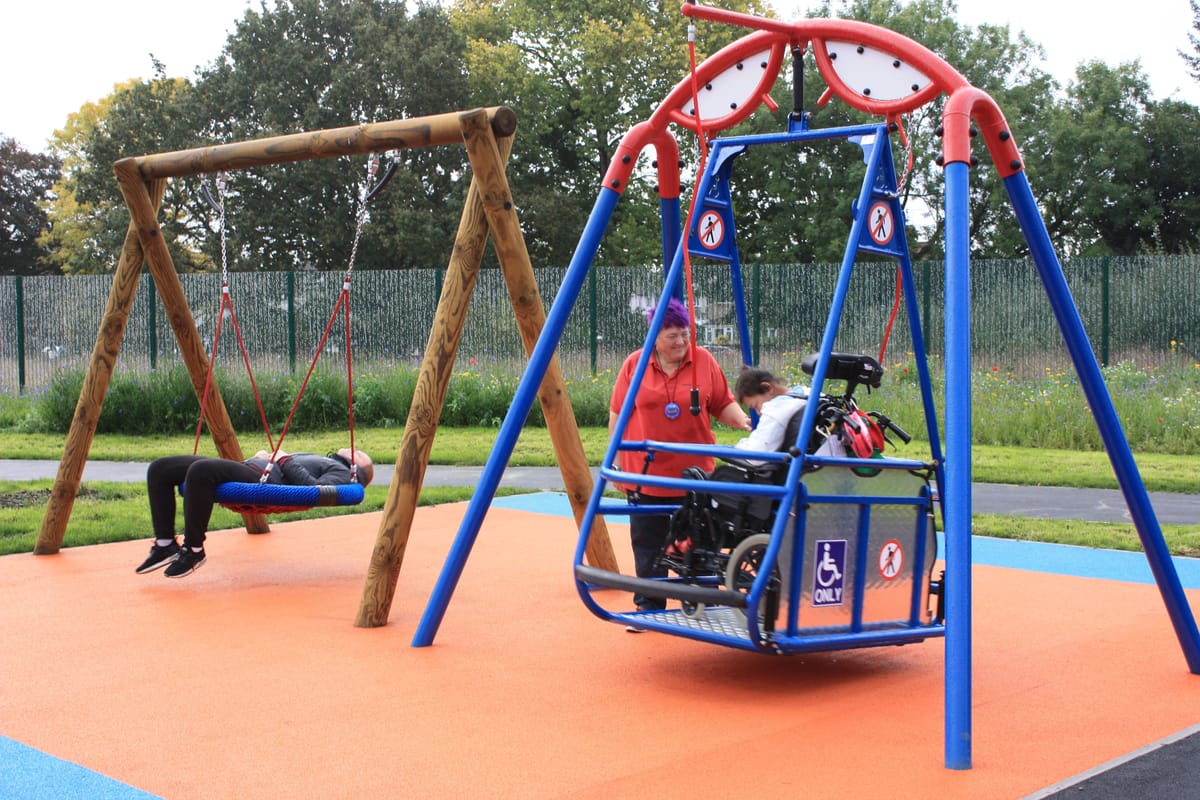
The good news is that designing inclusively doesn't mean designing two separate playgrounds! The most effective approach (and the one Pentagon's design team takes as standard) is designing one cohesive space where every child can play together, each finding something that works for them without feeling singled out or directed to a separate area.
Physical Accessibility
Accessible routes through and around the play area are the foundation of inclusive design. This means considering surface choices that allow wheelchair users and children with mobility aids to navigate the space comfortably, ramp access to elevated platforms where possible, and gate widths that accommodate buggies and wheelchairs without making entry feel like an obstacle course in itself.
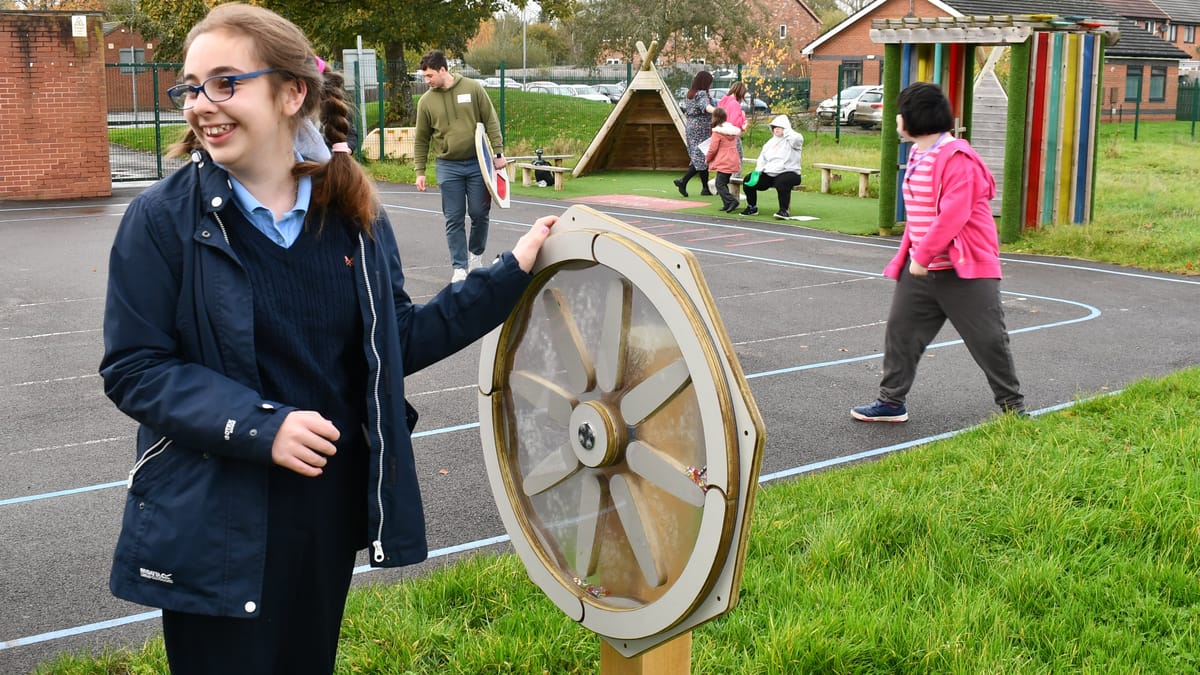
Ground-level play features (such as sensory panels, musical elements, interactive boards, and low-level climbing) ensure that children who aren't able to access elevated structures can still engage meaningfully with the play area alongside their peers.
Sensory Play
Children with sensory processing differences, autism, or anxiety often find busy, loud play environments overwhelming. Including quieter zones within the overall play area, like a nature-focused corner with planting, texture panels, and lower stimulation, gives these children a space to engage at their own pace while remaining part of the social environment.
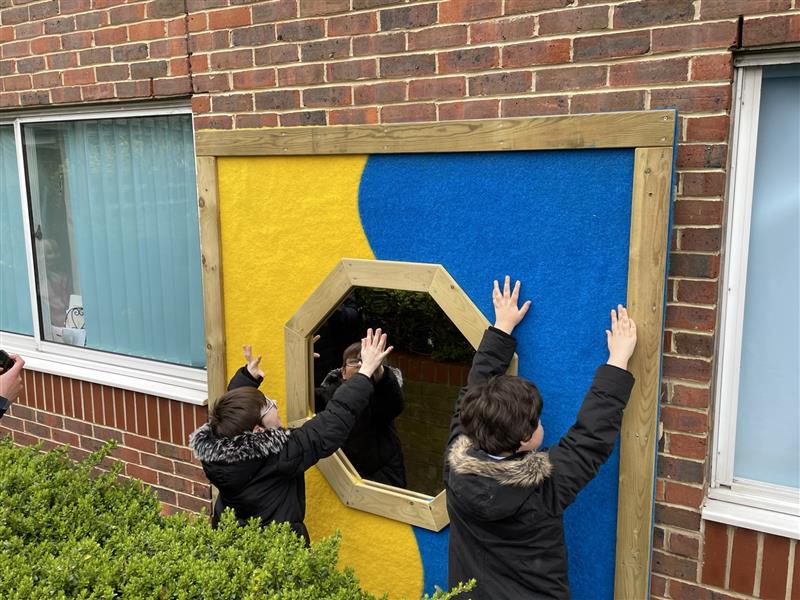
Sensory play equipment (panels with different textures, sounds, and visual elements) also benefits children with visual impairments, hearing differences, and developmental delays, while being equally engaging for children without additional needs.
Inclusive Equipment Choices
Specific equipment choices that support inclusive play in a holiday park setting include:
- Inclusive swings - wheelchair swings and basket swings that accommodate children who are unable to use standard swing seats independently, allowing them to experience one of the most universally loved pieces of playground equipment!
- Accessible roundabouts - designs that allow wheelchair users to remain in their chair while using the equipment, enabling genuine shared play between children of different abilities.
- Multi-sensory play panels - incorporated into or alongside main play structures, these extend the play experience for children who engage best through touch, sound, and visual stimulation rather than physical climbing.
The Commercial Case
Beyond the ethical imperative, inclusive design makes strong commercial sense. Families that include children with additional needs represent a significant and underserved market. The good news is that this market is actively loyal to settings that genuinely cater for them.
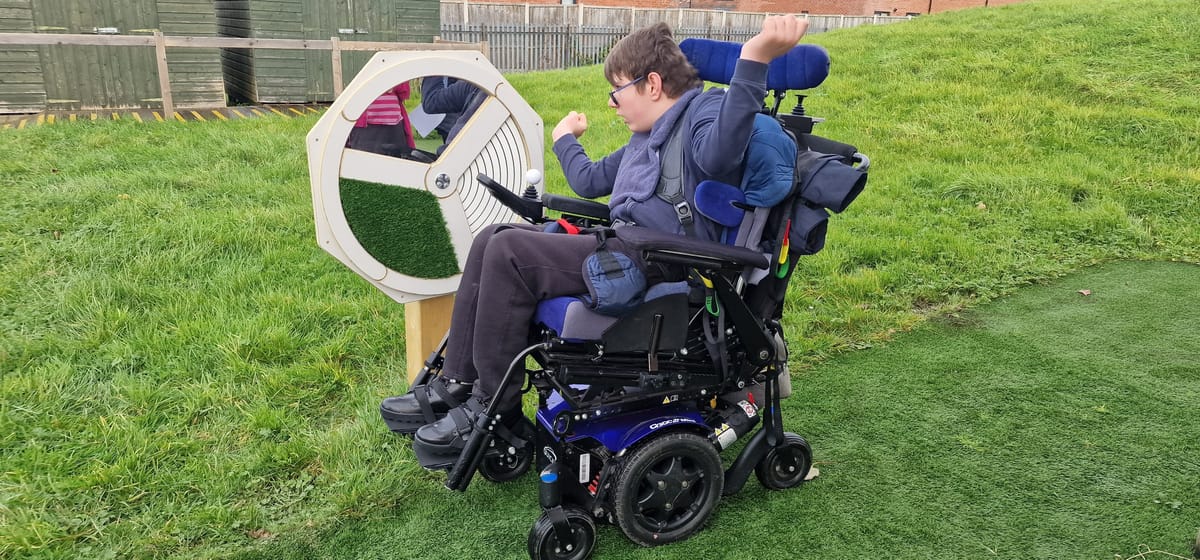
A holiday park with a well-designed inclusive play area stands out meaningfully from competitors and generates the kind of word-of-mouth recommendation that no marketing budget can replicate!
If you're looking for some inspiration, then check out our top 7 most inclusive playground activities, and see which you could incorporate on your playground.
Step 6 - Safety Standards and Compliance for Commercial Operators
Every holiday park playground in the UK must comply with two key safety standards:
- BS EN 1176 - which covers playground equipment
- BS EN 1177 - which covers safety surfacing
For commercial operators, understanding what these standards mean in practice isn't just a regulatory obligation, but it's a fundamental part of protecting your guests, your business, and your reputation.
As the operator of a commercial playground, the legal responsibility for maintaining a safe play environment sits with you. This is true regardless of who designed or installed the equipment, as once it's on your site, your duty of care begins and doesn't end until the equipment is removed.
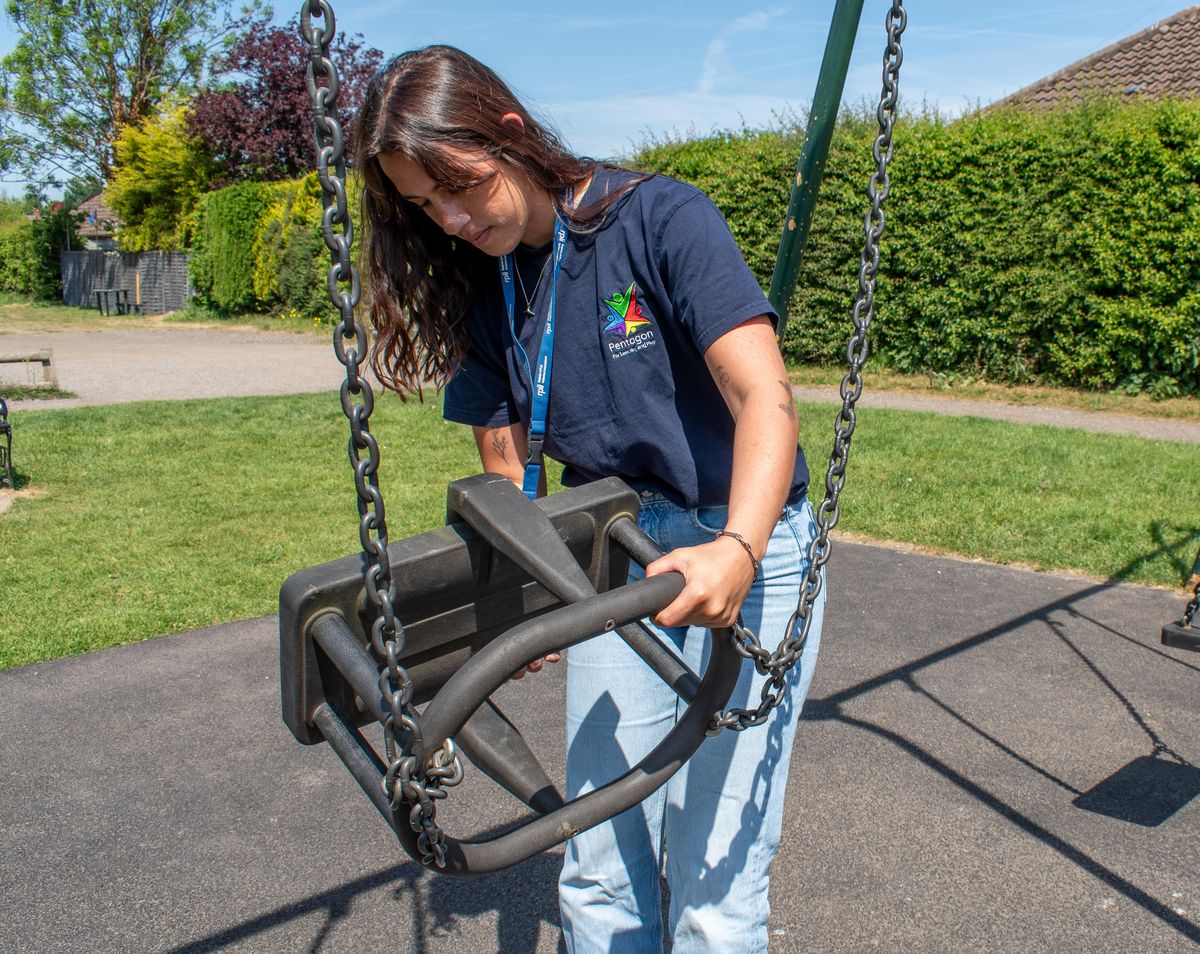
BS EN 1176 requires that all playground equipment is designed to withstand the demands of its intended use, including the intensity of commercial holiday park environments where equipment may see continuous use across long peak season days. Equipment that meets residential or low-use specifications but is placed in a high-footfall commercial setting may not satisfy this standard in practice.
BS EN 1177 governs the safety surfacing beneath and around equipment, setting requirements for critical fall height performance based on the height of the equipment above it. Safe play depends as much on what's beneath the equipment as on the equipment itself. Surfacing that has compacted, thinned, or degraded may no longer provide the impact protection it was installed to deliver.
The Importance of a Documented Inspection Programme
Health and safety compliance isn't a box ticked at the point of installation, but it's an ongoing responsibility that requires a structured, documented inspection programme throughout the lifetime of the equipment and surfacing!
For commercial holiday park operators, this means three tiers of inspection:
- Routine visual checks - carried out by your own staff on a daily or weekly basis during the season, looking for obvious damage, vandalism, or hazards. These should always be recorded.
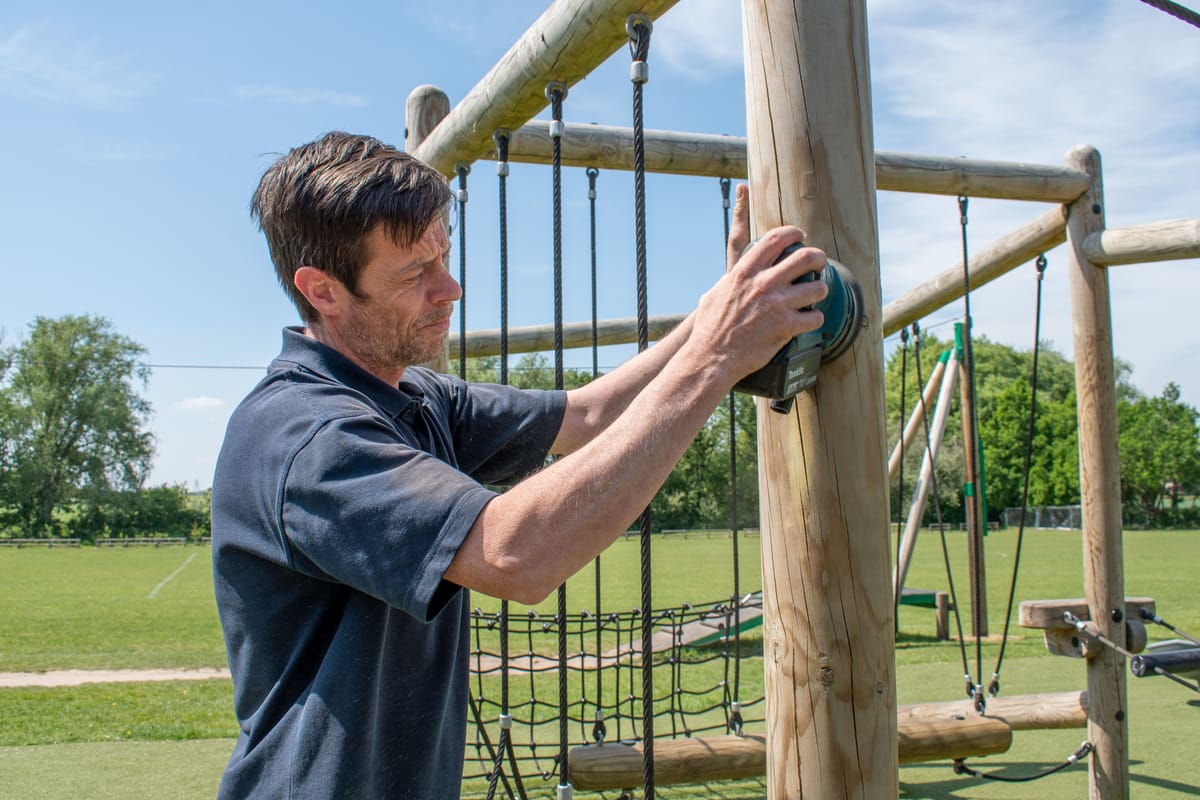
- Operational inspections - carried out every one to three months by a qualified inspector, covering equipment condition, fixing integrity, surfacing depth and performance, and any early signs of wear or degradation.
- Annual RPII inspection - carried out by an independent, RPII-accredited inspector who provides a full written compliance report. This is the documented evidence that demonstrates your playground is being actively managed to the standard the law expects.
Pentagon Play's inspections and maintenance service covers both operational and annual inspections for commercial holiday park settings, providing the compliance reports and maintenance records your insurers and local authority may ask to see.
For a full guide to playground safety standards and your legal responsibilities as an operator, read our complete guide to UK playground safety standards.
Planning Permission - What Holiday Park Operators Need to Know
One question Pentagon's commercial team hears regularly from holiday park operators is whether planning permission is needed before installing a playground. The honest answer is: it depends! Getting this wrong at the outset can cause costly delays to a project, so it's important to know whether your project will require it.
When Planning Permission Is Likely Required
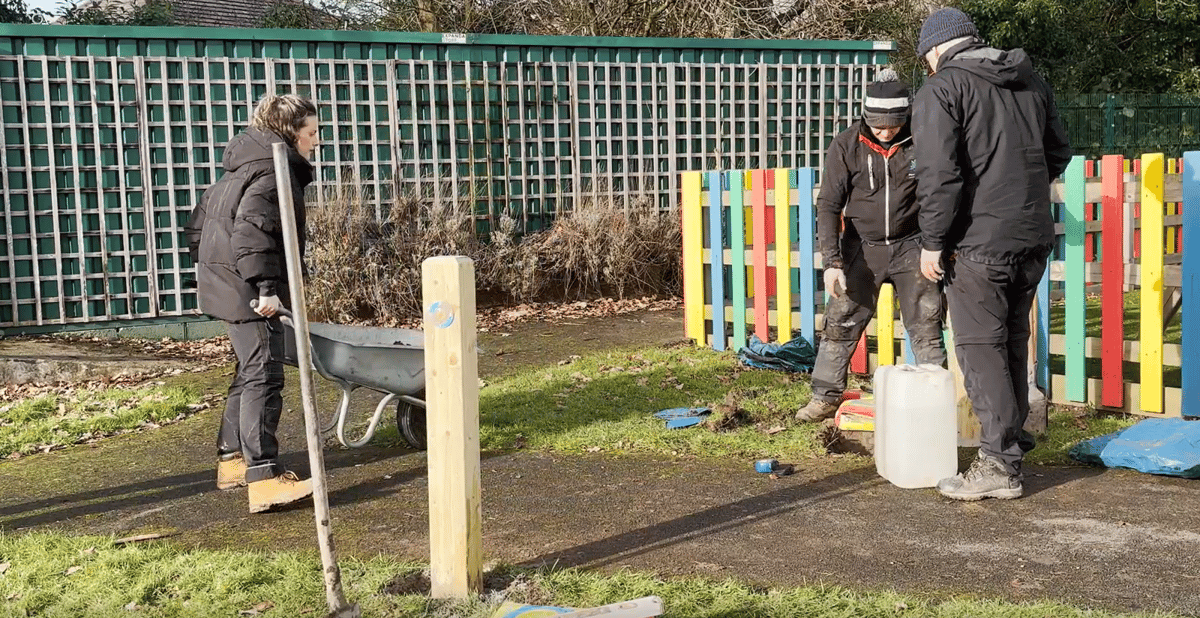
As a general rule, the more significant the groundwork involved, the more likely planning permission will be needed. Installing a large play structure with deep foundation sockets, significant earthworks, or permanent fencing across a meaningful outdoor space will typically require a planning application to your local authority.
Other factors that may trigger a planning requirement include:
- Equipment height - taller structures are more likely to require approval, particularly on sites with neighbouring properties or in areas with specific landscape designations
- Site constraints - if your holiday park sits within a National Park, Area of Outstanding Natural Beauty, or conservation area, additional restrictions may apply
- Change of use - if the play space is being created on land that hasn't previously been used for this purpose, planning permission is more likely to be needed
When It May Not Be Required
Smaller installations with minimal groundwork may fall within Permitted Development rights, which allow certain types of development to proceed without a full planning application provided they meet specific criteria around size, location, and impact.
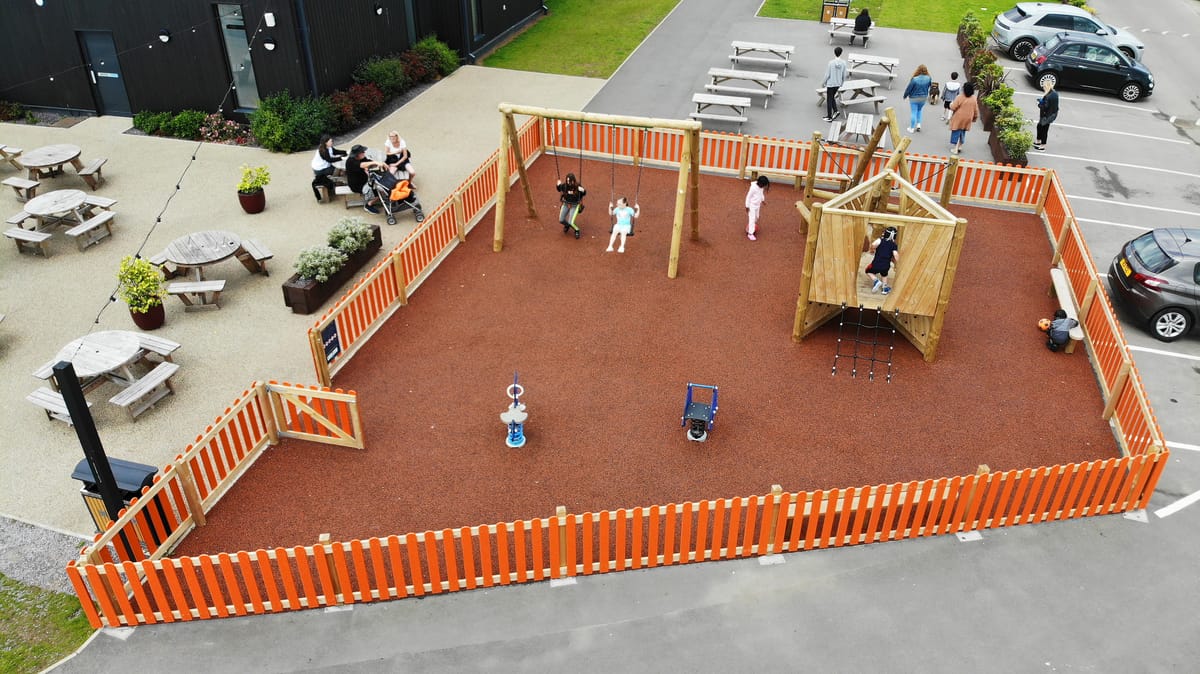
However, relying on Permitted Development without checking first is a risk not worth taking. What qualifies as permitted development varies between local authorities and can be affected by site-specific conditions.
The Practical Advice
Speak to your local planning authority early (before any designs are finalised) to understand exactly what is and isn't required for your specific site and project scope. This is a cost-effective step that prevents expensive redesigns or delays further down the line.
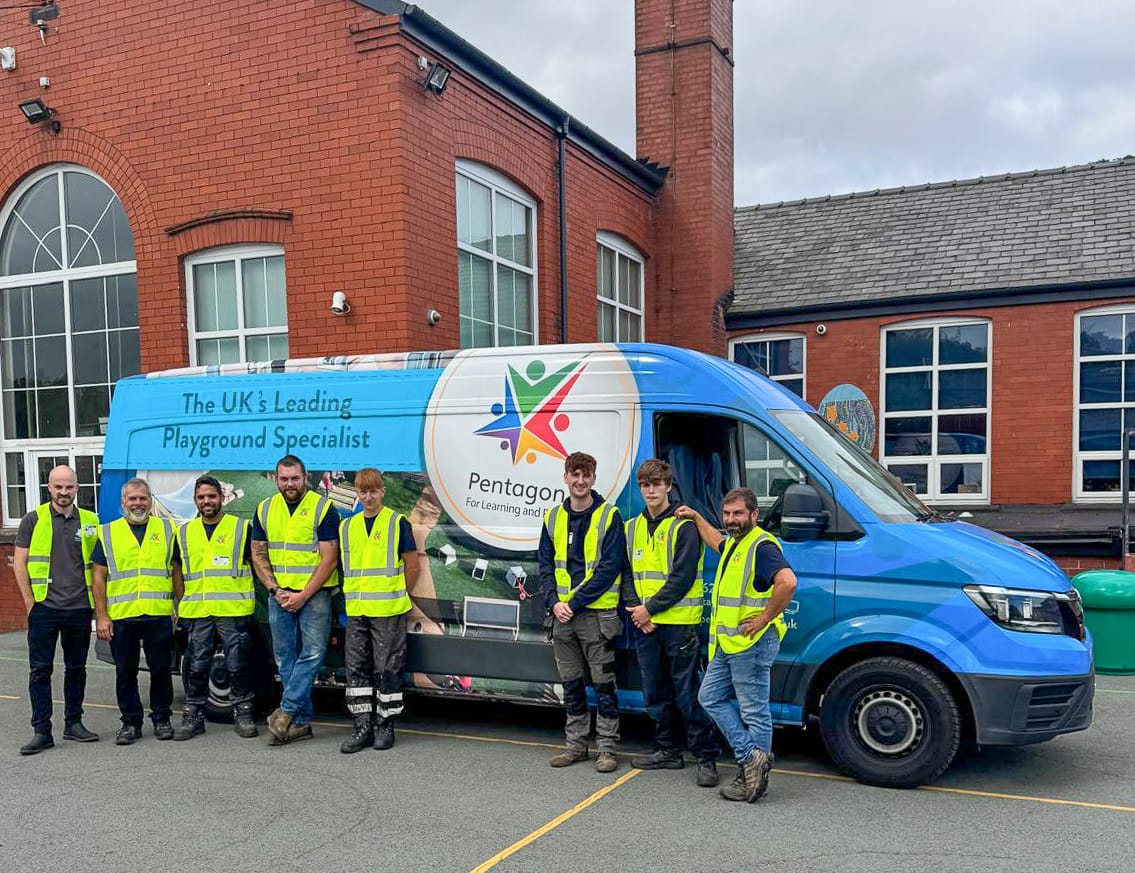
Pentagon's design team works with holiday park operators through this process regularly and can advise on how to structure a bespoke playground design that meets both your creative ambitions and the practical requirements of your local planning framework. Whether that's a sweeping adventure trail, a themed play space for children of all ages, or a compact but imaginative installation in a tighter outdoor space, Pentagon Play are the experts for the job!
We'd always recommend raising the planning question at the very start of your consultation with us, so it can be factored into the design timeline from day one.
How Pentagon Play Playground Design Services Can Help
Pentagon Play has been designing and installing outstanding outdoor play equipment for over 25 years. and while our roots are in creating fantastic playground equipment for schools and nurseries across the UK, our commercial playground expertise has grown to serve holiday parks, caravan parks, camping parks, and leisure settings nationwide!
What sets Pentagon apart isn't just the range of equipment available, but it's the end-to-end service that takes operators from initial playground ideas all the way through to a completed, compliant outdoor playground that genuinely enhances the holiday experience for every family that visits.
Our Process
It starts with a free, no-obligation consultation with one of our experienced playground designers. This is where we get to know your site, your guests, and your ambitions, ensuring that we're asking the right questions that shape every decision that follows. No two holiday parks are the same, and no two Pentagon playgrounds are either.
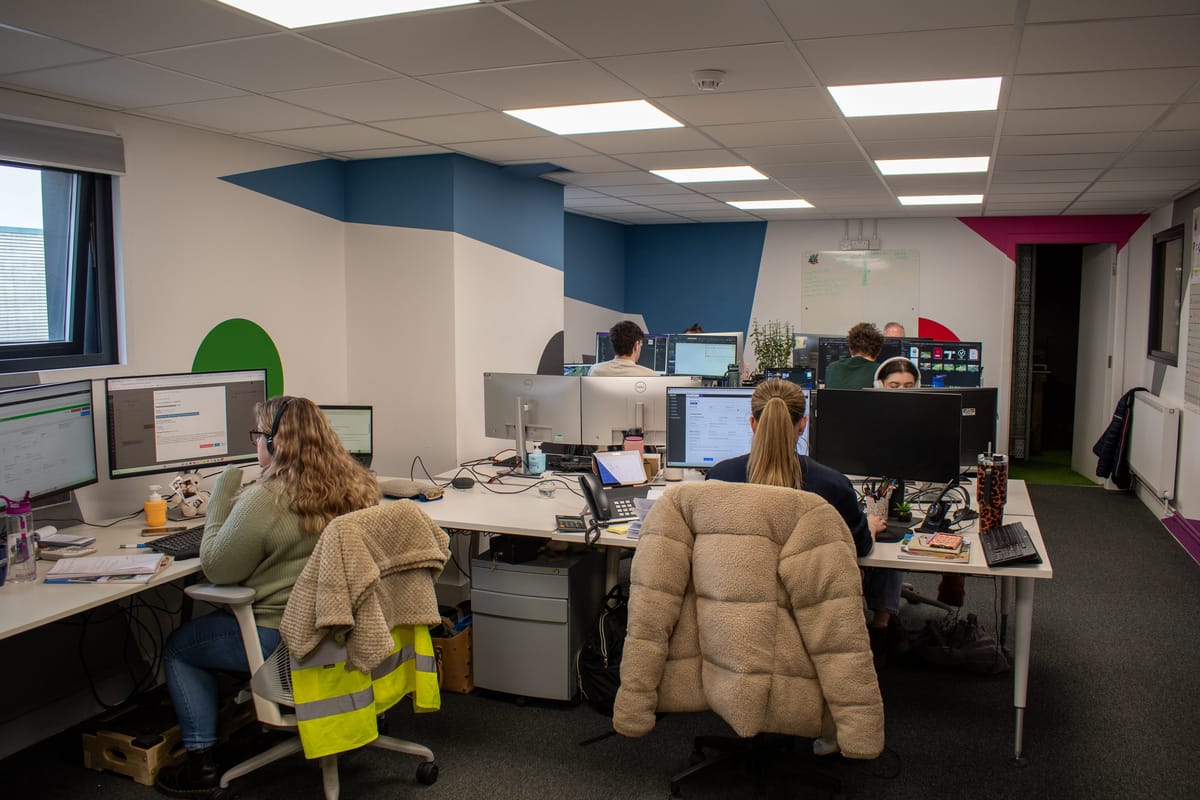
From there, our in-house design team gets to work translating your brief into detailed concepts and 3D visualisations. You'll see exactly how your new play area will look within your outdoor space before a single piece of equipment is ordered, with the freedom to refine, adjust, and push the creative play possibilities as far as your imagination allows.
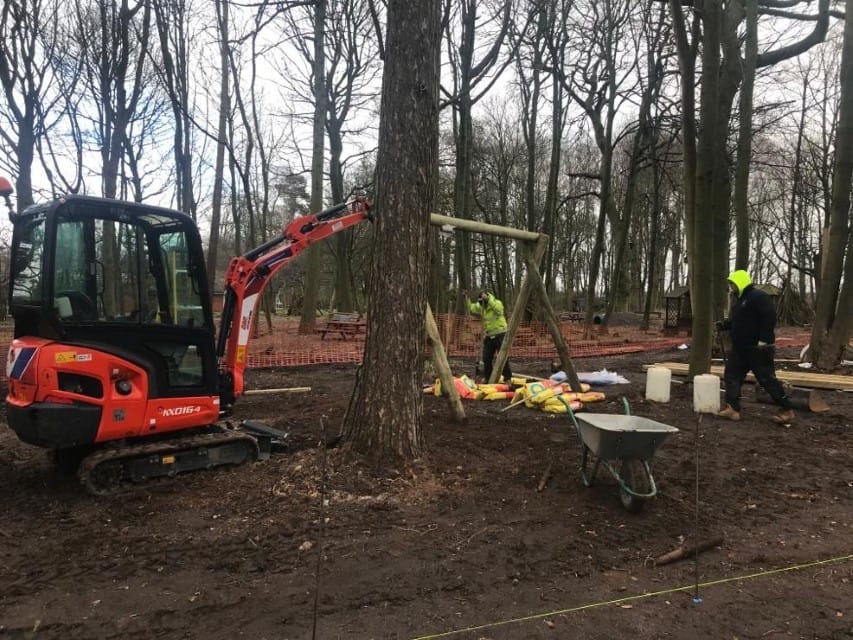
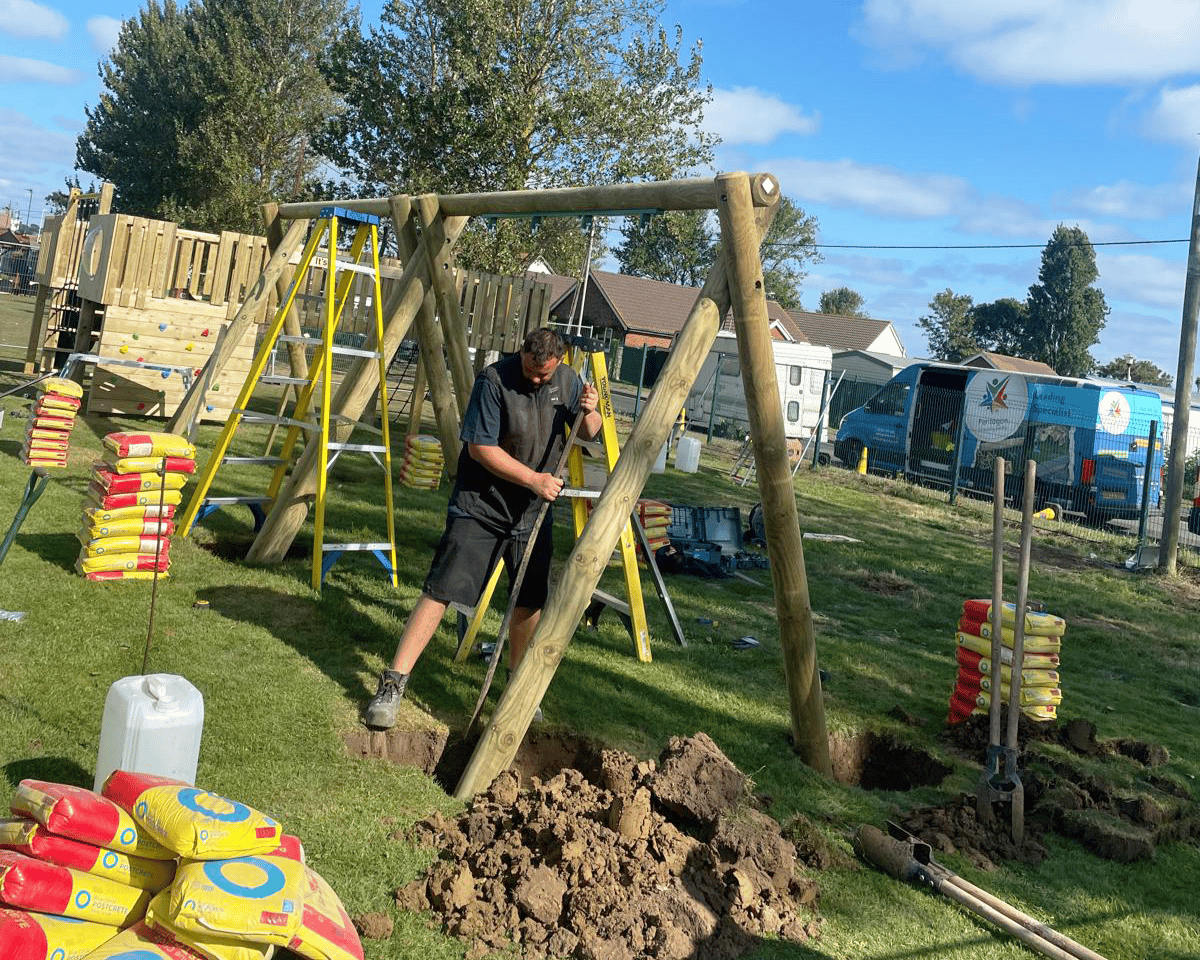
Once you're happy with the design, our expert installation teams take care of everything on site, working efficiently to minimise disruption to your guests and operations. Pentagon manufactures the majority of its playground equipment for children in-house, which means tighter quality control, faster lead times, and a genuinely bespoke result rather than an off-the-shelf solution.
Why Holiday Park Operators Choose Pentagon
- Over 25 years of experience designing outdoor playgrounds across the UK
- A wide range of equipment covering active play, imaginative play, inclusive provision, and themed structures
- Sustainably sourced timber with a 15-year guarantee (built to withstand the demands of heavy commercial use)
- In-house design team offering bespoke playground design from concept to completion
- Expert advice at every stage from dedicated playground designers who understand the commercial leisure sector
- RPII-accredited inspections and maintenance service to keep your playground compliant and performing season after season
Ready to Create a Playground Your Guests Will Love?
Whether you're looking to transform your outdoor space from scratch or upgrade an existing play area, Pentagon Play's team is ready to help you create a playground that becomes one of the defining features of a family's holiday.
Get in touch today for your free consultation and let's start turning your playground ideas into something extraordinary!
Frequently Asked Questions
Below is a collection of the most frequently asked questions we recieve from holiday parks. Make sure to check them out in case you've got a burning question that could be answered right now!
Do I need planning permission for a holiday park playground?
Usually, yes! If the playground is a new structure or changes the land use at a holiday park, you should check with the local planning authority because planning permission is often needed for new development or major changes. For UK holiday parks, the exact answer depends on the site’s existing consent and any permitted development rights. Pentagon Play's expert commercial playground consultants can help you understand what permissions are needed.
How long does a holiday park playground installation take?
An playground project can take a few days to a few weeks for installation, depending on the size and complexity of the playground. For larger projects, the full process can take around 3–8 weeks or more once design, surfacing, and site prep are included.
What maintenance does a holiday park playground need?
Holiday park playgrounds need daily/weekly visual checks, regular operational inspections, and at least one annual full inspection, plus prompt repairs of worn parts, damaged surfacing, drainage issues, and any vandalism or timber/metal decay.
How much does a holiday park playground cost?
Holiday park playgrounds can start at about £15,000+VAT for a small setup, but larger or more complex schemes can run much higher. For a fuller playground, a rough ballpark is tens of thousands of pounds, depending on equipment, surfacing, and installation.
What age range should a holiday park playground cater for?
Typically 0–12 years, with a separate toddler zone for under-5s and more challenging equipment for older children.
Is Play Equipment for Holiday Parks Different to Play Equipment for Schools?
Yes, usually. Holiday park play areas often need more robust, visitor-focused equipment, while school play equipment is typically designed around curriculum use, supervision, and a different age mix. The biggest differences are usually in durability, capacity, branding, and layout for dwell time and family use at holiday parks.
Does holiday park playground equipment need to meet EN 1176?
Yes, new holiday park playground equipment should meet EN 1176 as the relevant playground safety standard, with EN 1177 covering impact-absorbing surfacing. For existing equipment, compliance is generally treated as good practice and risk-based rather than automatically retroactive.
Can Pentagon Play help my Holiday Park Create a Bespoke Playground Design?
Yes, Pentagon Play can help design, build and install a bespoke holiday park playground, with support from concept to completion and after-care. We offer a free, no-obligation site visit to discuss your requirements and learn more about your holiday park.
.jpg)