

Key Points
|
Woodloes Primary School in Warwick, part of the Community Academies Trust, set out to completely reimagine its EYFS outdoor provision. Led by Headteacher Sharon Byrne and supported by Allan Ravenscroft, Estates Manager for the Trust, the ambition was clear. The existing tarmac space no longer reflected the vibrant, exploratory environment the school wanted for its youngest learners.
With £200,000 of Local Authority funding secured, the opportunity for meaningful change was significant. While the school knew they wanted varied textures, a brighter atmosphere and a new canopy, they were unsure how best to structure the space. They needed clear direction and a cohesive design that would maximise long term impact.
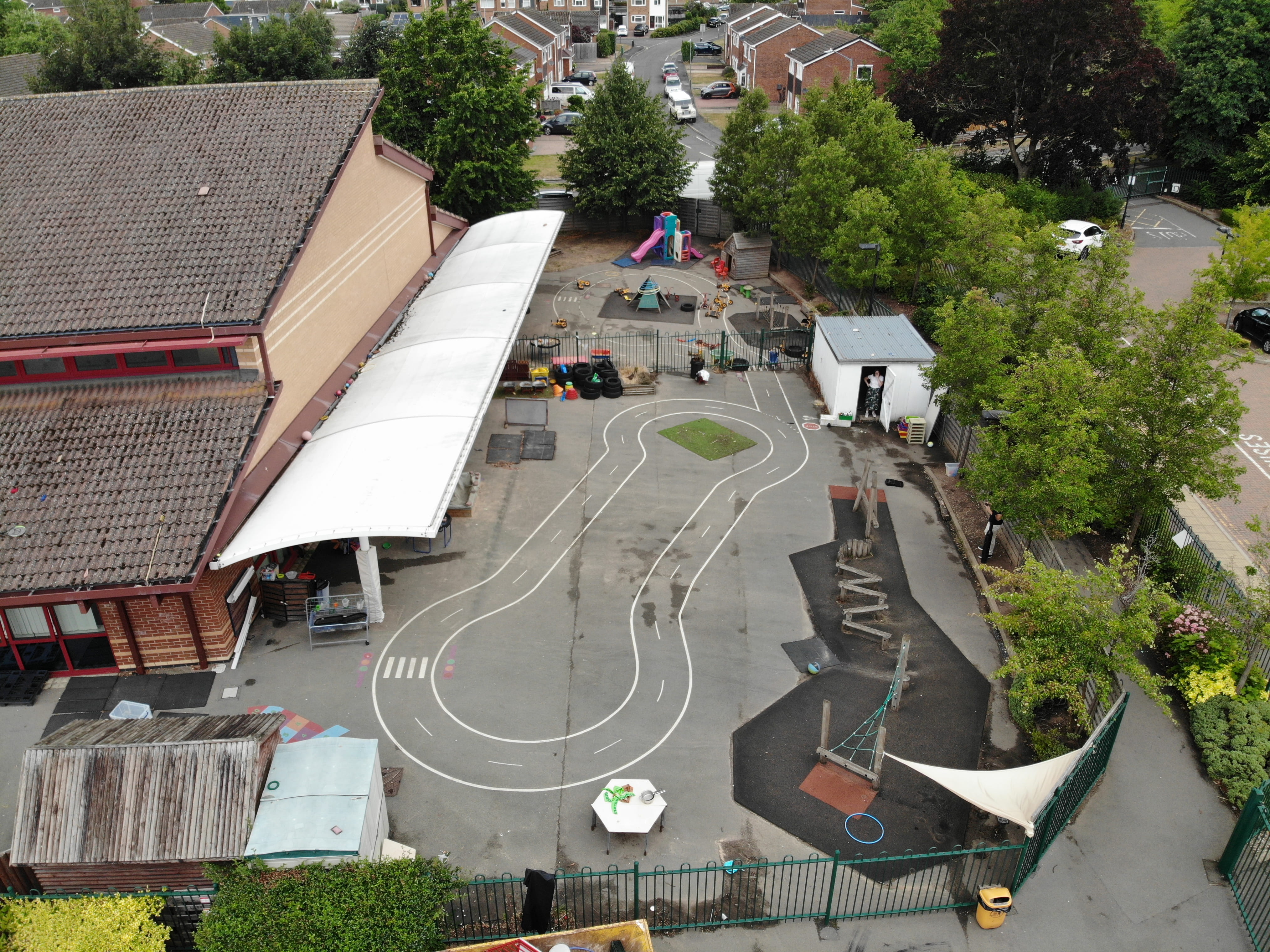
Following an enquiry, Outdoor Learning Consultant Megan Ragdale arranged a site visit to explore the area in detail. It quickly became clear this was not simply a surfacing upgrade. It was a full transformation project. The goal was to create a rich, purposeful EYFS environment that supported physical development, imaginative play and year round outdoor learning through carefully planned zoning, new materials and an integrated canopy structure.
Project Challenges and Design Considerations
Working closely with Sharon and Allan, Megan quickly identified that the biggest challenge was starting from a blank canvas. The existing tarmac offered little variation in texture or opportunity for defined learning spaces. While the ambition was to create a vibrant, engaging environment, the layout needed to be carefully structured to avoid overwhelming the open footprint.
Introducing multiple surfacing types such as artificial grass, wetpour and rubber mulch required a strategic approach. Each material needed to support a specific area of learning while ensuring the overall design felt cohesive. Physical development, messy play, planting, imaginative zones and performance areas all had to work together within one unified scheme.
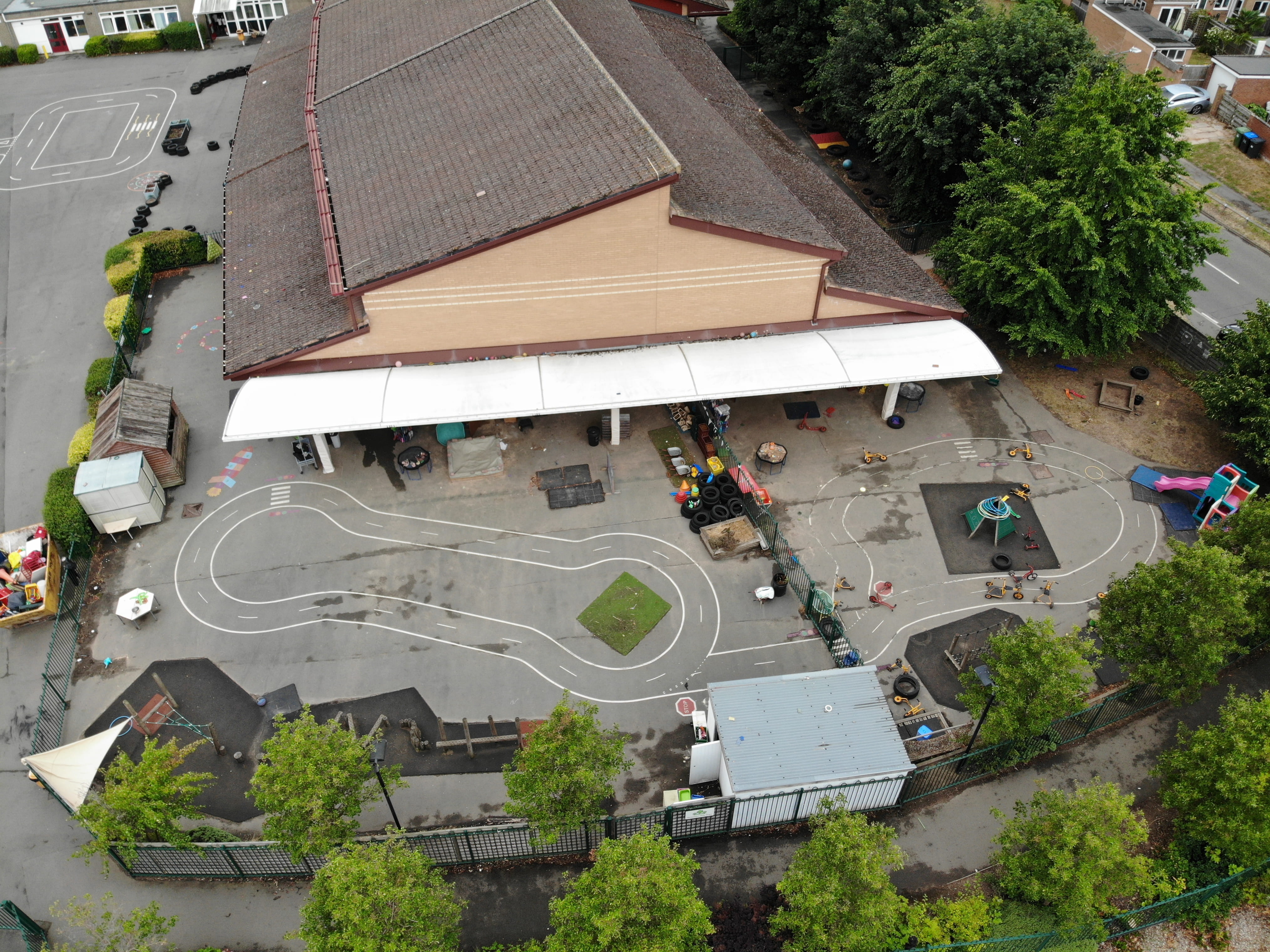
With a £200,000 investment, zoning became critical. The space needed to feel dynamic and exciting while maintaining clear sightlines and smooth movement between areas. The addition of a new canopy and outdoor classroom also required thoughtful positioning to ensure year round usability and to anchor the layout around structured teaching and free flow exploration.
Through careful consultation and concept development, Megan began shaping a design that would transform a flat tarmac playground into a layered, texture rich EYFS environment built for long term impact.
Design and Installation Process
Once the overall vision had been established, the project moved into detailed design and planning. Megan remained the lead point of contact, working closely with Sharon and Allan to refine zoning, surfacing transitions and the positioning of key features such as the canopy and outdoor classroom. With a project of this scale, clarity and structure were essential from the outset.
Behind the scenes, collaboration across departments ensured the scheme was both ambitious and deliverable. Our in house visualisation team developed detailed design concepts, allowing the school and the Community Academies Trust to clearly see how the new textures, learning zones and focal features would come together. At the same time, our estimating and project coordination teams carefully managed specifications, budgets and scheduling to ensure the £200,000 investment was maximised effectively.
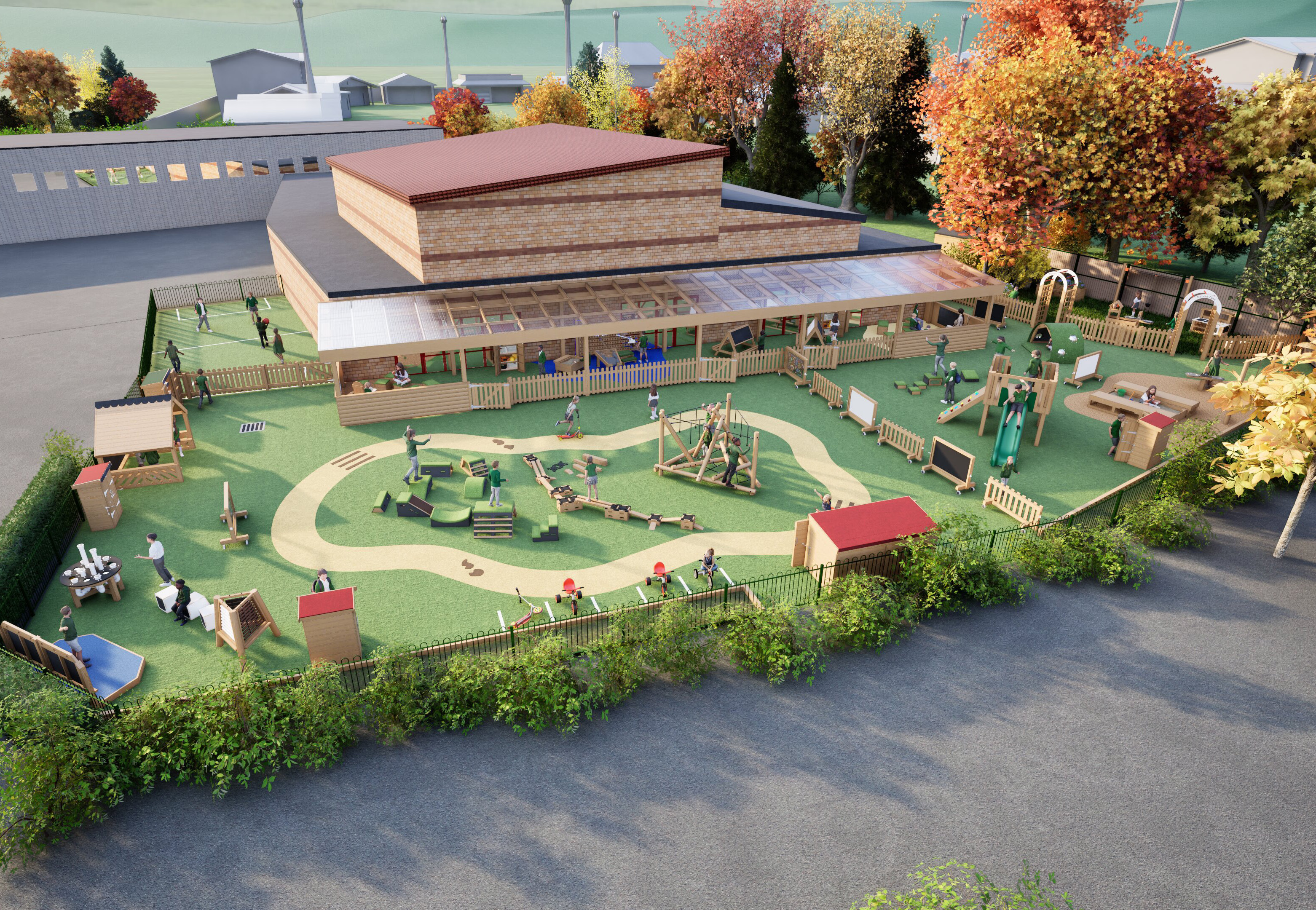
The introduction of multiple surfacing types required careful sequencing, particularly when integrating artificial grass, wetpour and rubber mulch within one cohesive layout. Each installation stage was planned to ensure smooth transitions between materials while maintaining safety and durability. The canopy installation was positioned strategically to anchor the space, creating a sheltered hub that would support teaching, exploration and year round use.
With strong communication between Megan, the school and our operations team, installation progressed in a structured and efficient manner. With clear communication and careful coordination throughout, the project progressed with confidence and precision. What began as a uniform tarmac space was reshaped into a carefully structured environment, ready to support the evolving needs of EYFS learners for years to come.
The Impact on Pupils and Staff
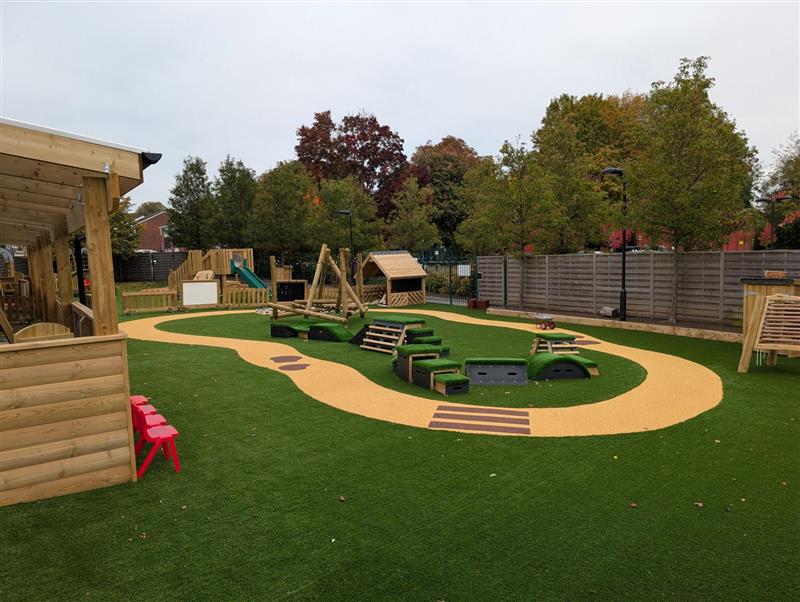
By the start of the new term, Woodloes Primary School’s EYFS outdoor area had been completely redefined. Megan returned to see the finished space in use alongside Sharon and the team, and the shift from the original tarmac playground was striking. What had once been a single surface now offered layers of texture, colour and clearly defined learning zones.
The impact on the children was immediate. Pupils moved confidently between areas, choosing where to climb, build, perform or explore without hesitation. The varied surfacing encouraged different types of movement and play, while the defined zones supported independence and purposeful engagement. The space no longer felt like an open yard, but a carefully structured extension of the classroom.
Staff shared how the transformation had changed the rhythm of the school day. The new canopy and outdoor classroom allowed learning to continue comfortably in all weather conditions, while the dedicated areas for physical development, messy play and creative exploration made planning outdoor sessions more intentional and effective. The environment now actively supports EYFS pedagogy rather than limiting it.
This project demonstrated the difference that thoughtful design, varied textures and clear zoning can make. The investment has created a dynamic outdoor learning environment that not only looks brighter, but functions as a purposeful, engaging space for Woodloes Primary School’s youngest learners.
Playground Surfacing, Textures and Zoning
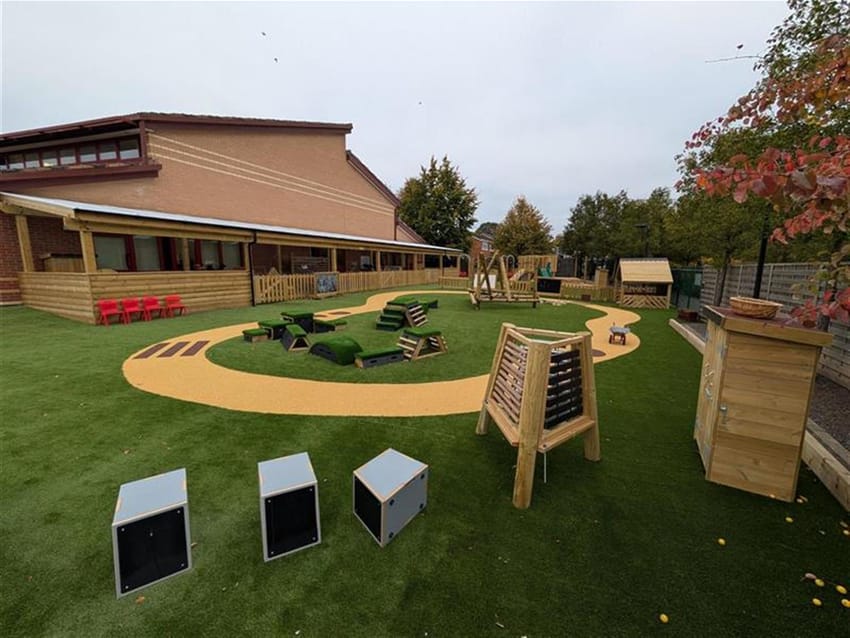
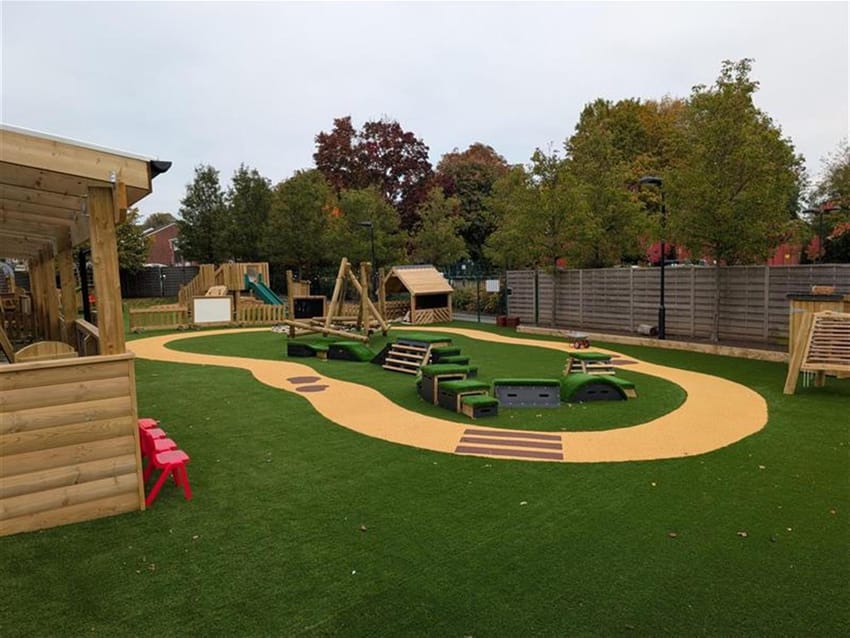
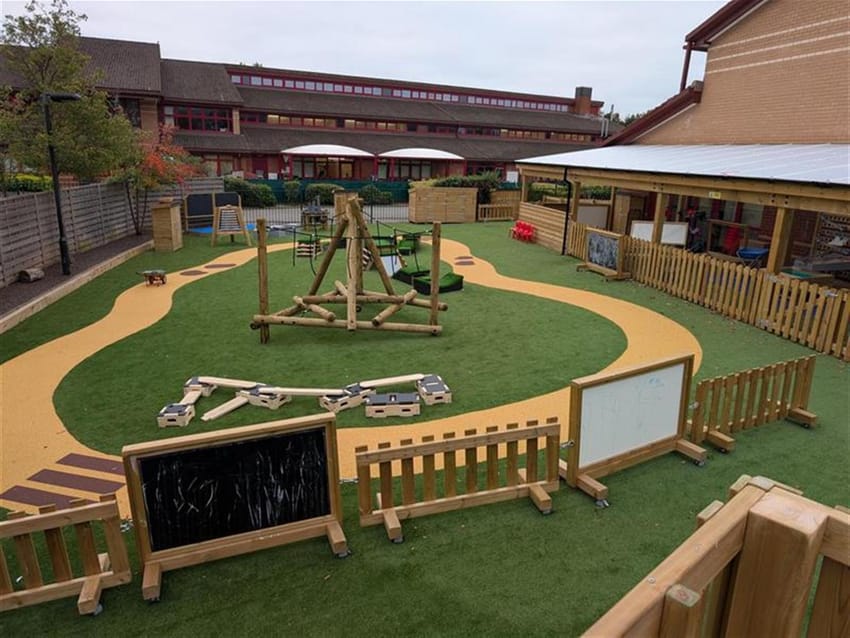
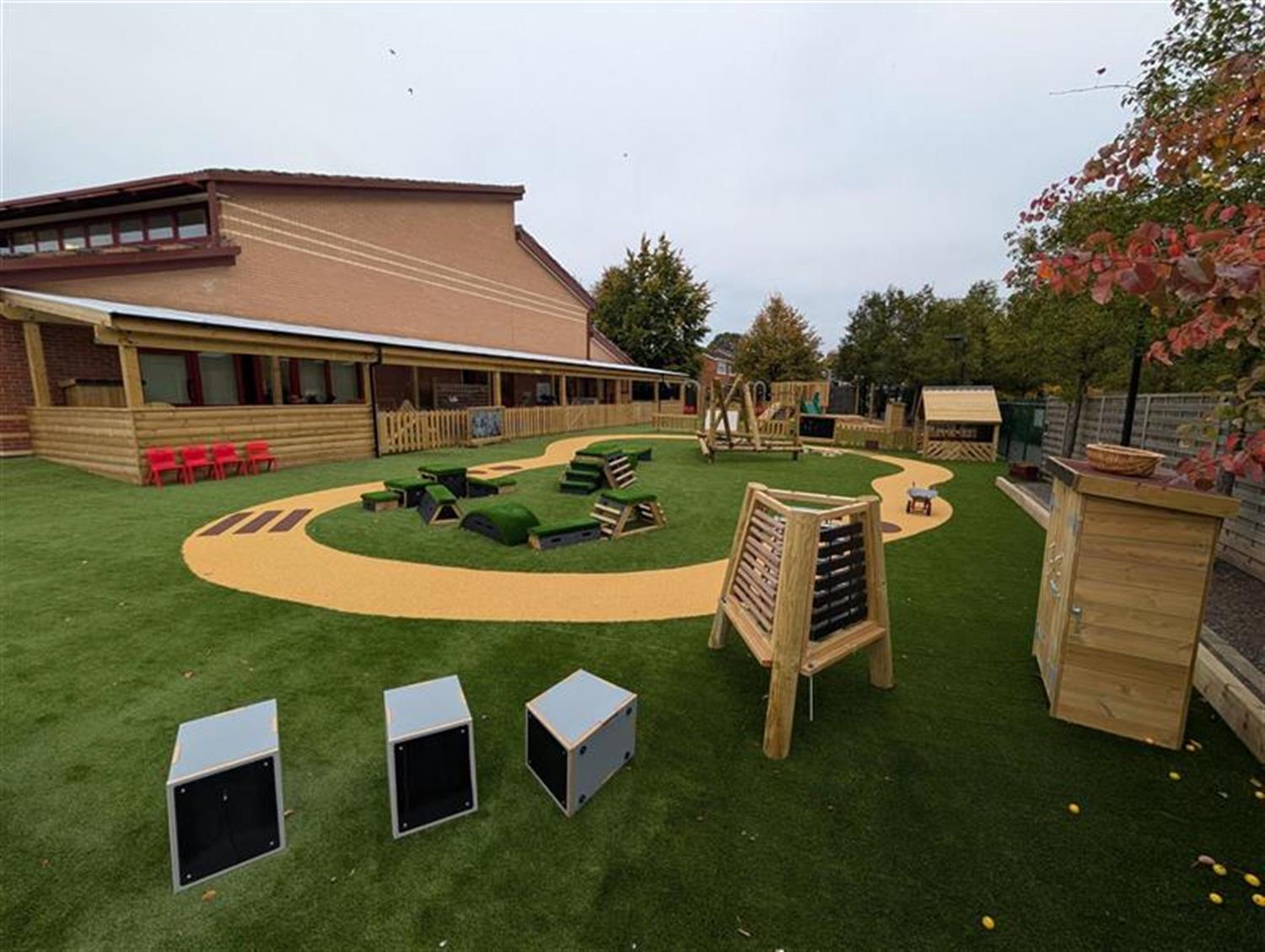
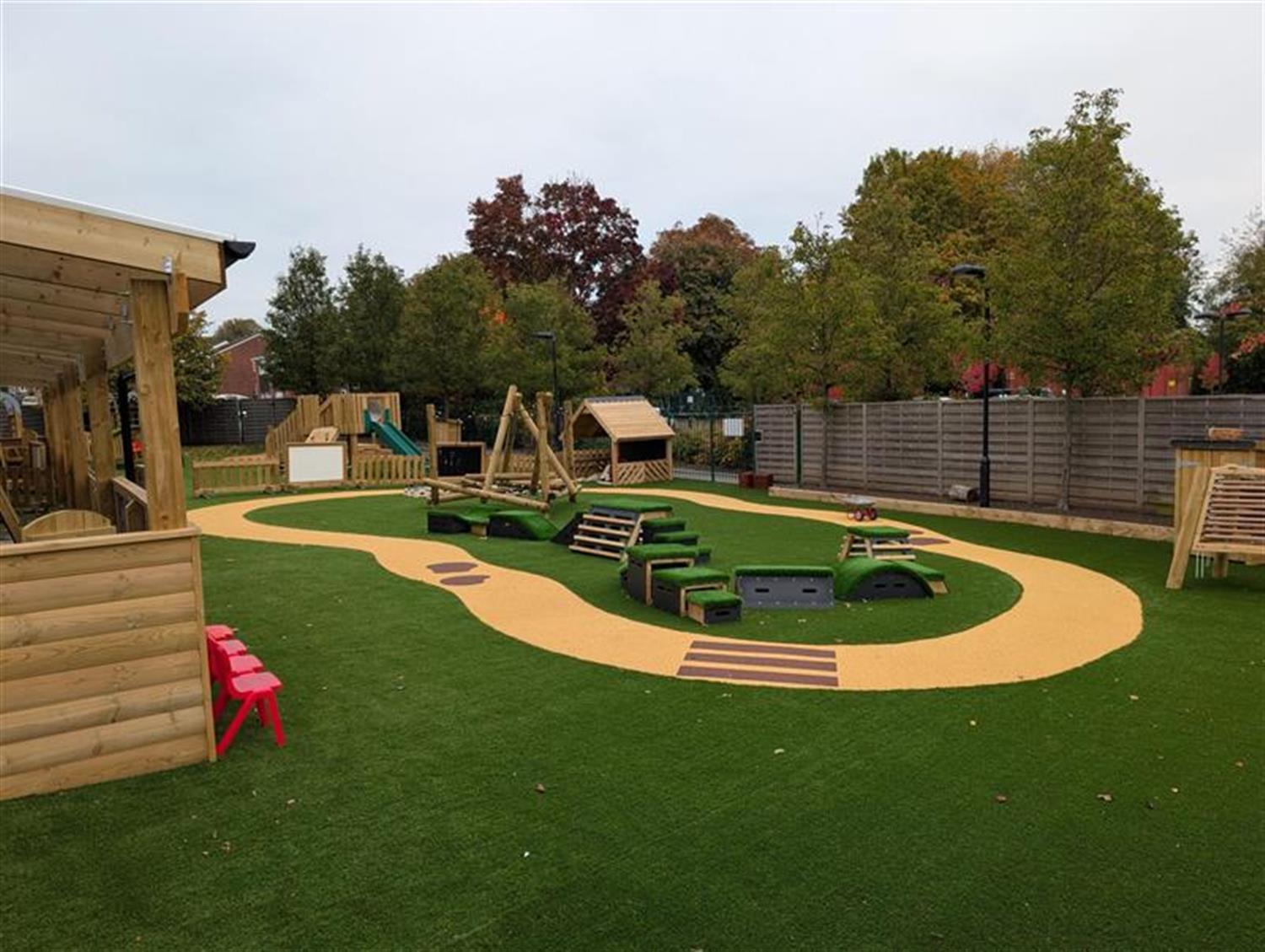
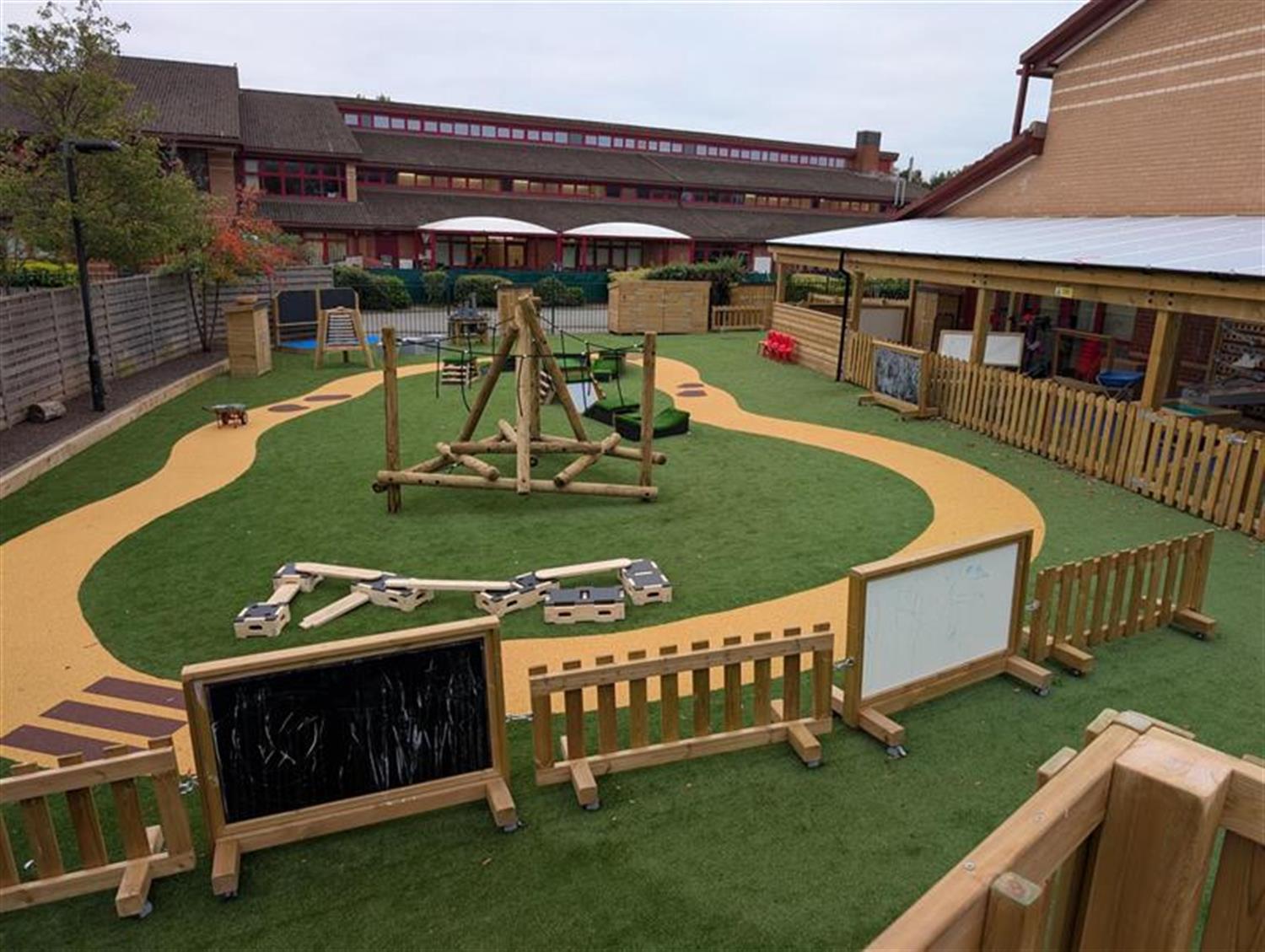
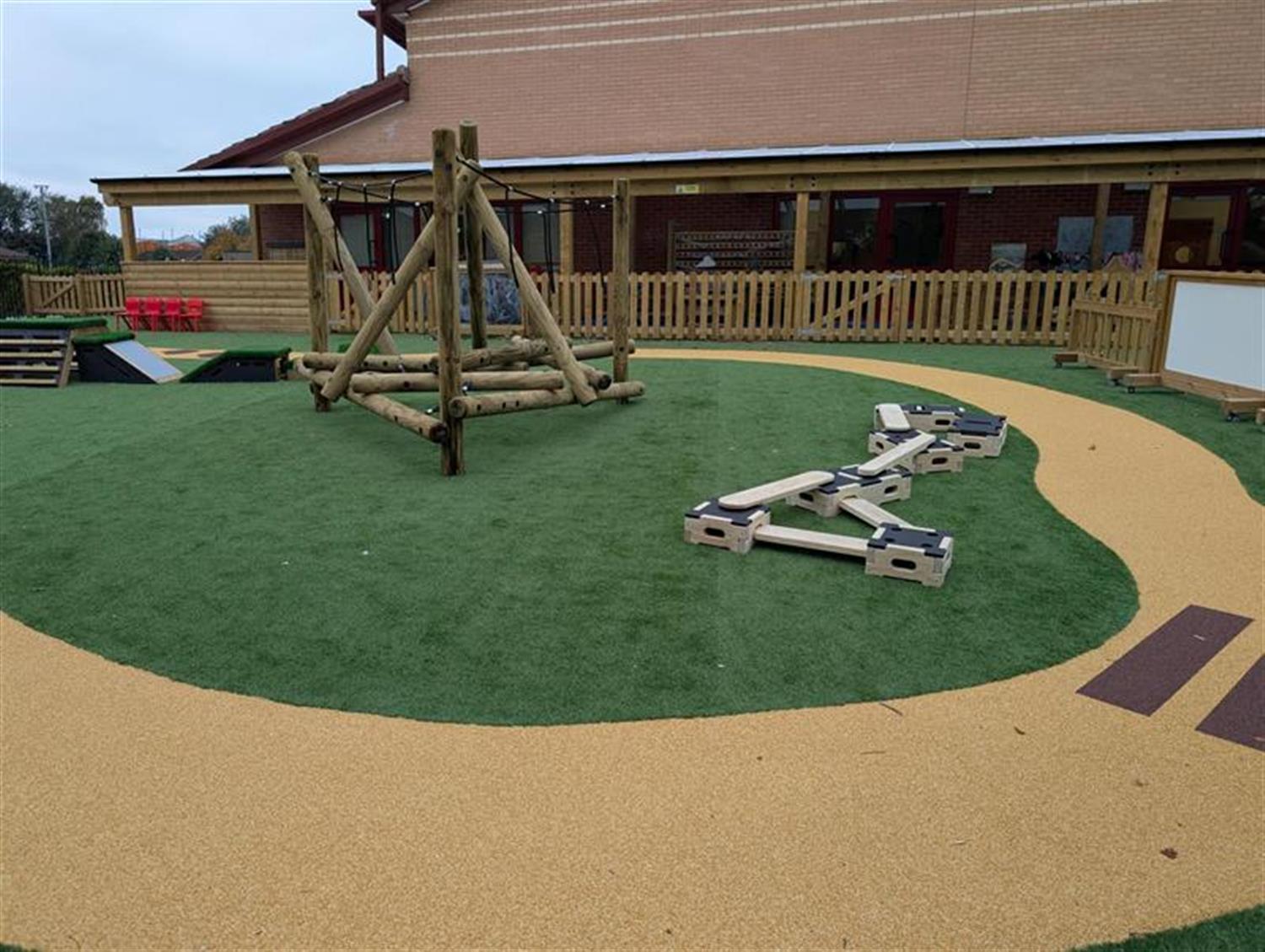
A complete rethink of surfacing shaped the foundation of the transformation. Artificial grass now replaces the former tarmac, creating a softer and more inviting base, while flowing tan and brown wetpour pathways introduce movement and direction. The curved route guides children naturally through the space, connecting each learning zone with clarity.
The contrasting wetpour loop defines circulation and encourages continuous movement between areas for physical development, imaginative play and creative exploration. Playbond has been used selectively within planting and exploratory zones to add further texture, supporting a richer sensory experience without overwhelming the layout.
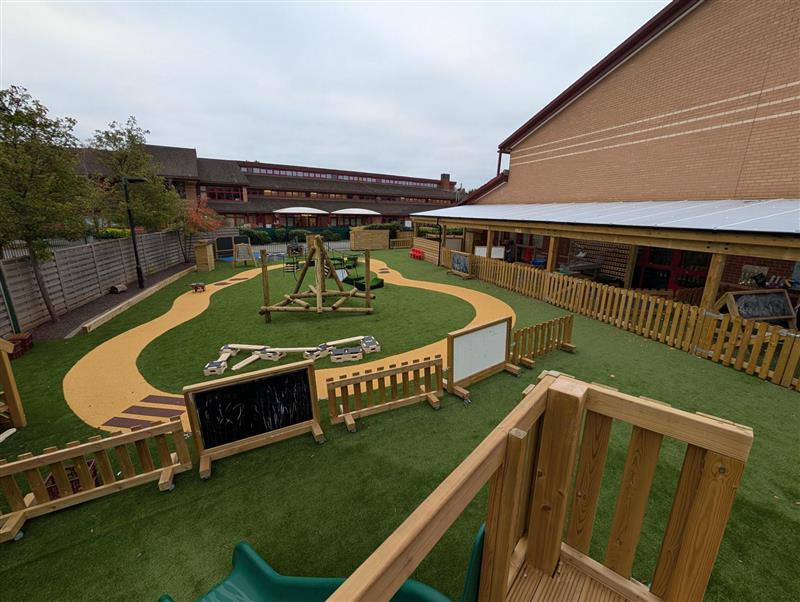
Zoning is reinforced through thoughtfully positioned fencing, particularly around the more physically challenging equipment. This subtle separation allows children to take risks in a controlled space, while maintaining clear sightlines and safe boundaries. Together, surfacing and structure work cohesively to create a balanced, purposeful EYFS environment.
In total, the playground featured:
- Over 645m² of Playturf Artificial Grass
- Over 120m² of Beige, Brown and Blue Wetpour
- 30m² of Playbond
- 2 Interactive Chalkboard Panels on Wheels
- 2 Interactive Whiteboard Panels on Wheels
- 2 Interactive Paint Panel on Wheels
- 2 Interactive Fence Panels on Wheels
- 20m of Bow Top Timber Fencing
Timber Canopy and Outdoor Classroom
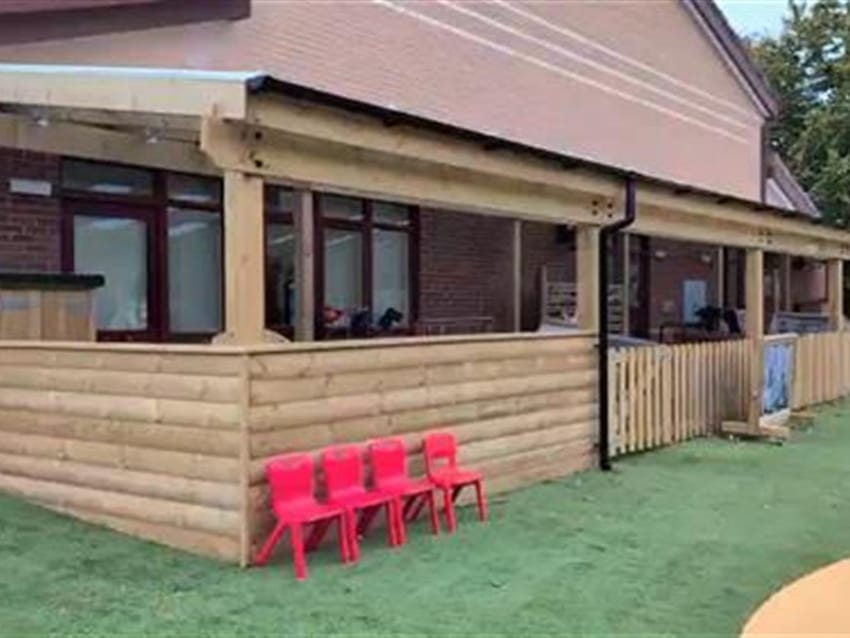
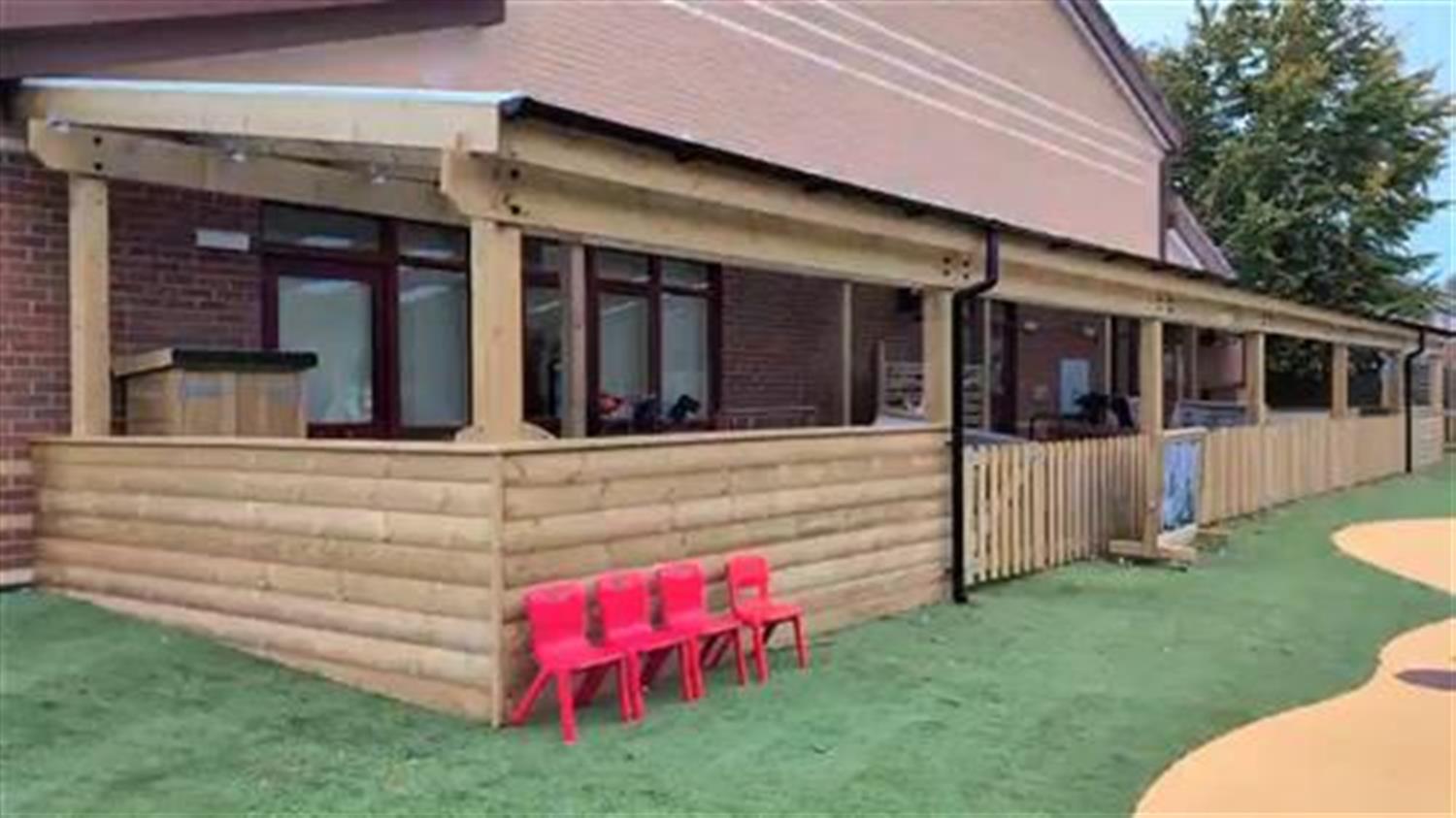
The bespoke timber canopy has become the heart of Woodloes Primary School’s EYFS outdoor provision. Stretching across a generous footprint, it creates a true outdoor classroom that can be used comfortably throughout the year. No longer limited by weather conditions, staff can now move learning outdoors with confidence, extending the classroom into a sheltered, open air environment.
Beneath the canopy, a range of carefully selected features support structured teaching and independent exploration. Giant chalkboards and whiteboards encourage mark making and collaborative learning, while storytelling chairs and moveable seating create inviting spaces for group discussion and shared reading. The inclusion of a water wall and damming station introduces hands on investigative play, blending creativity with early problem solving skills.
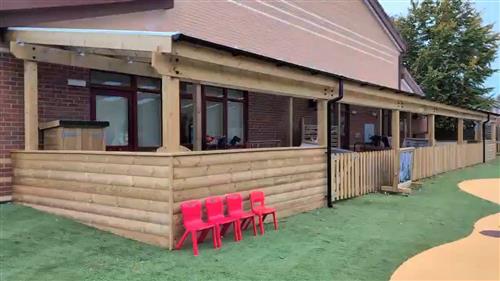
More than just shelter, the canopy anchors the entire layout. It provides a calm, organised hub where children can gather, learn and reset before flowing back into active zones. The result is a balanced outdoor environment that supports focused teaching, imaginative play and year round engagement in equal measure.
The outdoor classroom featured:
- 2 Giant Wall Mounted Chalkboards
- 2 Giant Wall Mounted Whiteboards
- 2 Freestanding Storytelling Chair
- 10 Small Moveable Artificial Grass-Topped Seats
- A Pair of Acorn Self-Select Storage Units
- 2 Easel Tables
- A Water Wall with the Water Damming Station Package
Physical Development Equipment for EYFS
Physical development sits at the core of effective EYFS provision, and the introduction of the Modular Play Tower Restormel (1.2m) and Mam Tor Mountain Climber has transformed this area of the playground. These structures provide progressive challenge, encouraging children to climb, balance and explore at their own pace. Designed to build coordination and core strength, they offer safe opportunities to develop confidence through movement.
The varied climbing routes and elevated elements allow children to assess risk in a controlled environment. Whether navigating platforms, scaling climbing faces or balancing across transitions, pupils are constantly developing spatial awareness and resilience. The equipment supports both structured physical sessions and spontaneous active play throughout the day.
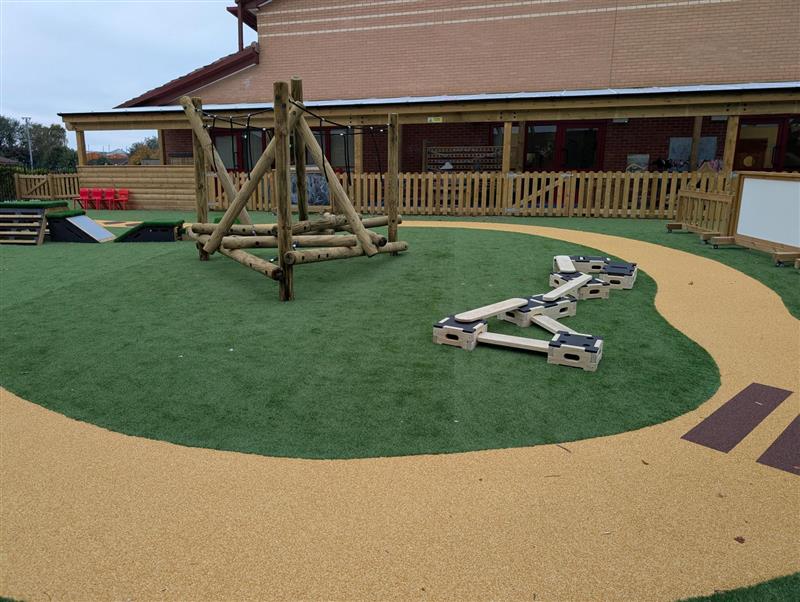
Freestanding active play resources such as the Get Set Go Blocks and Play Builder sets add further flexibility to the zone. These movable elements encourage children to construct their own obstacle courses, adapting the level of challenge to suit their ability. Together, the fixed and adaptable equipment create a dynamic physical development area that grows with the children using it.
Overall, the playground included:
- A Modular Restormel Play Tower (1.2m)
- A Hill Den
- A Mam Tor Mountain Climber
- A Play Builder Architect Set
- A Get Set Go! Blocks Cheviot Set
- A Giant Playhouse
- A Tricycle Storage Unit
- An Acorn Self-Select Storage Unit
- A Sycamore Self-Select Storage Unit
Messy Play and Mud Kitchen
The messy play zone has become a true haven for hands on exploration. At its heart sits the mud kitchen, inviting children to mix, measure and create using natural materials. This type of open ended play encourages collaboration, language development and imaginative storytelling, while also strengthening fine motor skills and early problem solving.
Surrounding the mud kitchen, a range of carefully selected features enrich the experience. The large covered sand box allows for digging, building and sensory investigation in all weather conditions, while the rope and pulley materials mover introduces an element of teamwork and cause and effect learning. These elements encourage children to experiment, transport and construct with purpose.
Together, the zone provides a safe space where children can fully immerse themselves in tactile play. It supports curiosity, creativity and resilience, allowing pupils to explore freely while developing the practical and social skills that underpin strong EYFS foundations.
- A Large Covered Sand Box
- 2 Weighing Scales
- 2 Rope and Pulley Materials Mover
- An Acorn Self-Select Storage Unit
- A Mud Kitchen
- A Mud Box
Planting and Natural Exploration
Introducing natural elements into the playground added a valuable layer of calm and discovery to the EYFS environment. Corner planter benches provide both seating and planting space, allowing children to grow flowers while also creating quiet areas to pause and observe. These spaces encourage responsibility and care, helping pupils understand growth cycles through hands on experience.
The addition of a bug hotel has further strengthened the area’s educational value. Children are able to observe insects up close, sparking curiosity about habitats and living things. This feature transforms a simple corner of the playground into a living learning resource.
Staff have been particularly enthusiastic about this zone, recognising its potential beyond free play. The planting areas and bug hotel offer meaningful opportunities to support science lessons, outdoor investigation and early environmental awareness. It has created a peaceful yet purposeful space within the wider playground layout.
Outdoor Performance and Music Area
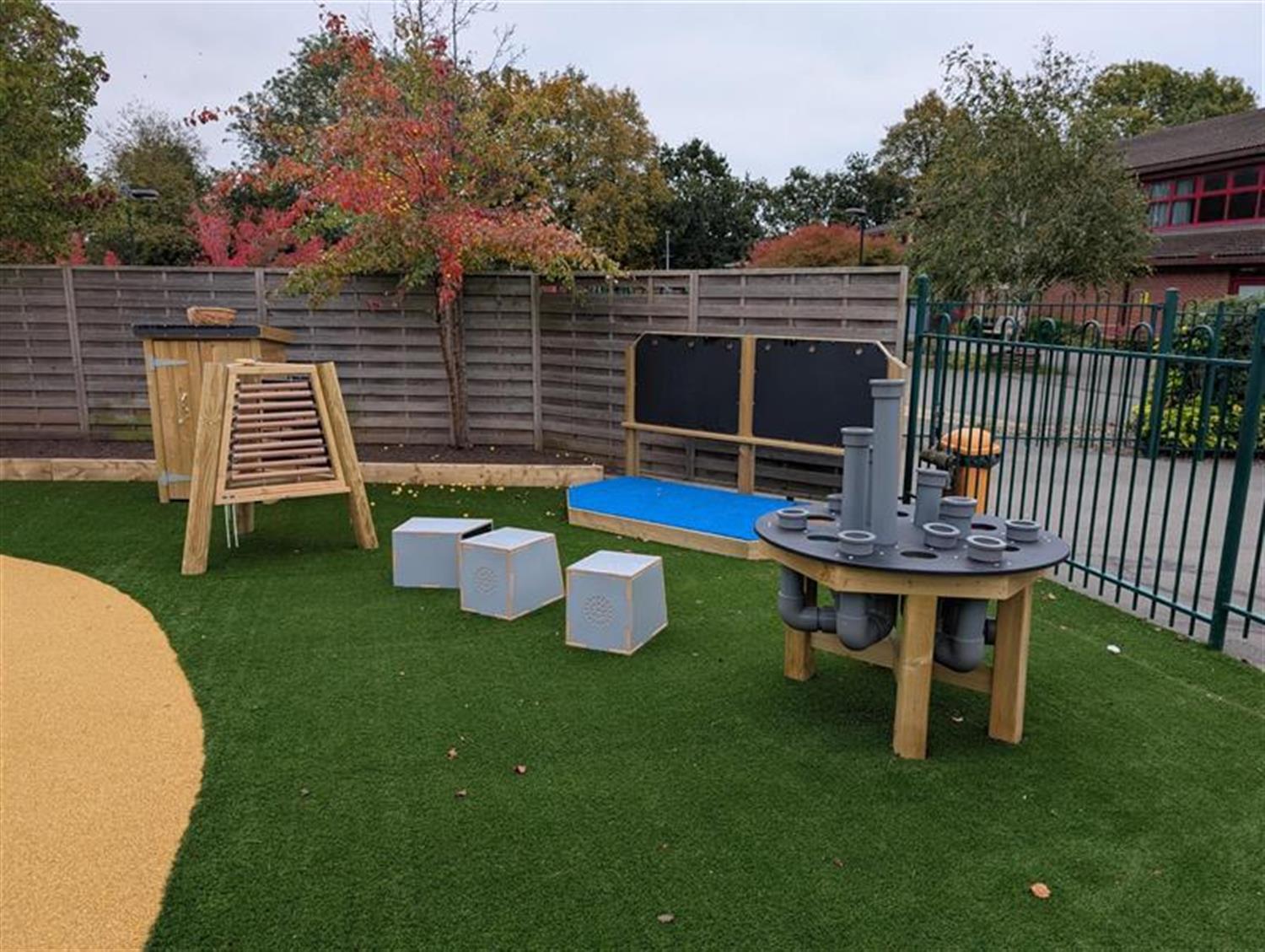
The Performance Stage with Chalkboard and Den Making additions has introduced a powerful creative hub within the EYFS playground. The raised platform gives children a clear focal point for storytelling, role play and informal performances, while the chalkboard backdrop encourages scene setting, mark making and collaborative expression. The den making elements allow the space to transform, giving pupils ownership over how it is used.
This flexibility supports confidence and communication, as children take turns leading, performing and negotiating roles. Whether presenting to peers or creating imaginative scenarios, the stage promotes language development and social interaction in a natural and engaging way.
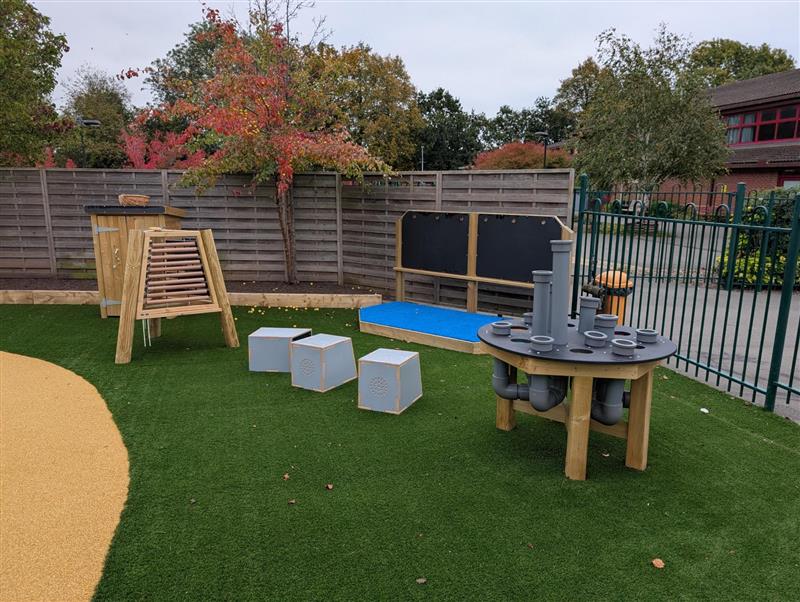
Complementing the stage, freestanding musical instruments such as the Musical Triad and Group Batonka add a sensory dimension to the area. These features encourage rhythm, coordination and collaborative play, allowing children to explore sound and movement together. The result is a vibrant zone that nurtures creativity, confidence and expressive development.
- A Performance Stage with Chalkboard and Den Making Additions
- A Musical Triad
- A Group Batonka
- 3 Drum Seats
- An Acorn Self-Select Storage Unit
Supporting Outdoor Learning at Woodloes Primary
Working with Woodloes Primary School and the Community Academies Trust has been a genuinely rewarding experience. From the outset, there was a shared ambition to create something special for the school’s youngest learners, and it has been a privilege to help bring that vision to life. The collaboration between Sharon, Allan and Megan ensured the project felt focused, ambitious and well considered at every stage.
Seeing the children make full use of their new environment has been the most exciting outcome of all. From climbing confidently on the play tower to performing on stage or exploring the planting areas, the playground now buzzes with energy and purpose. The space feels brighter, richer and far more reflective of the creativity and curiosity that define EYFS learning.
This transformation has created more than a playground. It has delivered a dynamic outdoor classroom that supports movement, imagination and exploration throughout the year. We look forward to seeing Woodloes Primary School’s youngest pupils continue to grow, learn and thrive within their revitalised outdoor space.